A comprehensive research-driven history of movable books, tracing the evolution of paper engineering from early mechanical manuscripts to modern pop-up innovation and collecting.
History, Innovation, and the Growth of Collector Interest in Movable Books and Paper Novelties
Jo Tisinger
[email protected]
Independent researcher in movable and interactive books
“Go into the stories and history behind your books— such research will bring deep satisfaction.”
—— Theo Gielen, 2008
Preface: “There are mistakes!”
Those were the words in the first email I ever received from Theo Gielen, a legendary movable book historian, the day after publication of my first Movable Stationery article in 2013, Dean & Son Publishers: A Short History.
Too starstruck to be offended, I eagerly wrote back. What followed were corrections on the digital side and a friendship built on curiosity, rigor, and a shared passion for uncovering the true history of "books with life".
We lost Theo on September 11, 2015, but his legacy continues to inspire collectors and researchers alike. The breadth of his work remains a lasting source of knowledge. I chose to begin this article with his words because they still ring true. There is still so much to discover. Great strides are being made, and the excitement surrounding interactive books—from centuries ago to today—continues to grow. I would like to thank the many researchers and institutions who continue to move the field forward, and I hope, in response to this article, to hear once again: “There are mistakes!”
Happy reading!
Table of Contents:
Preface
Introduction
Early Foundations of Paper Engineering
Medieval Beginnings: The Scholarly Origins of Movable Books Fold Out Diagrams Bat Books and Portable Folded Manuscripts Volvelles and Rotating Paper Devices
Sixteenth Century Advancements: Printing Meets Mechanics Petrus Apianus and Printed Scientific Volvelles Johannes Schoner and Paper Instruments The Blow Book and Early Interactive Illusion Anatomical Flap Mechanisms and Fugitive Sheets Vesalius and Layered Anatomical Instruction
Seventeenth Century Developments: Devotion, Anatomy, and Transformation Remmelin and the Anatomical Flap Book Volvelles in Scientific and Mathematical Works La Confession Coupee and Devotional Tab Mechanisms Early Transformation Prints and the Origins of the Harlequinade
Eighteenth Century: Entertainment Takes Center Stage Flap Books and Religious Instruction Navigational Volvelles and Practical Paper Instruments Harlequinades and Turn Up Books Metamorphosis Prints and the Transformation Tradition Martin Engelbrecht and Early Layered Perspective Views Thomas Malton and the First Commercial Pop Up Structures Early Paper Dolls, Pantins, and Articulated Figures Early Slatted Transformations and Venetian Blind Mechanisms Laying the Groundwork for the Nineteenth Century
The Nineteenth Century: The Golden Age of Movable Books Childhood, Education, and the Rise of the Movable Book Market The Technical Breakthroughs That Shaped 19th Century Movable Books Cloth Bindings and Durable Children's Books Lithography and Chromolithography High Speed Printing Presses Machine Made Paper Die Cutting Technology Hand Assembly of Movable Mechanisms Wire Mechanisms and Mechanical Innovation Distribution and International Trade E. P. Dutton and Transatlantic Partnerships Early Nineteenth Century Movable Books Flap Books, Movable Cards, Miniature Books, and Paper Toys Optical Prints, Peepshows, and Visual Novelties Fabric Picture Books and Stofboeken Late Nineteenth Century Innovations Germany as the Industrial Center of Movable Book Production Collecting Across Languages McLoughlin Brothers and the American Movable Book Market International Meggendorfer Editions Nineteenth Century Peepshows Late Nineteenth Century Metamorphosis Picture Books Reassessing Nineteenth Century Production
Adults Only: Concealment, Revelation, and the Mechanics of Desire Erotic Mechanical Paper and Hidden Imagery Censored Paper Engineering Interactive Mechanisms for Adult Audiences
Toy Theaters and Domestic Performance Paper Theaters and Home Performance Shadow Theatre and Ombres Chinoises
The Twentieth Century: Revival, Reinvention, and Loss Early Twentieth Century Spring Up Mechanisms and Pop Up Terminology The 1930s and Innovation During the Depression Era World War II and the Loss of Movable Book Talent Mid Twentieth Century Industrialization and the Pop Up Revival Vojtech Kubasta, Artia, and International Distribution Kubasta and Disney: Attribution, Anonymity, and Global Reach The Late Twentieth Century Paper Engineering Renaissance Modern Reprints and the Revival of Victorian Movable Books
The Twenty First Century
Digital Tools and New Materials A New Level of Technical Sophistication Contemporary Paper Engineers and the Modern Collector Market The Meggendorfer Prize and Contemporary Recognition The Internationalization of Modern Paper Engineering
Future Directions Technology, Hybrid Media, and New Forms of Paper Engineering Interactive Digital Surrogates Augmented Reality and Hybrid Print Digital Formats Artificial Intelligence and Emerging Design Tools Sustainability and the Future of Paper Engineering
Stay Abreast! Instruction & Practical Learning Ongoing Research and Community The Movable Book Society and Movable Stationery International Journal of Interactive Books The Pop APP Museum VintagePopupBooks.com as a Research Resource A Searchable Digital Archive of Paper Engineers and Their Works
Research Resources by Country United States United Kingdom Germany France The Netherlands Italy Spain Czech Republic and Czechoslovakia Japan Canada Taiwan China
Collecting Movable Books History of Collecting Movable Books Collectors, Scholars, and the Growth of Interest
Valuing Movable Books Rarity, Condition, Completeness, and Mechanisms Examples of Highly Collectible Movable Books Collecting for Love
Conclusion
References
Introduction:
Researching antiquarian movable books reveals far more than simple facts and publication dates. It becomes less like compiling a bibliography and more like reading an exciting historical novel. One gradually comes to know the personalities behind the books, the friendships, rivalries, partnerships, and international networks that brought these little marvels to life all intertwined in a remarkable web of cooperation and competition. It is a story of ambition, creativity, financial risk, invention, triumph, and too often heartbreak. With Germany serving as one of the great centers of production during the nineteenth century, these books were often shaped against a backdrop of industrial expansion, political upheaval, economic struggle, and sometimes profound human tragedy.
One begins to imagine the countless hands involved in creating a single movable book: the artists designing the scenes, the lithographers preparing the stones, the paper engineers inventing the mechanisms, the salesmen carrying samples from city to city, and the often overlooked factory workers, many of them women, carefully assembling tiny rivets, folds, pull tabs, and layers by hand through long hours of painstaking labor. Behind every movable scene stood enormous effort, skill, patience, and human determination. Perhaps that is why these books continue to fascinate collectors and researchers so deeply. Each movable book begins to feel less like a toy and more like a masterpiece born from the combined talents, sacrifices, and imagination of countless individuals whose stories deserve to be remembered.
Interest in movable books has grown rapidly in recent years, drawing in a new generation of collectors alongside established enthusiasts. A 2026 market analysis by Technavio, incorporating Google Trends and retail data, indicates that the term ‘interactive pop up books’ reached peak search interest in February 2026, attaining a normalized value of 100—the highest possible score.As more people discover the creativity and craftsmanship behind these books, they are increasingly recognized as one of the most fascinating and rewarding areas of book collecting. This growing appreciation is closely tied to their remarkable craftsmanship, the nostalgia they evoke, their rarity, and the fragile circumstances of their survival.
Many of the world’s historic movable books have already disappeared. Each one is also a small act of survival, having escaped the ordinary fate of books made to be handled, loved, and worn out.—yet those that do offer a rare and tangible connection to a lost world of ingenuity, craftsmanship, and imagination. These works are little works of art. Unlike standard printed books, they required a remarkable degree of hand assembly, combining illustration, printing, and paper engineering into a single object. Each surviving example represents not only a publication, but a crafted artifact—one that bridges the worlds of literature, design, and mechanical ingenuity.
Occasionally, a previously unrecorded or long-unseen example from decades or even centuries past emerges on the market, offering a rare opportunity to experience these objects as they were originally intended—to be viewed, handled, and understood in three dimensions. Such discoveries are both rare and exciting, expanding our understanding of the field and reminding us how much remains to be uncovered.
Movable books have long been underrepresented in serious scholarship, despite their technical ingenuity and cultural importance. Encouragingly, this is beginning to shift. The rapid digitization of library holdings, combined with the ability to conduct bibliographic research remotely across institutions worldwide, is making it possible to uncover connections and histories that were previously inaccessible. Along with that, organizations such as the Movable Book Society and, especially in advancing the historical study of movable books, the International Centre on Interactive Books, are helping to document, preserve, and promote these extraordinary works. Established within the Tancredi di Barolo Foundation in Turin, the Centre is dedicated to the study, cataloguing, restoration, and promotion of animated books, and plays a leading role in research, exhibitions, and publications in the field, including the open-access, peer-reviewed Journal of Interactive Books. Alongside major institutional collections such as Princeton University’s Cotsen Children’s Library and the New York Public Library, and a growing community of dedicated dealers, collectors, and independent researchers, these efforts continue to bring previously unknown examples to light.
Collectors such as Ellen G. K. Rubin “The Pop-Up Lady,” Jacques Desse, and Larry Seidman, together with artist-collectors and paper engineers including Bruce Foster and Robert Sabuda, as well as scholars and researchers such as Ann Montanaro,Suzanne Karr Schmidt , Patrick Lecoq, Thierry Desnous,Pompeo Vagliani, Eliana Angela Pollone, and Jacqueline Reid-Walsh —among many others— have all contributed to the growing awareness, visibility, and scholarly understanding of movable books. This expanding interest is further reflected in a growing body of research, including the aforementioned Journal of Interactive Books, as well as in significant exhibitions and the development of dedicated institutions such as the POP-APP Museum in Turin, Italy. It also builds upon the foundational work of earlier and posthumous researchers, including Theo Gielen, Percy Muir, Göte Klingberg, and Herbert Hosmer, whose contributions continue to shape the field.
Image: Ellen G. K. Rubin, “The Pop-Up Lady,” internationally recognized movable book researcher and collector. Her website: https://popuplady.com/
The recent publication on January 22, 2026 of A Moveable Feast: The Temperley Collection of Paper Engineered Pop-Ups, Transformations, and Other Surprises (Daniel Crouch Rare Books, London) further underscores the elevated status of movable books within the fields of collecting and scholarship. Representing one of the largest and most significant private collections assembled to date, the Temperley Collection reflects a growing recognition of movable books as objects of historical, artistic, and technical importance. Its presentation in a formal, multi-volume catalog by a leading antiquarian bookseller signals the extent to which these works are now regarded alongside other established areas of rare book and print collecting. The catalogue is available through Daniel Crouch Rare Books https://crouchrarebooks.com/gallery-category/catalogues/
An example of institutional preservation can be found in the Betty Tisinger Collection at Virginia Commonwealth University, which comprises more than one thousand examples of paper-engineered works. Assembled over decades, the collection reflects both the breadth of the field and the increasing recognition of movable books as objects worthy of institutional study and care. Together with other major institutional holdings, such as the William A. Gosling Pop-up and Movable Book Collection at University of Michigan and the Carol Barton Pop-Up Book Collection at James Madison University, as well as significant private collections and scholarly exhibition and collection catalogues, including the Temperley Collection noted above and the John Landwehr Collection catalogue, A Movable Book Feast (Ketterer Kunst, 2011), these resources reflect the growing recognition of movable books as objects of historical, artistic, and technical significance.Many additional research resources, institutional collections, and specialized archives are discussed in the Research by Country section in this article.
Rather than forming a single continuous tradition, movable books emerge across distinct disciplines—scientific, medical, theatrical, and commercial—each of which redefined both their function and audience. Much remains to be discovered. As interest in movable books continues to grow, new examples, variations, and previously unrecorded works will undoubtedly come to light. For collectors, scholars, and enthusiasts alike, the field offers not only a rich history to explore, but the ongoing excitement of discovery.
Image: Dr. Betty Tisinger, Professor Emeritus in VCU’s Department of Art Education, assembled a significant collection of movable books now housed in the James Branch Cabell Library, Special Collections and Archives. The present author is her daughter. Her donations comprise nearly 1,000 titles tracing the development of movable books from the early nineteenth century to the present. The collection continues to serve students and researchers.
Early Foundations of Paper Engineering
The word "book" has historically referred not only to bound codices but also to texts recorded on papyrus, parchment, vellum, and paper in a variety of forms, including scrolls, folded manuscripts, accordion-folded books, and other engineered structures. Long before the appearance of commercial movable books, medieval craftsmen and scribes were experimenting with foldouts, flaps, rotating mechanisms, and other interactive elements that expanded the capacity of the written page.
Movable books encompass many forms and represent a remarkable fusion of illustration, engineering, and printing technology. Unlike conventional books, they incorporate physical structures such as flaps, rotating discs, pull-tabs, volvelles, transformation mechanisms, and three-dimensional paper constructions that allow images to move, transform, or rise from the page as the reader interacts with them. These mechanisms create a dynamic reading experience in which storytelling, visual design, and mechanical ingenuity work together.
The origins of movable books can be traced to medieval manuscripts, when scholars began attaching rotating paper devices known as volvelles to pages in order to illustrate complex ideas (Karr Schmidt, 2017). These early mechanisms were not created for amusement but served as practical tools for calculation, observation, medicine, and the visual organization of knowledge. Over time, paper engineers expanded upon these innovations, developing foldouts, flaps, volvelles, and other interactive devices that gradually moved beyond scholarly and religious contexts into the world of popular publishing.
The centuries that follow witnessed extraordinary advances in printing, illustration, and paper engineering. From medieval volvelles and anatomical flap books to eighteenth-century harlequinades, nineteenth-century transformation books, panoramas, peep shows, and mechanical novelties, movable books evolved into increasingly sophisticated forms of interactive media. Today they remain among the most inventive expressions of the printed book, combining artistic creativity, technical ingenuity, and reader participation in ways that continue to fascinate collectors, scholars, and readers around the world.
Medieval Beginnings: The Scholarly Origins
Early movable elements appear not only in printed books but in medieval manuscripts, with examples dating to the twelfth century. These early forms demonstrate that mechanical mechanisms predate the age of print and were already being used to organize and communicate complex information. Early movable books were not created for children, but for adult audiences, particularly in scientific, medical, and astronomical contexts. These works used interactive mechanisms as tools for learning and calculation before later evolving into forms of entertainment. In the thirteenth century, when scholars began incorporating mechanical paper devices into texts as tools for learning and calculation. By adding rotating discs, layered diagrams, and movable elements to manuscripts, scholars could visually demonstrate complex relationships that were difficult to explain through text alone. The invention of the printing press in the mid fifteenth century, traditionally dated to around 1450, made the large-scale production and wider dissemination of books possible.
Fold out Diagrams
Suzanne Karr Schmidt, Curator of Rare Books and Manuscripts at the Newberry Library, identifies a manuscriptLiber Floridus (Book of Flowers), compiled between 1090 and 1120 by Lambert, Canon of Saint Omer, as one of the earliest known precursor to later interactive book forms. This encyclopedic work contains an extended foldout diagram (a curved section that was folded and sewn to fit the book block) illustrating the motion of the planets, demonstrating that layered and expandable visual structures were employed centuries before the emergence of movable books for children. Although not a movable book in the later mechanical sense, Liber Floridus reflects an early attempt to enhance understanding through the physical manipulation of the page. Produced within a monastic setting, this work uses something termed “vellum engineering”—the precursor to paper engineering—was already being employed by monastic scribes to convey complex scientific ideas centuries before the Renaissance.
Image: Palmier in Liber Floridus, 1120, Ghent University, Ghent, Belgium. Wikimedia Commons (public domain).
The website Origami Heaven, in its survey of the history of practical paper folding in Europe, discusses a variety of early folded paper constructions that predate the commercial movable book industry. These include bat books, accordion or concertina folded books, folded maps, paper packets, educational paper folding exercises, and other engineered paper structures that demonstrate a long European tradition of manipulating paper into interactive and functional forms. Although not movable books in the modern sense, these constructions illustrate the broader paper engineering traditions from which later transformation books, panoramas, peep shows, and mechanical books would eventually emerge. See David Mitchell, "History of Practical Paperfolding in Europe," Origami Heaven https://www.origamiheaven.com/historypracticaleurope.htm Bat books were a distinctive form of medieval folded manuscript designed for portability. Constructed from parchment leaves folded into multiple sections and attached by narrow tabs along one edge, they could be suspended from a belt or girdle and unfolded when needed for reading. In many examples, the text was written upside down relative to the folded state so that it could be read correctly while hanging. Their portable nature has led scholars to describe them as a form of vademecum, or handbook for convenient reference. Approximately sixty-three examples are known today, ranging from a manuscript produced at Glastonbury Abbey around 1265 to examples from the 1470s, when the advent of printing was beginning to replace many handwritten manuscript traditions. The term "bat book" was introduced by J. P. Gumbert (1936–2016), emeritus professor of Western palaeography and codicology at Leiden University, who documented the surviving examples in his landmark study Bat Books: A Catalogue of Folded Manuscripts Containing Almanacs or Other Texts (2016). When fully unfolded, their wing-like appearance inspired the modern name by which they are now known. Until the publication of this book , this unusual category of medieval folded manuscript had received remarkably little scholarly attention. Gumbert's work represented the first comprehensive study devoted to bat books and brought wider recognition to a form of portable folded manuscript that had previously remained largely overlooked within the history of the book.
Image: Medieval Bat Book, England, c. 1415–1420. This portable manuscript contains calendrical, astrological, and computational tables on seven leaves folded into multiple sections and designed to hang from a belt for convenient reference. Courtesy of the Wellcome Collection, London, Archives and Manuscripts MS.8932, Photograph C0096772.
Volvelles and Rotating Paper Devices
While Liber Floridus demonstrates the early use of fold-out and layered visual structures, it does not yet incorporate fully mechanical elements. As Suzanne Karr Schmidt has observed, the earliest surviving movable books with true interactive mechanisms—dating to approximately 1121 and 1250—include a gate-fold flap structure depicting the cosmos and a volvelle dial used to calculate Catholic calendar dates. Both were created in monastic settings by monks and represent what she describes as early examples of ‘vellum engineering,’ predating later developments in paper-based movable books. Schmidt expains that many early examples of movable books are steeped in religious ritual, encouraging their users toward devout meditation. She discusses these early forms in her article Flaps, Volvelles, and Vellum in Pre-Modern Movable Manuscript and Print, published in the Journal of Interactive Books (Vol. 1, No. 1, 2022). From these devotional beginnings, movable mechanisms were soon adapted for intellectual and scientific inquiry, where they became tools not only for contemplation, but for calculation, reasoning, and the exploration of complex systems.
The name Volvelle derives from the Latin volvere, meaning "to turn," and variant names for the device include "wheel charts," "information wheels," and "rundells".One of the earliest and most influential movable paper mechanisms used in books was the volvelle, a rotating paper wheel attached to the page with a central pivot. Volvelles were widely used in medieval and Renaissance manuscripts to illustrate scientific and astronomical concepts, allowing readers to calculate planetary movements, determine calendar dates, or explore complex diagrams by rotating layered paper discs. By turning the wheel, different combinations of information became visible through small windows or along printed scales. These devices demonstrate that movable elements in books were originally developed for educational and scientific purposes long before they became popular in children's literature (Karr Schmidt 2017).
The Catalan philosopher and mystical poet Ramon Llull (c. 1232–1316), born in Majorca, made extensive use of rotating diagrams in his works on logic and theology, most notably in Ars Magna. In this system, combinations of letters and symbols were arranged on concentric discs that could be turned to generate philosophical arguments and conceptual relationships.
Llull’s diagrams functioned as active tools for thought. By rotating the discs, users could produce new combinations and test relationships, effectively transforming the page into a mechanical system for reasoning. Llull described this approach as a foundational method for a universal art—an intellectual framework through which all knowledge could be organized and understood.
At the center of this system were independently rotating paper discs, which allowed for the generation of an almost infinite number of logical statements through structured variation. The volvelle emerges as one of the earliest paper technologies designed not merely to display knowledge, but to produce it (Karr Schmidt 2017; Montanaro 1993).
The same underlying principle was soon applied beyond philosophy and science. In the fifteenth century, Leon Battista Alberti developed a cipher device based on rotating discs, allowing users to encode and decode messages by shifting the alignment of alphabets. This demonstrates that the volvelle was also used as a tool for communication and secrecy—one of the earliest examples of movable paper being used to control and transform information itself.
Another early example appears in the work of Matthew Paris, a Benedictine monk and historian at St Albans Abbey in England. In his Chronica Majora (compiled between 1236 and 1253), Paris included a movable circular diagram used for calendrical and astronomical calculations. This device, consisting of rotating parchment discs attached by a central pivot, is often cited as one of the earliest surviving movable mechanisms incorporated into a manuscript. Paris’s volvelle was designed to address the long-standing computational challenge of determining the date of Easter within the liturgical calendar. While earlier calendrical tables—often presented as rotae or wheel diagrams—required the reader to physically reorient the manuscript to interpret cyclical data, Paris introduced a more intuitive solution: a rotating disc that could be turned independently. This innovation allowed the user to align the calculation directly, significantly improving readability and usability. Paris’s work also included the use of flaps attached to maps, which could be opened and closed to alter routes and spatial understanding.
During the late medieval period, movable diagrams became increasingly common in scientific manuscripts and early printed books. One influential work was Johannes de Sacrobosco’s De Sphaera Mundi, a widely used medieval astronomy textbook first written in the thirteenth century. Later printed editions often included volvelles that allowed readers to visualize celestial movements and astronomical calculations. These rotating diagrams helped students understand the complex geometry of the heavens and were used in universities across Europe for centuries. For a medieval reader, these devices transformed the page into a working instrument—allowing knowledge not just to be read, but physically manipulated. This idea continued to develop in later scientific works, where movable diagrams were often designed to be cut out, assembled, and operated by the reader. In such cases, the book functioned not just as a source of information, but as a toolkit—blurring the line between text, instrument, and experiment.
Volvelle diagram demonstrating the motion of the sun from Johannes de Sacrobosco’s De sphaera mundi (ca. 1230). Photograph by Staff Videographer. Image via Wikimedia Commons, licensed under Creative Commons Attribution ShareAlike 3.0. link: https://creativecommons.org/licenses/by-sa/3.0.
16th Century Advancements: Printing Meets Mechanics
With the spread of printing during the fifteenth and sixteenth centuries, movable diagrams became increasingly sophisticated and widely distributed. Among the most cited figures in this development was the German mathematician and astronomer Petrus Apianus (Peter Apian) (1495–1552). His highly influential Cosmographia, first published in 1524, became one of the most popular scientific books of the Renaissance, appearing in more than forty-five editions and several languages. The work incorporated rotating paper instruments, or volvelles, that enabled readers to calculate astronomical positions, determine latitude, and better understand geographical and cosmological relationships. Later editions, revised by Apianus's student Gemma Frisius (1508–1555), introduced additional volvelles, including one illustrating the phases of the moon. These movable devices transformed the book from a static repository of knowledge into an interactive scientific instrument. By manipulating the discs and aligning their scales, readers actively participated in observation and calculation, making the page itself an essential part of the process of discovery.
Apianus brought this approach to its highest level of refinement in his monumental Astronomicum Caesareum (1540). Produced for the Holy Roman Emperor Charles V, the lavishly illustrated volume contained numerous finely printed volvelles designed to assist readers in determining planetary positions and other astronomical phenomena. Many of these instruments consist of multiple rotating paper discs mounted with pivots, allowing the user to align scales and diagrams to model the motions of the Sun, Moon, and planets. The complexity of these devices is striking: some include multiple layered discs, pointers, and threads, effectively compressing large amounts of astronomical data into a compact, interactive format. In this way, the book itself functioned as a portable scientific tool—capable of demonstrating the workings of the cosmos through direct manipulation. In this respect, Apianus’s work represents one of the earliest and most fully realized expressions of the movable book as an interactive system, marking a critical point in the transition from manuscript-based diagrams to mechanically sophisticated printed instruments. The Newberry Library holds an extensive collection of cosmography textbooks by Petrus Apianus, comprising more than twenty copies dating from 1524 to 1609, each containing at least five movable components. These Renaissance scientific texts, part of the library’s extensive history of science holdings, are accessible for research and viewable in the Newberry's digital collections.
Volvelle from Astronomicum Caesareum by Petrus Apianus, illustrated by Michael Ostendorfer (Ingolstadt, 1540). Image courtesy of The Metropolitan Museum of Art, Open Access (CC0). .
Johannes Schoner’s contributions to Renaissance science are best seen in his “paper instruments,” which transformed static books into interactive tools. His technical astronomical works, including the Aequatorium Astronomicum (1521) and the posthumously published Opera Mathematica (1561), incorporated sophisticated movable volvelles—rotating paper discs mounted directly onto the page. These devices functioned as analog calculating instruments that allowed readers to determine the positions of celestial bodies such as the Sun, Moon, and planets. By aligning the layered circular scales printed with astronomical tables and coordinates, users could perform calculations that would otherwise require extensive manual computation.
In Schoner's Opera Mathematica these movable devices were employed for a variety of astronomical and astrological calculations. Some volvelles served as aspect finders, using rotating geometric diagrams to identify angular relationships between planets in a horoscope. Others functioned as calendrical and astronomical instruments that helped determine lunar phases, planetary positions, or observational conditions for different latitudes. These mechanisms were not decorative illustrations but practical scientific tools. By translating the complex movements of the heavens into manipulable paper instruments, Schoner demonstrated how the printed page could function as a working instrument for Renaissance astronomers and mathematicians. Figure. Volvelle equatorium for calculating the motion of Saturn from Johannes Schoner, Opera mathematica (Nuremberg: In officina Ioannis Montani and Ulrici Neuber, 1561). Public domain.
These early movable elements were carefully handcrafted using parchment or paper components attached with thread, parchment strips, or small metal pivots. The precision required to cut, align, and assemble these mechanisms reflects the remarkable craftsmanship of medieval scribes and early printers. Even in printed books, these elements were typically added after the sheets left the press, meaning that each copy required a degree of hand assembly. This combination of print production and manual construction highlights the hybrid nature of early movable books—part mass-produced object, part handcrafted instrument. Although originally developed for scholarly purposes, these interactive diagrams established the fundamental principles of paper engineering that would later evolve into the movable and pop-up books designed for entertainment and storytelling. At the same time, these works demonstrate that interactivity in books did not originate as a novelty, but as a practical solution to complex problems—whether calculating planetary motion, measuring time, or visualizing abstract systems.
The sixteenth century marked a growing stage in the development of movable books as the spread of printing allowed paper mechanisms to reach a wider audience. Earlier manuscript volvelles and rotating diagrams had been produced in limited numbers by hand, but the rise of printed books enabled scholars and printers to reproduce these devices more consistently and distribute them more broadly across Europe.
The Blow Book: Early Interactive Illusion in the Codex Form
Another type of interactive book, emerging alongside early devices such as volvelles, was employed not by scholars, but by magicians. Known as the blow book, this remarkable form represents one of the earliest uses of the codex as an instrument of illusion rather than instruction.
Most early movable books were designed to be “read” by a scholar. Their mechanics were visible and functional, intended to assist with calculation or the organization of knowledge. The blow book, by contrast, introduced the concept of concealed mechanics. It was an interactive object designed specifically to deceive, its structure engineered to misdirect the viewer and create the illusion of transformation.
The earliest known reference to the principle appears in De Subtilitate Rerum (1550) by Gerolamo Cardano, who described what he called a “book of many changes,” noting the mathematical subtlety by which a finite number of pages could be manipulated to appear as several different sequences. A more detailed account follows in The Discoverie of Witchcraft by Reginald Scot, where the device is explained as a deliberate illusion achieved through controlled handling. By the seventeenth century, the blow book was sufficiently established to be included in Hocus Pocus Junior, which provides detailed instructions for its construction and performance.
The effect relies on a deceptively simple structure. Pages of alternating widths, or fitted with concealed tabs, are bound together so that different sequences of images are revealed depending on how the book is held and rifled. To the audience, the book may appear blank, then suddenly display images after the performer blows upon it, only to transform again moments later. What appears to be magic is in fact a carefully controlled manipulation of the book’s physical structure.
Blow books were tools of professional magicians. As working props, they were subject to heavy use, and once the edges wore down and the mechanism became unreliable, they were often discarded. For much of their history, they were not widely available through ordinary book trade channels, but instead circulated as trade secrets within the conjuring profession. Most early examples lack title pages or publisher’s imprints, making attribution difficult and reinforcing their status as ephemeral objects. As a result, the survival rate of blow books in true performance condition is exceptionally low.
The blow book may also be understood as an early ancestor of later optical formats such as the flicker book and the flipbook, each of which similarly depends on the rapid manipulation of sequential images to produce visual change.
No exploration of blow books would be complete without mentioning Ricky Jay, the legendary sleight-of-hand artist, historian, and bibliophile. In his landmark 1994 work, The Magic Magic Book, Jay traces the history of these remarkable "trick conjuring volumes," documenting references to their performance as early as the sixteenth century and demonstrating how the illusion spread throughout Europe and Asia. Published by the Library Fellows of the Whitney Museum in a limited edition of just 300 copies, The Magic Magic Book has become one of the most sought-after references on the subject. Copies are rarely encountered on the market and are typically found only in major research libraries or advanced private collections.
Early Flap mechanisms:
A second major branch of the early movable book tradition is the anatomical flap book, in which separate leaves, each depicting a different layer of the human body, are hinged together and attached to a page so that successive layers can be lifted to reveal progressively deeper anatomical views. Flap mechanisms may also be understood as one of the earliest forms of interactive “interface” within the book, inviting the reader to actively manipulate the page in order to reveal hidden information and deepen visual comprehension. Unlike volvelles, which often focused on calculation and alignment, flaps introduced a different kind of interaction—one based on sequence and revelation, allowing information to be uncovered step by step. In the 15th century, printers also began producing anatomical “fugitive sheets” with liftable paper flaps that allowed readers to examine successive layers of the human body. One of the earliest known anatomical prints with movable flaps was produced in Strasbourg in 1538 by Heinrich Vogtherr the Elder. The German artist, printer, and poet constructed his male and female anatomical figures by piecing together multiple layers of pressed linen, creating sections that could be lifted to reveal the positions of internal organs beneath the surface of the body. Another was Hans Guldenmundt , a 16th-century Nuremberg publisher known for producing early anatomical "fugitive sheets" with lift-the-flap woodcuts around 1538–1540.These rare, fragile sheets, such as Anathomia oder abconterfectung eines Weybs leyb (c. 1538), allowed viewers to lift flaps to reveal internal organs.
These sheets are considered precursors to modern movable, multi-layered anatomical books. Dating from 1538 to 1687, these prints occupy a position at the intersection of popular medicine, print culture, and visual pedagogy, offering a semi-interactive means of exploring the human body prior to the development of modern textbooks and anatomical models. By lifting each layer in sequence, the viewer effectively performed a simulated dissection, moving deeper into the body in a controlled visual order. This made complex anatomical knowledge more accessible, turning observation into an active, hands-on process. This anatomical tradition helped establish lift-the-flap as a mechanism with genuine pedagogical authority. This lineage has been traced in detail by Suzanne Karr Schmidt in Interactive and Sculptural Printmaking in the Renaissance (2017), which examines hundreds of surviving printed objects from sixteenth-century northern Europe. Karr Schmidt argues that the interactive prints that survive are only a small fraction of those originally produced, many having been worn out or discarded through use—a reminder that the history of movable books is shaped by survivorship bias. For a comprehensive study of this material, also see Andrea Carlino’s Paper Bodies: A Catalogue of Anatomical Fugitive Sheets, which brings together previously scattered examples and situates these prints within early modern visual culture.
Andreas Vesalius experimented with interactive anatomical illustration in the Epitome (1543), a condensed companion to De Humani Corporis Fabrica. The volume included printed anatomical sheets intended to be cut out and assembled by the reader. Vesalius instructed users to paste layered organs onto a base “muscle man” figure, creating a multi-layered model that could be lifted and examined.
This technique reached a remarkable level of sophistication in the Epitome, which features anatomical figures constructed in multiple superimposed layers—a paper-engineering feat of extraordinary complexity for the sixteenth century. Although these sheets required assembly rather than functioning as bound mechanisms, they represent an early example of mechanical paper techniques used for scientific instruction and contributed to the wider dissemination of anatomical knowledge across Europe.
Vesalius sheet to cut out and paste. Figure. Anatomical sheet designed for cut out assembly from Andreas Vesalius, Andreae Vesalii Bruxellensis, scholae medicorum Patavinae professoris, suorum de humani corporis fabrica librorum epitome (Basel, 1543). HMD Collection, WZ 240 V575dhZ 1543. Public domain
Despite these innovations, the production of movable elements in the 16th century remained highly labor intensive. Each volvelle or flap had to be cut out, assembled, and attached to the page by hand after the book was printed. Many illustrations were also hand-colored, further increasing the cost and time required for production. As a result, these early movable books were typically produced in relatively small editions and were often intended for scholars, universities, or wealthy patrons rather than a broad commercial market.
Note that: Western developments in flaps and layered imagery were not entirely without precedent in the broader history of the book. In China, interactive page constructions can be traced back over a millennium to the Tang dynasty in the form of so called “dragon scale” (longscale bound) books, composed of overlapping leaves that reveal content progressively when lifted. For a fuller discussion of these structures, see Wang, “Dragon Scale Binding.”
Although the seventeenth century did not produce a dramatic expansion in the number of movable books, the period saw continued refinement of interactive mechanisms in scientific, religious, and medical publishing. Printers built upon the techniques developed in the sixteenth century, producing increasingly elaborate anatomical and instructional works, that relied on layered flaps and rotating diagrams to illustrate complex subjects.
One of the most notable works advancing the art of anatomical flap books is Johann Remmelin’s (1583-1632) Catoptrum Microcosmicum. Although a pirated edition appeared in 1613, the first authorized edition was published in Ulm in 1619. This remarkable anatomical atlas featured intricately constructed layered flaps that allowed readers to lift successive sections of the human body to reveal muscles, organs, and skeletal structures beneath. Containing nearly 120 individual flaps, it represented one of the most sophisticated applications of movable paper engineering produced during the early modern period. The precision of these layered illustrations provided a striking visual method for studying human anatomy and demonstrated the potential of interactive print to enhance scientific learning. The work proved enormously popular, circulating widely throughout the seventeenth and eighteenth centuries in numerous reprints and editions. Originally published in Latin, it was subsequently translated into Dutch, French, German, and English, ensuring its influence across much of Europe.
First image: Anatomical flap illustration from Johann Remmelin, Catoptrum microcosmicum (1619). Wellcome Collection, London. Licensed under Creative Commons Attribution 4.0 (CC BY 4.0). See page for author, CC BY 4.0 https://creativecommons.org/licenses/by/4.0
Volvelles also continued to appear in astronomical and mathematical works throughout the seventeenth century. These rotating paper instruments enabled readers to calculate planetary movements, determine dates, and visualize astronomical relationships through mechanical interaction with the page. Constructing these devices required careful printing, cutting, and assembly to ensure the rotating elements functioned correctly.
In the seventeenth century, religion was a dominant subject in printed works. One of the most inventive examples is La Confession coupée, ou la Méthode facile pour se préparer aux confessions particulières et générales (The Cut-Out Confession, or the Easy Method for Preparing for Particular and General Confessions), first published in 1677 and attributed to Christoph Leutbrewer. A devotional writer active in the late seventeenth century, Leutbrewer produced manuals intended to guide the faithful through Catholic practice, and this work proved especially popular, appearing in multiple editions in Paris and elsewhere and remaining in circulation into the early eighteenth century.
The book was designed as a small, portable handbook—often bound in dark leather with mottled or marbled endpapers—making it easy to carry discreetly. Its purpose was practical: to help individuals prepare for both private and general confession by carefully examining their actions and identifying specific sins. What sets it apart, however, is its remarkable physical construction.
The pages listing sins were cut into narrow projecting tabs along the fore-edge, each tab corresponding to a particular category or type of transgression. These ranged from moral and behavioral faults to more personal or socially sensitive offenses. As one tab reads, “I have corrupted myself [x number of times], by dirty and impure words… in front of persons of the opposite sex.” By pulling out the relevant tabs, the user could mark their own actions and effectively create a customized record of sins. When closed, the selected tabs remained visible, allowing for quick reference during confession without the need to search through the text.
though movable mechanisms remained largely confined to scholarly publications during this period, the continued development of these techniques laid foundations for later innovations. By refining the use of flaps, rotating discs, and layered illustrations, seventeenth-century printers expanded the possibilities of interactive print. These advances helped prepare the way for the much broader use of movable elements in the educational, recreational, and children’s books that would emerge in the eighteenth and nineteenth centuries..
Detail from La Confession coupée (1677), showing the cut paper tabs used to mark and organize sins for confession.
Folding paper: An early antecedent of the harlequinade format may be found in the religious transformation print The Beginning, Progress, and End of Man, printed in London by B. Alsop for T. Dunster in 1650 during the later years of the English Civil War. As noted by Jacqueline Reid-Walsh, the work consisted of a single black-and-white woodcut sheet with liftable flaps revealing successive stages in the moral journey of human life. Measuring approximately 17.78 by 29.21 cm, early editions are now extremely rare and survive in only a small number of institutional copies, including the 1650 example recorded in the British Library. Although not yet associated with the theatrical character Harlequin, this early transformation sheet demonstrates that the flap-based mechanism later used in harlequinades was already present in printed form more than a century before the examples produced by Sayer and others. A later edition of the work—held in the Cotsen Children’s Library at Princeton University and issued by J. Deacon, tentatively dated between 1671 and 1704—further demonstrates the continued use of segmented flaps to create sequential visual transformation across the sheet. This kind of sheet is especially interesting because it shows that flap-based transformation did not suddenly appear in the eighteenth century. The basic visual logic was already in place earlier: an image divided into parts, lifted in sequence, and used to reveal change over time. As Jacqueline Reid-Walsh has noted, seventeenth-century turn-ups were primarily religious in character, whereas eighteenth-century examples increasingly served purposes of moral instruction and popular entertainment.
Image courtesy of the Cotsen Children’s Library, Princeton University, via the Cotsen Children’s Library blog. The J. Deacon edition of The Beginning, Progress, and End of Man (stated 3rd editon 1671–1704), the only known example with contemporary hand-coloring, showing the five metamorphosing panels.
18th Century: Entertainment Takes Center Stage
The eighteenth century marks a major turning point in the history of movable books, when a form long reserved for scholars, astronomers, and theologians began to be reimagined as entertainment and instruction for children. This shift partly grew out of changing Enlightenment ideas about childhood and learning, the rise of a commercial children’s book trade, and a lively exchange between popular theater and print culture. By this period, paper mechanisms that had once served scientific purposes were increasingly adapted for visual entertainment, transforming reading into a tactile “theatre of the page.”
Key entertainment forms of the period included folding-based harlequinades, immersive accordion-fold peepshows, flap books, and interactive satirical paper dolls. Although different in structure and purpose, these formats share a common goal: to animate the printed image and draw the viewer directly into the scene.
Books with Flaps: Flap-based constructions, a mechanism already known from earlier scientific and instructional works but now increasingly applied to narrative and devotional subjects. Evidence suggests that movable flap elements may have occasionally appeared in eighteenth-century children’s teaching books. For example, a copy of the fifth edition of Isaac Watts’s A Short View of the Whole Scripture History (London: T. Longman, 1757), described in Christie’s, London, 11 June 2002, lot 186, is catalogued as follows: “WATTS, Isaac (1674–1748). A Short View of the Whole Scripture History…adorned with figures… The Fifth edition. London: printed for T. Longman [et al.] 1757. 12° (163 x 95 mm). Three single-fold plates engraved on copper and signed J. Mynde placed at the end of the book, the third plate with an engraved paper flap hinged on with paste at its upper edge, simulating a ‘vail’ over the most holy place of the tabernacle.” While it remains unclear whether this feature was present in any later copies or formed part of the original issue, it demonstrates that simple movable paper mechanisms could appear in religious instructional works of the period. Such features appear to have been exceptional rather than typical, suggesting that the incorporation of movable elements into children’s books during the eighteenth century remained experimental and not yet standardized.
Image courtesy of Google Books, from a digitized copy of Isaac Watts, A Short View of the Whole Scripture History (London: T. Longman et al., 1757). This copper-engraved lift-the-flap plate incorporates a hinged paper “vail”—the historical spelling used in the text—as a tactile rendering of the biblical curtain described in Exodus, behind which the Ark of the Covenant was kept. When raised, the veil parts to reveal the interior of the Tabernacle, including the Most Holy Place, inviting the reader to reenact the symbolic passage of the High Priest into the sacred space.
For adults, movable mechanisms were not confined to earlier astronomical treatises. Volvelles continued to be used throughout the eighteenth century in practical navigational manuals designed for sailors and students of maritime science. An example is A Compleat System of Navigation (Dublin, 1767), which includes a rotating paper volvelle operated by a thread bound pivot along with large fold out engraved diagrams. Devices such as this functioned as early paper calculating instruments, allowing users to align scales and determine navigational relationships directly from the page. This example demonstrates how movable paper mechanisms remained key scientific tools even as printers increasingly began adapting similar interactive techniques for entertainment and popular reading. Entertainment formats did not suddenly replace scientific ones; for a time, both traditions continued side by side, showing that movable print in the eighteenth century served both practical and playful purposes.
While earlier centuries had used movable mechanisms mainly in astronomical and anatomical works, printers increasingly experimented with formats designed for amusement as well as instruction.
One of the most influential developments of the eighteenth century was the emergence of transformation books, or harlequinades, in England. These works were popularized by the London printer Robert Sayer in the mid-eighteenth century and were among the first movable books produced specifically for children. They were illustrated sheets divided into horizontal segments—but when the flaps are lifted or folded, the image transforms, revealing new characters, altered scenes, or unexpected outcomes. Accompanied by short verses that guide the reader through the narrative, each page becomes an unfolding sequence of visual surprises. Although later generations would associate the format primarily with the comic figure Harlequin, Sayer's earliest turn-ups were more overtly moral and instructional in character. Significantly, the first title in his series was a version of The Beginning, Progress, and End of Man, directly derived from the earlier transformation sheet tradition represented by Bernard Alsop's 1650 publication. Harlequin himself did not appear until several titles later, suggesting that the format evolved from established moral transformation prints before becoming associated with theatrical entertainment. In this sense, Sayer's achievement was not the invention of the mechanism itself, but its successful adaptation into a new and highly popular form of children's literature.
Many of these books featured the comic theatrical figure Harlequin, whose magical transformations made him an ideal subject for this format. Drawing directly from the popular pantomime stage, these books translated theatrical spectacle into print. Here, the reader was no longer simply uncovering information, but actively staging a miniature performance. By lifting the segmented flaps and following the accompanying verse, the reader became both narrator and scene-changer, directing the transformation of the image in real time.
The construction of harlequinades was deceptively simple, often formed from a single sheet of paper with carefully scored folds and layered flaps that could be lifted in sequence. Yet this simplicity was precisely their strength, making them relatively inexpensive to produce, easy to use, and durable enough for repeated handling. Although less mechanically complex than later movable books, they represent a crucial moment in the history of the form: the point at which interaction, storytelling, and visual transformation were fully combined for a broad audience. Issued in both plain and hand-colored versions at modest prices, these books reached readers across a wide social range, reflecting a growing recognition that children’s literature could be both entertaining and commercially viable. Although Robert Sayer is most closely associated with the development of the harlequinade, recent research suggests that William Tringham may have published the earliest surviving Harlequin turn-up, The Magic Egg or Birth of Harliquin, in January 1770, several months before Sayer issued his first example. Nevertheless, it was Sayer's extensive and sustained production of transformation prints that established the format's popularity and secured its lasting place in the history of movable books.
Image: Harlequinade illustration from English Children’s Books 1600 to 1900 by Percy Muir (Frederick A. Praeger, New York, 1954; second printing, 1969), p. 93, depicting a Sayer harlequinade from Harlequin’s Invasion, 1770. This image shows a typical transformation sequence in eighteenth-century harlequinades. The left scene presents Harlequin threatened by a tailor, while the right reveals the transformed outcome, illustrating how the narrative unfolds through physical interaction and visual change.
Sayer’s production of these innovative metamorphosis, or harlequinade, sheets was both substantial and sustained. Between 1766 and 1772, he is known to have issued at least fifteen titles in the format (see image below) . Theater historian George Speaight, who studied the genre extensively, identified a corpus of at least sixteen Sayer publications, suggesting that the total output may have been even greater than surviving records indicate. These works represented a meaningful commercial investment and demonstrate Sayer’s willingness to experiment with new forms of printed entertainment that combined engraved imagery with mechanical transformation. Further evidence of their significance and distribution is provided by Jacqueline Reid-Walsh, who has identified eleven extant examples in major institutional collections, including the Cambridge University Library, the Cotsen Children’s Library, the Lilly Library at Indiana University, the Opie Collection at the Bodleian Library, and the Osborne Collection. The survival of these examples across leading research libraries in both the United Kingdom and the United States underscores both the popularity and durability of Sayer’s innovations. (Reid-Walsh 2007, 2008; Reid-Walsh 2019)
Shown here: A list of Robert Sayer’s early Harlequinade transformation prints—commonly referred to as “Turn-Ups” because the segmented panels were lifted or turned upward to reveal new scenes—from Sayer and Bennett’s Enlarged Catalogue of New and Valuable Prints (London, 1775), where they were advertised as entertaining and instructive prints for children commonly called Turn-Ups::
Metamorphosis Prints: The Evolution of the Harlequinade Tradition
Although the terms “harlequinade” and “metamorphosis print” are often used interchangeably today, they originally referred to slightly different traditions. The earliest harlequinades emerged in England in the mid-eighteenth century and were closely tied to the theatrical character Harlequin and the culture of pantomime. By the late eighteenth and nineteenth centuries, however, the same segmented transformation mechanism had spread across Europe and was applied more broadly to illustrated prints and children’s books. These later works, often described as metamorphosis prints, retained the same underlying structure but expanded in subject matter, moving beyond theatrical narratives to include moral tales, allegories, and humorous visual transformations.
The success of the harlequinade format ensured that it did not remain confined to England for long. By the late eighteenth century, the form had crossed the Atlantic and was being produced in the United States, where it became known more broadly as the “metamorphosis” book. On December 24, 1782, Virginia schoolteacher Benjamin Sands completed a prototype for what would become a distinctly American iteration of the format. This early prototype bears a looping inscription—“Loudoun County, Virginia / December 24, 1782 / Benjamin Sands made this”—providing a rare and precise record of its origin. A commercial American issue of Metamorphosis; or, A Transformation of Pictures (Philadelphia, 1787), attributed to Sands, was subsequently published, confirming that the format had entered print circulation in the United States by the late eighteenth century.
Over the following decades, the format proved remarkably durable. Dozens of editions were issued by publishers across the United States, including major centers such as Philadelphia and New York as well as smaller regional presses. These works were typically printed on a single sheet, folded into multiple panels and sometimes stitched into small booklet formats. When the upper panels were lifted or folded downward, the illustrations changed dramatically, revealing new scenes or humorous visual transformations. The subjects varied widely, encompassing moral tales, allegorical imagery, and comic inventions.
At the same time, the format continued to develop across Britain and Europe, where it was adapted to an increasingly wide range of subjects. While early harlequinades remained closely tied to the character of Harlequin and the conventions of pantomime, later metamorphosis prints expanded beyond theatrical themes. The underlying segmented mechanism remained largely unchanged, but its application became more varied, demonstrating both the flexibility of the format and its strong commercial appeal.
This continuity is important. The nineteenth-century metamorphosis book did not invent transformation anew, but carried forward an established eighteenth-century format into new subjects, markets, and styles of illustration. In both Europe and the United States, the transformation book represents a critical stage in the evolution of movable imagery—bridging the gap between static printed pictures and the more complex mechanical movable books that would emerge later in the Victorian period.
From the collection of VintagePopupBooks.com: Metamorphosis; or a Transformation of Pictures, with Poetical Explanations, for the Amusement of Young Persons (Turn-Up Book), attributed to Benjamin Sands. Published by WM Hazen & Co, Pottersville, New Jersey, 1875.
Martin Engelbrecht and Early Layered Perspective Views
During the 1720s and 1730s, the Augsburg engraver and publisher Martin Engelbrecht produced layered perspective views—often described as early optical theaters—composed of multiple hand-colored engraved sheets mounted and arranged in sequence to create the illusion of depth. These sets, typically consisting of several card-backed cut-away panels aligned within a shallow frame, were viewed through the front aperture of the assembled scene itself, allowing the image to resolve into a convincing three-dimensional composition. Unlike the contemporaneous Guckkasten or boîte d’optique—separate optical viewing devices used to display flat perspective prints—Engelbrecht’s constructions were self-contained, relying on their layered structure rather than an external lens or mirror system to produce their effect.
These miniature theatrical scenes reflect the Baroque fascination with illusion, stagecraft, and scientific optics, drawing directly on contemporary scenic design in which stage sets were arranged on receding planes to simulate depth. Engelbrecht’s productions represent one of the earliest sustained applications of this principle within printed media, transforming engraved sheets into spatial compositions that required careful alignment and controlled viewing.
Engelbrecht’s perspective sets were not separate from so-called cut-out sheets (Ausschneidebogen), but rather constituted a refined form of engraved, pre-cut, and assembled paper construction produced by the publisher. While later eighteenth- and nineteenth-century print traditions would include sheets intended for user assembly, Engelbrecht’s works were typically issued as completed sets, with the cutting and mounting forming part of the production process rather than an activity for the consumer. This distinction places his work closer to finished optical constructions than to later do-it-yourself paper novelties.
The scale of Engelbrecht’s enterprise further underscores its importance. His Augsburg publishing house, established in 1719, ultimately produced hundreds of these perspective subjects; the Marlborough catalogue documents a total of 456 separate designs issued in three size formats and organized in extensive lettered series running from A through ZZZ. To meet demand, the firm employed specialist designers including Jeremias Wachsmuth, whose work is documented from as early as 1731, and Johann David Nessenthaler, active from 1737.
Continued by his family after his death in 1756 and active well into the nineteenth century, Engelbrecht’s publishing house maintained ongoing production rather than issuing isolated reprints.
The First Pop-Up? Another important development in the history of movable books appeared in England with Thomas Malton the Elder’s A Compleat Treatise on Perspective, in Theory and Practice; on the True Principles of Dr. Brook Taylor, first published in London in 1776. The substantial volume comprises [4], viii, [8], 284 pages and is illustrated with an engraved frontispiece and forty-six numbered plates, most of them folding. Five of the plates incorporate movable elements, with tipped-on paper diagrams that could be raised or folded from the surface of the page to create geometric forms in three dimensions. Conceived as a practical guide to perspective for artists, architects, and draughtsmen, these constructions allowed readers to explore principles of perspective and spatial relationships physically rather than through flat illustrations alone. Significantly, Malton himself emphasized the book’s interactive character on the title page, describing his method as being made clear “by various moveable schemes, and diagrams,” confirming that the movable constructions were conceived as an integral part of his instructional method.
Thomas Malton the Elder (1726–1801) was an English architectural draughtsman, writer, and teacher of perspective. His work combined an artist’s practical understanding of architecture with an interest in the mathematical principles governing perspective. Note: He should not be confused with his son, Thomas Malton the Younger (1748–1804), the noted architectural artist and teacher associated with J. M. W. Turner
Malton’s treatise was intended not as a novelty book, but as a serious working manual for artists seeking to master the representation of three-dimensional space on a flat surface. His examples move from geometric principles to practical problems a painter or draughtsman might encounter: the recession of tiled floors, the placement of furniture within an interior, staircases, open doors and windows, domes and ceilings, architectural arcades and columns, and the effects of light and shadow. Other demonstrations address curved and spherical forms and even such complicated subjects as wheeled carriages. The illustrations therefore reveal the remarkable breadth of perspective problems confronting eighteenth-century artists and show why physical, dimensional diagrams could be especially useful as teaching devices. Malton designed the illustrations himself, while the engraved plates were executed by Malton and several accomplished engravers, including Peter Mazell, Tobias Miller (Mueller), Anker Smith, and Joseph Collyer.
Malton’s constructions belong to a much longer tradition of interactive scientific illustration. More than two centuries earlier, Henry Billingsley’s 1570 English edition of Euclid’s Elements, with its celebrated preface by John Dee, had employed folding paper diagrams to demonstrate geometric solids, while Joseph Cowley’s Theory of Perspective Demonstrated of 1765–66 provided another important eighteenth-century precedent. Malton, however, incorporated such movable constructions into an extensive practical treatise devoted to the theory and application of perspective, using them alongside numerous engraved demonstrations of interiors, architecture, furniture, shadows, curved forms, vanishing points, and other problems of spatial representation.
The history of the book itself is unusually dramatic. Only about 300 copies of the 1776 first edition are reported to have reached subscribers before a fire at the printer’s establishment on March 2, 1776 destroyed the remaining stock. Although Malton referred in his preface to a planned continuation, the fire apparently contributed to a seven-year delay before An Appendix, or Second Part to the Compleat Treatise on Perspective appeared in 1783. The Appendix contained ten further plates, including another with a movable component.
The survival of these paper mechanisms is particularly significant. Malton’s treatise was a working instructional book rather than a novelty intended merely for amusement.
Image: Pop up plate from A Complete Treatise on Perspective (1775) by Thomas Malton the Elder. Courtesy of Wikimedia Commons. Public domain.
Early "paper dolls": The earliest known set of articulated paper figures is preserved in the Germanisches Nationalmuseum. Printed in southern Germany around 1650, it comprises two female figures with accompanying dresses, hats, hairstyles, and accessories, all connected and animated by string. This remarkable survival demonstrates that interactive, costume-based paper figures were already in existence well before the widespread popularity of pantins in eighteenth-century France. The eighteenth century saw the widespread popularity of pantins in France—jointed paper figures with articulated limbs connected by string. When manipulated, these figures produced animated movement, making them an early and highly engaging form of movable printed entertainment. Pantins were particularly fashionable during the reign of Louis XV and were often produced as satirical figures representing members of the aristocracy, theatrical characters, or contemporary public figures. These early examples demonstrate that interactivity in printed figures—whether through movement or costume—has a much deeper history than is often assumed.
Typically printed on engraved sheets, pantins were cut out, mounted on card, and assembled with string joints. They were sold through print shops across France and other parts of Europe, ranging from finely engraved and hand-colored examples to more cheaply produced versions intended for a broader audience. Their widespread popularity, combined with their fragile construction, has contributed to the relatively small number of surviving examples today. The more familiar “jumping jack” form, in which a central string animates the limbs, emerged later in the early nineteenth century as a more standardized development of this earlier tradition.
Closely related to, but distinct from, pantins were early “dressed figures”—printed human figures accompanied by separate paper costumes that could be cut out and arranged over the body. Produced in England and France in the late eighteenth century, these sheets emphasized fashion and display rather than movement, allowing users to change outfits rather than animate the figure. These dressed figures are generally regarded as direct precursors to the commercial paper dolls that became popular in the nineteenth century.
Articulated figures such as pantins, or jumping jacks, represent a related form of interactive printed toy that developed alongside early paper dolls.
Image: The English Ladies Dandy Toy, Isaac Robert Cruikshank, 1818. Hand-colored etching depicting a fashionable young woman manipulating a pantin, or articulated jumping jack, suspended by two strings. Inscribed “I. R. Cruikshank del. et fecit; Pubd Decr 9th 1818 by T. Tegg, 111 Cheapside.” Public domain, via Wikimedia Commons; description after the British Museum catalogue. Such articulated figures were closely related to early paper dolls, reflecting a shared tradition of interactive printed cut-outs. The satire uses the toy to symbolize fashionable, often frivolous male figures (dandies) being controlled by women, serving as a social commentary on gender and fashion.
Image: Pantin à découper (cut-out pantin sheet), Wissembourg, nineteenth century. Published by Burckardt’s Nachfolger (C.). Printed sheet with separate components designed to be cut out and assembled into an articulated figure. Public domain, Bibliotheque nationale et universitaire de Strasbourg via Wikimedia Commons
Early Slatted Transformations and the Origins of Venetian Blind Mechanisms
While Ernest Nister is often credited with introducing slatted, or “venetian blind,” transformations into movable books in the late nineteenth century, the underlying technology can be traced back much earlier. The principle was formally patented on February 27, 1793, by the British inventor James Hitchcock. One of the earliest fully documented applications of this technique appears not in book form, but in a framed print now preserved in the Victoria and Albert Museum. Attributed to Hitchcock’s patented invention, this work—described by him as a “metamorphosis or transfigurative print”—presents two idealized female figures, titled Laura and Mausoloa, after designs by Angelica Kauffmann. Through a concealed sliding mechanism, the image transforms, allowing multiple compositions to occupy a single surface.
This invention must also be understood within the broader late eighteenth-century fascination with multi-image prints and optical entertainments, including trick pictures and dissolving views. Unlike earlier devices, however, Hitchcock’s use of precisely interleaved strips introduces a level of mechanical sophistication that anticipates the later development of venetian blind transformation books.
Another often overlooked application of movable mechanisms appears in early nineteenth-century political prints, including slat or “venetian blind” transformations and pull-tab novelties. These prints used concealed paper strips or sliding mechanisms to reveal hidden portraits or alternate imagery beneath the surface. While such techniques would later become closely associated with children’s entertainment, their early use was often political, commemorative, or satirical in nature.
The example shown here, dating to the immediate post-Napoleonic period, incorporates a pull-tab mechanism within a symbolic “ship of state” composition titled La Ville de Paris. As the caption explains—“Elle renferme nos médiateurs” (“It contains our mediators”)—the viewer uncovers portraits of the Allied European powers associated with the occupation and political reorganization of France following Napoleon’s abdication in 1814. The surviving movable portraits appear to represent Tsar Alexander I of Russia, King Frederick William III of Prussia, and Emperor Francis I of Austria, while a fourth original portrait is now lacking. Heraldic devices surrounding the composition further reinforce the political symbolism of the anti-Napoleonic coalition.
These mechanically interactive political prints demonstrate that movable formats were not merely playful novelties, but also sophisticated vehicles for commentary, persuasion, symbolism, and visual rhetoric. Long before movable books became firmly associated with children’s literature, paper engineers and printmakers were already using concealed imagery and physical interaction to communicate political ideas and shape public perception.
Image: Pull tab transformation print depicting 3 of 4 European “mediators,” France, circa 1814–1815. From the VintagePopupBooks.com Collection.
Laying the Groundwork for the Nineteenth Century:
Together, these late eighteenth- and early nineteenth-century innovations marked a transformation in the history of movable print. Interactive mechanisms were no longer confined to scientific demonstration but were increasingly used to create playful visual narratives and imaginative forms of entertainment. Techniques such as slatted, or “venetian blind,” transformations—developed from earlier optical devices—introduced new possibilities for image change and visual surprise. The popularity of harlequinades, peepshows, slot-figure books, and paper dolls helped establish the commercial foundation for the richly illustrated movable books that would flourish during the nineteenth century.
19th Century: The Golden Age of Movable Books
The nineteenth century marks the moment when movable books come fully into their own. What had once been a scattered range of experiments—scientific volvelles, anatomical flaps, transformation prints, scenic devices, and mechanical novelties—coalesced into a more unified, ambitious, and commercially successful form. By the early nineteenth century, the essential ideas were already in place; what followed was their refinement, combination, and expansion on an unprecedented scale.
The nineteenth century was an age of rapid industrial and social change. Advances in printing technology and improved distribution networks allowed books to be produced and sold at a much larger scale. At the same time, a growing middle class created new demand for books that were not only instructive but entertaining and visually engaging.
As child labor was gradually restricted and compulsory education expanded, children began to spend less time working and more time in school and at home.Childhood was no longer viewed simply as preparation for labor, but as a distinct stage of growth, learning, and development. This created both the need and the opportunity for books designed specifically for young readers. Children emerged not only as students, but as a new and significant consumer audience.
Publishers responded with increasing ingenuity. What had once been simple interactive devices evolved into more elaborate constructions designed to capture attention, stimulate curiosity, and reinforce learning. Movable books—combining visual appeal, mechanical ingenuity, and storytelling—were ideally suited to this new cultural moment. For the first time, they were produced on a sustained mass-market scale, transforming them from curiosities into widely distributed objects of childhood experience.
Image: This increasing sophistication is evident in later nineteenth-century Continental productions such as Polichinelle (Paris: A. Capendu, ca. 1880), an unrecorded Dean & Son variant, where simple transformation gives way to more complex pull-tab mechanisms, integrated scene construction, and richly chromolithographed imagery. The survival of such an unrecorded example underscores both the rarity of these movable books and the continued, though infrequent, emergence of previously undocumented examples within the field—a dynamic that remains one of the most exciting aspects of collecting.
The Technical Breakthroughs That Shaped Nineteenth-Century Movable Books:
The Industrial Revolution didn’t just change labor—it transformed production, materials, and distribution, directly enabling movable books to flourish. Advances in mechanized paper production, steam-powered printing, and chromolithography dramatically reduced costs while increasing speed and visual quality. At the same time, improved binding techniques and die-cutting allowed for more precise and repeatable mechanical components.
Cloth Bindings and Durable Children's Books
Advances in bookbinding also played a role in the development of movable books. During the nineteenth century, publishers increasingly adopted cloth-covered boards in place of traditional leather bindings. The introduction of starch-filled book cloth in the early nineteenth century made it possible to produce durable, uniform “publisher’s bindings” on a large scale, replacing earlier custom-bound formats.
Cloth offered both economic and structural advantages. It was less expensive than leather and provided a flexible yet resilient covering that could withstand repeated handling. Unlike leather, which could crack, or paper-covered boards, which were easily torn, cloth bindings were better suited to the mechanical stresses created by layered, interactive pages. In most movable books, however, the cloth served primarily as the structural covering, while the visual appeal was concentrated in brightly printed paper onlays applied to the front. Common formats included quarter cloth (cloth spine with paper boards) to allow for flexibility, yet durability, as these books were heavier and thicker than standard picture books due to the moving parts.
Publishers frequently selected bold cloth colors—most notably deep greens, reds, and blues—not only for durability but for their visual presence in retail settings. Rich emerald and dark green cloth, in particular, became a common choice, providing a striking contrast to the colorful pictorial onlays mounted to the boards. These saturated tones helped books stand out in crowded shop displays and under dim lighting conditions typical of nineteenth-century interiors, where strong color was essential for attracting attention.
For movable books, the binding functioned as more than a cover; it acted as a structural support system. The stiff cloth-covered boards protected the thickness and complexity of multi-layered constructions, helping to keep delicate internal components flat and properly aligned. This durability has played a crucial role in the survival of many nineteenth-century movable books, which might otherwise have been damaged through repeated handling.
The adoption of case binding further streamlined production. In this system, the cloth-covered case was manufactured separately from the assembled text block and attached as a final step.
Lithography and Chromolithography
Lithography, invented by Alois Senefelder in 1798, and its later development into chromolithography transformed the production of illustrated books during the nineteenth century. Based on the principle that grease and water repel one another, lithography allowed artists to draw directly onto a prepared surface, which could then be inked and printed with remarkable fidelity. Early lithographic printing relied on large blocks of fine-grained limestone, which were heavy, difficult to handle, and limited in the number of impressions they could produce. As a result, the process remained relatively slow and dependent on skilled labor. Although lithography was invented at the end of the eighteenth century, the possibility of printing in color was recognized early. Alois Senefelder himself described plans for color printing in his 1818 Vollständiges Lehrbuch der Steindruckerey (A Complete Course of Lithography), outlining his intention to develop a process capable of producing multiple colors. During the following decades, printers in France and England pursued similar experiments. A major breakthrough came in 1837, when Godefroy Engelmann of Mulhouse was awarded a patent for chromolithography, formalizing a method for printing in multiple colors from separate stones.
Chromolithography brought to commercial maturity by the mid-nineteenth century, allowed printers to produce richly colored images through the use of multiple lithographic stones. Chromolithography expanded this technique by printing multiple colors in sequence, each from its own prepared stone or plate. A single image might require numerous carefully aligned impressions to build up the final composition. Although technically demanding, the process produced vivid, richly colored illustrations that were far more consistent than hand coloring and could be reproduced in large quantities. For the first time, publishers could issue brightly illustrated children’s books at scale.
By the second half of the nineteenth century, German printing houses—particularly those in Bavaria—became internationally recognized for their exceptional chromolithographic quality. Large firms developed highly specialized production systems in which artists, stone preparers, press operators, and color technicians each handled distinct stages of the process. This division of labor enabled precise color registration and subtle tonal variation, giving German chromolithographs their characteristic richness and clarity. Many toy books and movable book components sold in England and elsewhere were in fact printed in Germany, often simply marked “Printed in Bavaria.”
Among the most notable of these firms was Löwensohn of Fürth, known for high-quality chromolithographic production and advanced printing techniques. Such firms possessed not only the expertise required for complex color printing but also the equipment necessary for precision die-cutting, making them ideally suited to the manufacture of movable book components.
Later in the century, printers began to adopt lighter metal printing surfaces such as zinc and aluminum. These plates offered significant advantages over traditional stone: they were easier to handle, more durable, and capable of producing far greater numbers of impressions. An 1898 report in The Aluminum World and Brass and Bronze Industries noted that aluminum plates could yield several times the impressions of stone and could be used on faster rotary presses. Innovations such as the 1892 patent of Joseph Scholz of Mainz further advanced the commercial application of these materials, which were soon adopted internationally.
By the mid-nineteenth century, however, many illustrated books—and movable books in particular—were still dependent on hand coloring, a labor-intensive method that directly affected both output and quality. Contemporary accounts describe a workshop “assembly line” in which teams of workers, often women and children, each applied a single color as sheets were passed from hand to hand. The results could be uneven, and as leading illustrator Walter Crane later observed, earlier hand-colored books were often “careless and unimaginative,” with color applied in broad, imprecise patches. More details about this are discussed below in the section American Distribution and the late 19th century.
This method imposed clear limits on production. Early movable titles such as Dean’s Moveable Mother Hubbard (1857) were issued in relatively modest quantities, and variation between copies was common.
The widespread adoption of chromolithography in the 1860s fundamentally altered this model. By replacing manual coloring with mechanically printed color, publishers achieved both consistency and scale. Although the process could require dozens of stones for a single image, it enabled the efficient production of richly illustrated books in large quantities.
Color illustration, once a costly luxury, became widely accessible, allowing early adapter publishers such as McLoughlin Brothers and Dean & Son to produce vividly illustrated books for a broad audience. For movable books, this shift was especially significant: increasingly complex paper engineering could now be matched by equally sophisticated and reliable color printing, supporting the rapid expansion of the genre in the later nineteenth century.Dean & Son’s role in the development of mechanically printed color is particularly noteworthy. In May 1885 the firm launched The Little One’s Own Coloured Picture Paper, which contemporary printing histories identify as the first British periodical produced by chromolithography.
This nineteenth-century print by Engelmann & Cie, a key figure in the development and commercialization of lithography in France, provides a rare and detailed view of the labor-intensive preparation of lithographic stones, depicting a craftsman manually grinding a slab to achieve the smooth surface required for drawing. The scene, likely produced in Paris around 1850, captures a highly specialized stage of lithographic production, emphasizing the skill and physical effort involved at that time.
Image courtesy of Wikimedia Commons; originally from the Library of Congress, Prints and Photographs Division (digital ID: pga.06040)
.High Speed Printing Presses
By the end of the nineteenth century, lithographic printing had been transformed by mechanization, becoming faster, more consistent, and increasingly industrial in scale. A 1901 document from the Löwensohn picture-book factory records the following testimonial: “I hereby gladly confirm to Messrs. Steinmes & Stollberg that the machine ‘Noris’ supplied to me functions to my complete satisfaction and gives no cause for complaint.” It was signed Fürth, March 3, 1901; G. Löwensohn, picture-book factory. ( Allgemeiner Anzeiger für Buchbindereien, vols. 17–18 (1902), reporting a 1901 testimonial from the Löwensohn picture-book factory in Fürth.)
This “Noris” machine was a a steam-powered high-speed lithographic press (Schnellpresse) press designed to automate the lithographic process. It was manufactured in nearby Nuremberg and designed to accelerate the production of printed materials while maintaining the precision required for detailed chromolithographic illustrations. For more than three centuries, printing operated on a “flat-on-flat” principle, in which a flat platen pressed paper against a flat bed of type. While effective, this method was slow and labor-intensive, producing only a limited number of impressions per hour. The nineteenth century brought a fundamental shift with the introduction of high-speed mechanical presses. In 1810, Friedrich Koenig and Andreas Bauer patented the first steam-powered cylinder press, which was adopted by The Times in 1814 and increased output to over 1,000 sheets per hour—far surpassing the roughly 200 impressions achievable on a hand-operated press. This marked the beginning of industrial-scale printing.
By the mid-nineteenth century, flatbed cylinder presses had become standard, allowing sheets to be fed continuously through the press with greater speed and consistency. Further advances followed with the development of rotary presses, in which the printing surface itself was curved around a cylinder. First introduced in the 1840s, these machines eliminated the reciprocating motion of earlier presses and dramatically increased efficiency. By the 1870s, web-fed rotary presses could print on continuous rolls of paper at speeds exceeding 10,000 impressions per hour.
At the same time, improvements in lithographic printing and the adoption of lighter metal plates—such as zinc and aluminum—further enhanced productivity. These plates were easier to handle than traditional stone, could withstand longer press runs, and were better suited to mechanized systems.
A clear example of this transition can be seen in the German firm Löwensohn of Fürth. In 1876, the company moved to larger premises to accommodate a steam-powered Schnellpresse, or “quick press,” designed for mechanized lithographic production. This investment allowed the firm to expand output significantly and reflects the broader industrialization of illustrated printing across Europe. Contemporary accounts noted that such presses could produce thousands of impressions per hour while maintaining consistent pressure and image quality.
The combination of high-speed press production, chromolithographic color printing, and precision die-cutting made it possible to manufacture complex, multi-part illustrated sheets at scale. Accurate registration and consistency were essential, as even slight misalignment could disrupt both the visual effect and the mechanical function. Without these advances, the sophisticated integration of image and movement seen in late nineteenth-century movable books would not have been possible.
From an advertisement for the Noris lithographic Schnellpresse manufactured by Steinmesse & Stollberg of Nürnberg, illustrating the type of mechanized press used in late nineteenth- and early twentieth-century lithographic printing. Source: Allgemeiner Anzeiger für Buchbindereien, vols. 17–18, 1902.
For illustrated movable books, speed alone was not enough. Printers also needed presses capable of handling individual sheets with great consistency, since the images often had to pass through the press multiple times during color printing and later align precisely with die cut shapes and movable components.
These advances transformed the economics of illustrated publishing. Publishers were now able to print large editions of brightly colored images at far lower cost than earlier methods allowed. Firms such as Dean and Son in London took full advantage of these technologies. By combining high speed printing with improved paper engineering and manufacturing techniques, they were able to produce movable books in large quantities while incorporating increasingly sophisticated mechanical features such as pull tabs, rotating discs, and layered scenic elements.
Another major technological breakthrough behind the golden age of nineteenth century chromolithography was the development of accurate color registration systems — methods that allowed multiple color stones to align precisely during printing. Without such systems, colors easily shifted out of place, making richly colored illustrations blurry or inconsistent. Following the pioneering color printing experiments of Godefroy Engelmann, the machinist Brisset adapted these registration methods to practical hand-operated lithographic presses. Brisset’s improved press became so widely adopted that it remained one of the most commonly used hand color lithographic presses in the world through the 1890s.
Before the development of reliable color registration systems, each individual color in a chromolithograph required a separate lithographic stone. If the stones shifted even slightly during printing, the colors blurred or fell out of alignment, making richly colored illustrations difficult, slow, and expensive to produce on a large scale. Innovations such as these transformed chromolithography from a specialized artistic technique into a practical industrial mass-production system capable of producing vividly colored books, prints, advertising materials, and movable paper novelties on an unprecedented scale during the nineteenth century.
Machine Made Paper
Another major technological development that supported the growth of illustrated children’s books was the introduction of machine-made paper. Earlier handmade paper was produced sheet by sheet and remained relatively expensive. In the early nineteenth century, the invention of the Fourdrinier machine made it possible to produce paper in continuous rolls, which could then be cut into uniform sheets. By the 1830s, this method was in widespread use and dramatically increased production speed while lowering costs.
This innovation worked in tandem with the rise of steam-powered printing presses. Faster presses created a growing demand for paper that only continuous production could meet, while the availability of inexpensive paper encouraged publishers to expand output.
The transition from rag-based paper to wood pulp further accelerated this shift. Earlier papers were made primarily from linen and cotton rags, materials that became increasingly scarce and costly as literacy expanded. New chemical and mechanical pulping methods allowed paper to be produced from wood fibers on an industrial scale. Although wood pulp paper was less durable than traditional rag paper, it enabled publishers to produce books far more cheaply and in much larger quantities. Contemporary accounts from workers in firms such as the Löwensohn picture-book factory describe the monotony of standing for long hours at machines, sometimes earning as little as six marks per week, revealing the industrial labor conditions that underpinned the production of these visually engaging printed works. (Solidarität, vols. 6–8 [1911], p. 2.)
By the mid-nineteenth century, the combined effect of machine-made paper and wood pulp production significantly reduced the cost of printed materials, in some cases by half. Books that had once been luxury items became accessible to a broader audience, including the growing middle class.
Publishers such as Dean & Son were quick to take advantage of these developments. The availability of inexpensive, standardized paper allowed them to produce large quantities of illustrated “toy books” at affordable prices, often selling for as little as sixpence or a shilling. Standardized sheet sizes also streamlined production, particularly for series such as the New Scenic Series, where uniformity simplified both printing and assembly.
The combination of lower material costs and increased production capacity made it economically viable to produce novelty formats—books that required not only printing, but also cutting, layering, and assembly. Machine-made paper, though less durable, provided the flexibility and affordability necessary to support the rapid expansion of movable books in the nineteenth century. First image:This stereoscopic view captures a late nineteenth-century paper mill in Holyoke, Massachusetts, showing workers inspecting machine-made paper as it moves through a mechanized production line. The scene illustrates the scale and efficiency of industrial papermaking, where continuous processes replaced traditional hand methods and enabled the mass production of paper. Image courtesy of the New York Public Library, Miriam and Ira D. Wallach Division of Art, Prints and Photographs (digital ID: G90F242_010F), from the Robert N. Dennis Collection of Stereoscopic Views. Contemporary accounts from workers in firms such as the Löwensohn picture-book factory describe the monotony of standing for long hours at machines, sometimes earning as little as six marks per week, revealing the industrial labor conditions that underpinned the production of these visually engaging printed works.
Second image: Fourdrinier paper-making machine. Image courtesy of the Robert C. Williams Paper Museum, Atlanta, Georgia (model of a Fourdrinier paper-making machine, based on the invention of Nicholas Louis Robert, 1798), public domain.
Die-Cutting Technology
Another technological development in the industrial production of movable books was the introduction of mechanical die-cutting. Prior to its adoption, figures, flaps, and openings were cut by hand using knives or scissors, a slow and labor-intensive process that limited both production speed and consistency. Early movable formats such as the Harlequinades of the eighteenth century required extensive manual cutting, contributing to their high cost and limited output.
The development of die-cutting technology in the mid-nineteenth century transformed this process. Adapted from earlier industrial applications—particularly in the footwear trade, where dies were used to cut leather—publishers began using steel-rule dies: sharpened steel blades bent into precise shapes and mounted into blocks. When pressed onto printed sheets, these dies could cut complex forms in a single operation, producing clean, uniform components with remarkable speed and accuracy.
This innovation made it possible to mass-produce the structural elements essential to movable books, including pull-tabs, flaps, apertures, and rotating components such as volvelles. Because the dies could be reused repeatedly, thousands of identical parts could be produced while maintaining consistent quality—an essential requirement for mechanisms that depended on precise alignment.
As John Holland observed in 1834"Die-Cutting is a most important affair in the manufacture of plate; and it is that upon which the success and celebrity of many modern works depend. It is, at the same time, the most expensive branch of the business; so much so, indeed, as to place the production of the various articles which are usually exhibited in the show-rooms of respectable houses quite beyond the reach of ordinary competition". ( A Treatise on the Progressive Improvement and Present State of the Manufactures in Metal (London: Longman, Rees, Orme, Brown, Green, & Longman, 1834), 362.)
By the 1850s and 1860s, publishers such as Dean & Son were among the first to integrate die-cutting into large-scale production, using it to create their tab-operated “living pictures.” Printed sheets were produced using chromolithography and high-speed presses, then die-cut to form the movable elements, and finally assembled by hand through folding, pasting, and mounting. This combination of industrial printing, mechanical cutting, and skilled hand assembly allowed for a level of complexity and scale that had previously been impossible.
By the late nineteenth century, die-cutting had become standard in the manufacture of illustrated children’s books. Its integration with advances in printing and paper production marked a decisive stage in the industrialization of movable books, enabling publishers to produce large editions of vividly illustrated, mechanically sophisticated works at relatively low cost..
Hand Assembly of Movable Mechanisms
Despite the increasing mechanization of printing and cutting processes, the final construction of movable books remained largely a manual operation throughout the nineteenth century. After sheets were printed and die-cut, workers assembled the movable elements by hand, attaching tabs, hinges, and layered components with paste or glue. Individual parts were carefully folded, positioned, and secured so that the mechanisms would function smoothly when activated by the reader.
Even relatively simple movable illustrations could require multiple separate pieces, while more elaborate designs involved complex internal linkages concealed beneath the page surface. The success of these mechanisms depended not only on precision cutting, but also on careful alignment during assembly; even minor errors could prevent a figure from moving properly.
This work was both delicate and repetitive, requiring patience and fine manual control. Publishers frequently employed women and children for these tasks, reflecting broader labor practices of the period, as such work was considered to require dexterity but not formal training. In some cases, assembly was carried out in decentralized or home-based settings, with workers completing portions of the process outside the main workshop and returning finished components for final binding.
While Raphael Tuck was a British firm, they famously did their high-end chromolithography in Saxony (Leipzig and Bavaria). This wasn't just for the printing; Germany had a massive cottage industry of skilled home-workers. Printed sheets were often distributed as flat, die-cut components to these workers, where families participated in the careful gluing, folding, and preparation of individual scenes before the materials were returned for final binding and distribution.
The techniques used in this work were simple in form but required considerable skill. Workers employed tools such as bone folders to create sharp, durable creases without damaging the paper, and applied adhesives sparingly in a process known as “tipping,” in which only a small amount of glue was used to secure tabs and hinges without interfering with the movement of the mechanism. Components were assembled in a precise sequence, with background elements laid down first, followed by intermediate layers and finally the moving figures or tabs. In more complex constructions, additional methods such as thread linkages or small metal rivets were used to create pivoting motion, each requiring careful hand insertion and securing.
Production was often organized on a piecework basis, with workers paid per completed component or scene rather than by the hour. This system demanded both speed and accuracy, as improperly assembled parts could render the mechanism unusable. In larger workshops, specialized rooms or departments were devoted to folding and assembly, while in home-based systems, different members of a household might participate in sorting and preparing components.
Because these processes relied on hand labor at multiple stages, small variations between copies were inevitable. Unique Flaws: One book might have a tab angled slightly differently than another, simply because of the way a specific worker’s hand moved that day. The "Ghost" in the Machine: When a modern collector pulls a tab and a figure moves, they are literally re-activating a mechanical sequence set in place by a worker over 100 years ago. It turns the book from a mass-produced object into a hand-built stage, where the "mechanics" were actually neighbors working by candlelight to meet a piecework quota.
Because these were assembled by different workers in different homes or stations, no two copies are exactly alike. Collectors often find slight variations in how a tab is angled or how a scene is seated, which is the "fingerprint" of the individual person who glued that specific book over 100 years ago.
Accordion and Panoramic Formats
During the nineteenth century, publishers also experimented with new book formats that expanded the visual possibilities of illustrated storytelling. Among the most innovative were accordion-fold and panoramic books, which used a continuous strip of paper folded in alternating panels. When fully extended, these books could unfold into long illustrated scenes that stretched across a table or floor, creating an immersive visual experience far larger than a conventional bound page.
Accordion formats allowed publishers to present sweeping landscapes, sequential narratives, or theatrical scenes in a single uninterrupted composition. This structure proved particularly effective for depicting journeys, battles, fairy tales, and historical events, where the unfolding panorama could guide the reader through the story step by step. Some examples extended several feet in length when opened, transforming the book into a kind of miniature stage set.
Panoramic books were especially popular in the mid to late nineteenth century and were produced by several prominent publishers in Britain and Europe. Firms such as Dean and Son in London and Raphael Tuck and Sons developed a variety of panoramic toy books that combined vivid chromolithographic printing with folding structures that allowed the illustrations to stand upright or spread outward in dramatic scenes. In some cases the panoramas were accompanied by movable elements or slots for figures, further enhancing their interactive qualities.
Lothar Meggendorfer’s large-scale theater books, such as Affentheater, utilized extended accordion formats to create self-erecting, 360-degree environments. He also constructed elaborate three-dimensional panoramic scenes in works such as International Circus and The City Park, in which the book unfolds into a fully realized spatial composition. In Meggendorfer’s hands, the concertina fold was not merely a display surface but a structural engine. His books expand into multi-panel carousels or stage sets that stand independently, allowing multiple viewers to engage with the scene simultaneously. In these works, the reader does not simply view a continuous image but actively assembles and participates in a constructed spectacle. . Braun & Schneider published about nine accordion type titles up to 1888, while from 1886 onward JF Schreiber produced at least sixteen.
Accordion-folded, or “concertina,” formats have a much longer history. The structure developed in China during the Tang Dynasty (618–907 CE), where it was used to make long Buddhist sutra scrolls more manageable; this format is known as jingzhe zhuang. In Japan, a closely related form is called orihon, and similar folding structures appear independently in Mesoamerica, where the Maya produced accordion-folded bark-paper codices by the thirteenth century. In Europe, the term leporello became associated with accordion-fold books, particularly in German and Italian contexts.
By the nineteenth century, the format experienced a resurgence as the preferred structure for folded panoramas and travel souvenirs. These compact yet expansive publications allowed travelers to carry continuous views of cities such as Paris or London in a portable form. Beyond children’s literature, the leporello became the standard format for the nineteenth-century souvenir panorama, presenting extended views of the Rhine, the Alps, and major European capitals. In doing so, they offered a proto-cinematic experience, where the act of unfolding the paper mirrored the sensation of moving through the landscape itself. Recent scholarship has emphasized how such folded formats shape not only the presentation of images but the reader’s physical and spatial experience of narrative.
For a more detailed scholarly treatment of the leporello accordion format and its broader historical and cultural context, see Christoph Benjamin Schulz, ed., Die Geschichte(n) gefalteter Bücher: Leporellos, Livres-accordéon und Folded Panoramas in Literatur und bildender Kunst (Hildesheim: Olms, 2019).
Images below from the collection of vintagepopupbooks.Lothar Meggendorfer. Affentheater (Panorama Book). Munich: Braun & Schneider, circa 1880s. Lothar-Meggendorfers-AFFENTHEATER-
Introduction of Wire Mechanisms
As movable books became increasingly sophisticated during the late nineteenth century, some publishers began incorporating fine metal wires and linkages into their internal mechanisms. Earlier movable books relied primarily on paper hinges, sliders, and pull-tabs to animate illustrations. While effective, purely paper mechanisms could wear out quickly or limit the complexity of motion. The addition of thin wire components allowed designers to transmit movement more precisely and connect multiple moving elements within a single scene.
Wire linkages were typically concealed between layers of paper or thin board, where they acted as internal levers connecting the pull-tab to various parts of the illustration. When the reader pulled a tab, the wire mechanism transferred the motion to different figures in the scene, allowing several parts to move simultaneously. This approach made it possible to animate complex actions such as characters raising their arms, opening their mouths, nodding their heads, or interacting with surrounding objects in coordinated movement.
In the 1860s, A Dean & Son advertisement claimed, their movable mechanisms “are, by an improved plan, worked upon thin Copper Wire, and, therefore, are not liable to get out of order.” The same notice warned against inferior imitations, advising buyers: “be sure you have Dean and Son’s moveable books.” Note that before using copper wire, Dean used tiny cotton knots to secure the movables. These early "string-pull" or "knot" mechanisms were common in the first half of the 19th century. In these versions, small pieces of string were threaded through the paper layers and secured with a bulky knot—often cotton—at either end to hold the moving pieces in place. Dean & Son were advertising the use of copper-wire mechanisms as early as 1860, noting in The Publishers’ Circular that their “moveable” books had been “made much stronger… the movements working on copper-wire in lieu of thread,”
Image source: Google Books digital scan of a public domain work
The Publishers’ Circular and General Record of British and Foreign Literature, 1860, p. 557
German paper engineers were particularly innovative in developing wire techniques during the late nineteenth century. Publishers associated with the German movable book tradition, including those producing works illustrated by Lothar Meggendorfer, employed intricate systems of paper joints, rivets, and concealed metal linkages to achieve remarkably animated scenes. Meggendorfer’s books represent some of the most advanced examples of this engineering, often allowing a single pull-tab to activate multiple figures simultaneously in coordinated motion. Meggendorfer’s most sophisticated designs relied on internal paper linkages structured as parallelograms, allowing multiple figures to move in synchronized, lifelike motion from a single pull tab—an engineering innovation that set his work apart from all earlier movable book production
At the heart of his mechanical innovation was a system of small metal rivets, frequently formed by hand from fine wire and coiled into spiral joints. These rivets connected precisely cut paper segments on the reverse of the illustration, creating articulated linkages that translated a single external movement into complex internal action. This method allowed for fluid, synchronized animation while maintaining the delicate balance of tension required for repeated use. Surviving examples often display small rust marks where the iron components have oxidized over time, providing tangible evidence of the materials and construction techniques employed. The use of metal wire mechanisms increased the durability and precision of movable books while greatly expanding the range of possible animated effects
Rivets used to articulate the arms and legs are visible in this close-up from a scene in Nah und Fern: Ein Ziehbilderbuch zum Ziehen by Lothar Meggendorfer.
Collaborations Between Publishers and Artists
The nineteenth century also witnessed increasingly close collaboration between publishers, printers, and illustrators in the production of illustrated children's books and movable books. As advances in chromolithography and mechanical printing made color illustration more practical, publishers began working closely with artists and specialized printers to achieve both visual quality and efficient mass production. These collaborations allowed the artistic design of the book to be integrated with the technical requirements of printing and mechanical construction.
One figure in this development was the British printer Edmund Evans (1826 - 1905), who became renowned for his mastery of color wood engraving and chromoxylography. Evans collaborated with leading illustrators such as Walter Crane, Randolph Caldecott, and Kate Greenaway, carefully supervising the color printing process to reproduce their artwork with remarkable clarity and vibrancy. Although Evans was not primarily associated with movable book engineering, his work helped establish new standards for color printing in children's books and demonstrated how close cooperation between artist, printer, and publisher could produce works that were both visually refined and commercially successful.
Similar collaborative relationships existed within the movable book industry itself. Publishers such as Dean and Son and Raphael Tuck in London and several German firms worked with illustrators, paper engineers, and printers to combine artistic illustration with complex mechanical structures. The design of movable books required careful coordination between the printed imagery and the underlying mechanisms that animated the scenes. Artists created illustrations that could be separated into movable components, while printers and engineers adapted the designs for die cutting, folding, and assembly.
These collaborations between artists, publishers, and technical specialists were essential to the development of nineteenth century movable books. By integrating artistic design with advances in printing technology and paper engineering, publishers were able to produce books that were not only entertaining but also visually sophisticated, helping establish movable books as both popular commercial products and innovative works of graphic and mechanical design.
Distribution of Movable Books
During the nineteenth and early twentieth centuries, publishers developed increasingly sophisticated systems for distributing illustrated and movable books to the retail trade. These methods combined centralized marketing, printed promotional materials, and direct personal sales, allowing firms to reach booksellers, stationers, and department stores across national and international markets.
One channel was the use of trade catalogues and the publishing press. Firms regularly issued illustrated catalogues listing their available titles, formats, and prices, which were circulated to retailers and wholesalers. At the same time, trade publications such as Publishers Weekly (founded in 1872) and The Bookseller provided a platform for announcing new titles, describing mechanical innovations, and offering wholesale terms. These printed channels allowed publishers to communicate efficiently with a wide network of buyers.
Publishers also relied on physical display and exhibition. Trade shows and commercial exhibitions in major centers such as London, New York, and Leipzig gave firms the opportunity to present new publications in person, often alongside competing offerings. In addition to these formal exhibitions, companies frequently maintained permanent or semi-permanent showrooms where retailers could view full product lines. Raphael Tuck & Sons, for example, operated out of Raphael House in London, which functioned as a major showroom for their illustrated books, postcards, and novelty items.
Alongside these centralized methods, traveling salesmen played a crucial role in distribution. Firms such as McLoughlin Brothers in the United States and Raphael Tuck & Sons in England employed representatives who visited retailers directly, carrying selections of books and promotional materials. These agents often established temporary display rooms—sometimes in hotel suites—where local buyers could examine products and place orders. Members of the Tuck family themselves, including Gustave and Herman Tuck, are known to have been actively involved in such sales efforts, likely traveling with representative materials similar to the example shown here.
A key tool in this system was the salesman sample book, also known as a specimen, prospectus, or “dummy” book. These volumes contained reduced or partial versions of finished publications, often multiple titles were combined into a single volume, allowing a salesman to present a wide range of products without transporting large quantities of stock. These samples enabled agents to demonstrate both the visual appeal and mechanical features of movable books while taking advance orders, often on a subscription basis.
The salesman sample shown here contains four scenes drawn from Raphael Tuck’s panorama slot-in toy books. Scene 4 corresponds to the circus setting from With Father Tuck at the Circus: Panorama; Scene 3 depicts the seaside scene from With Father Tuck at the Seaside: Panorama; Scene 2 reproduces a scene from Father Tuck’s Panorama Fairy Stories, featuring characters from Little Red Riding Hood, Snow White, and Rose Red; and Scene 1 presents the farmyard scene from Father Tuck’s Panorama Buttercup Farm. By combining examples from several titles into a single portable volume, Tuck enabled sales agents to demonstrate the distinctive slot-in panorama format while representing multiple books in the popular Father Tuck series.
Such sample books provide valuable insight into how publishers marketed movable books to the trade. They reveal not only the range of titles offered, but also the importance placed on demonstrating mechanical effects and visual impact in person. Surviving examples of Raphael Tuck salesman samples are exceptionally rare, in part due to the destruction of the company’s London headquarters, Raphael House, during the Second World War, which resulted in the loss of many original records and materials.
Images: Raphael Tuck movable book salesman sample demonstrating the mechanical features used to present novelty books to retailers and distributors. From the collection of vintagepopupbooks.com Raphael Tuck movable book salesman sample
This composite volume is characteristic of a salesman’s sample, typically bound in plain cardboard covers and assembled for trade use rather than retail sale.
American Distribution and the late 19th century “Five-Cent Miracle”: How Movable Books Reached U.S. Stores
By the late nineteenth century, the widespread availability of movable books in the United States was not the result of domestic production, but of an increasingly sophisticated transatlantic supply chain. Among the most notable figures in this system was Frank Winfield Woolworth (1852 - 1919) whose five-and-dime stores transformed European novelty goods—including movable books—into affordable mass-market commodities.
By the 1890s, Woolworth’s stores featured dedicated “book counters,” where inexpensive picture books and mechanical novelties were sold alongside toys and household goods. His business model depended on maintaining a constant flow of low-cost, visually striking merchandise. To achieve this, he purchased surplus stock, commissioned large “job lots,” and increasingly sought to buy directly from European manufacturers. Woolworth recognized that German-made picture books and movable books, produced in centers such as Nuremberg and the Thuringian toy region, could be manufactured at a cost low enough to retail for five or ten cents in America.
Woolworth’s travels to Germany in the 1890 was pivotal. There, he met buying agent, J. H. (Pop) Hunt, . Hunt coordinated production across a vast network of small-scale, home-based workshops. This decentralized structure—commonly described by historians as the “putting-out system”—relied on merchants supplying materials to rural households, where families completed specialized tasks before returning finished goods for consolidation and export. Movable books fit naturally within this system. Because their construction required precise, delicate hand-work that machinery of the period could not replicate, the printed sheets were often distributed to rural cottages for finishing. Women and children, working at kitchen tables, performed the labor-intensive processes that gave these books their movement: die-cutting shapes, threading pull-tabs, assembling layered scenes, and gluing the intricate paper hinges that animated each page. Once the mechanical elements were completed and tested, the finished components were returned to urban workshops, where professional binders assembled them into covers and prepared them for sale.
This hybrid production model—combining centralized printing with decentralized hand assembly—allowed publishers to scale output efficiently, particularly during peak seasons such as the Christmas trade, without the cost of maintaining large permanent factories. It also helps explain how mechanically complex objects could be produced at remarkably low cost.
Woolworth’s own correspondence offers insight into the human dimension of this system. Writing from Germany in the 1890s, he described a labor structure in which entire families, primarily women and children, participated in production - often working long hours for very low wages. While his most detailed accounts concern toys, the same conditions likely extended to paper goods, including movable books, which required equally meticulous hand assembly. These observations, widely cited in histories of Woolworth, reflect broader patterns of late nineteenth-century cottage industry rather than conditions unique to the book trade.
Once completed, the books entered a highly organized distribution network. Finished goods were consolidated in hubs such as Sonneberg or Nuremberg, where Hunt oversaw inspection and packing. From there, shipments traveled by rail to major ports such as Bremen or Hamburg, crossed the Atlantic by steamship, and typically entered the United States through New York. After clearing customs, they were distributed by rail to Woolworth’s warehouses and retail stores across the country.
The distribution of books, however, required an additional intermediary. Operating from its principal offices at 83–85 Duane Street in New York, with additional branches in London and Leipzig, the International News Company functioned as the overseas arm of the American News Company. It specialized in the importation, distribution, and, when necessary, reprinting of European periodicals and illustrated books, including the highly sought-after genre of movable books.
While publishers and importing firms such as E. P. Dutton & Co. acquired rights to foreign books and issued American editions, access to the national mass market frequently depended upon the distribution infrastructure controlled by the International News Company and its parent organization. In this way, publishing and distribution operated as interconnected but distinct layers within the international movable-book trade.
Acting as a gatekeeper to the American mass market, the International News Company played a central role in managing the translation, adaptation, and circulation of European printed materials. German books were frequently issued in English-language editions through processes that included translating text, modifying covers, and reissuing titles under formats tailored to American consumers. In many cases, the mechanical components remained unchanged, while the textual and visual presentation was localized for sale.
Its parent company, the American News Company, founded in 1860, quickly became a vertically integrated powerhouse in the distribution of printed materials. As Charles Johanningsmeier documents in Fiction and the American Literary Marketplace: The Role of Newspaper Syndicates in America, 1860–1900, the company developed a centralized and effectively monopolistic system that supplied booksellers, newsstands, and agents across the country through exclusive contracts and an extensive transportation network. By the 1880s, its dominance extended beyond physical distribution; it exerted significant control over market access, often dictating terms to both domestic and international publishers.
Foreign publishers—including those producing movable children’s books in Germany—were effectively compelled to comply with these terms if they wished to reach the American market. Titles that did not align with the company’s commercial model were unlikely to be imported at all, giving the American News Company substantial influence over the transatlantic flow of printed culture.
Even when works were accepted for distribution, they were frequently repackaged or partially Anglicized to meet commercial expectations. Cover designs, formats, and textual elements were often altered or suppressed, reshaping how foreign books were presented to American audiences. In this way, the American News Company and its subsidiary did not merely distribute books; they actively curated, filtered, and reformatted them to align with domestic tastes and market demands.
The Transatlantic Partnership of E. P. Dutton and European Movable-Book Publishers
One of the most important American intermediaries in the international movable-book trade was E. P. Dutton & Co., whose publishing relationships helped bring the work of major European movable-book producers to American audiences during the late nineteenth and early twentieth centuries. Founded by Edward Payson Dutton in Boston in 1852 as a bookseller, the firm opened a branch office in New York in 1864 and relocated its headquarters there in 1869, at which point it expanded from bookselling into publishing and importation. Rather than functioning primarily as a printer or mechanical innovator itself, Dutton served as a crucial American publishing and distribution partner for many of the leading European firms associated with illustrated and movable books.
Among Dutton’s most significant relationships was its partnership with the London publisher Dean & Son. Through arrangements with Dutton, many of their movable books reached American consumers in parallel or localized editions some bearing the Dutton New York imprint.
Dutton also became closely associated with the German publisher and printer Ernest Nister, whose mechanically animated books and richly chromolithographed children’s publications became enormously popular in Britain and the United States during the late nineteenth century. Operating from Nuremberg — one of Europe’s major toy-manufacturing centers — Nister later established a London branch to prepare English-language editions for the British market before expanding transatlantically through Dutton in New York. Surviving imprints commonly read “London: Ernest Nister; New York: E.P. Dutton,” demonstrating that these were frequently simultaneous English-language editions issued for both British and American markets rather than later American reprints. Several surviving imprints also explicitly note that the books were printed in Bavaria, underscoring the international nature of production. The relationship is further documented through Ernest Nister catalogues preserved within the Dutton company archives at Syracuse University.
Many of the books issued through these partnerships relied upon the technical expertise of German printing firms such as J. F. Schreiber. German firms such as Schreiber frequently supplied printed sheets and engineered components later issued under English or American imprints, allowing publishers such as Dean, Nister, and Dutton to participate in a highly internationalized production system in which printing, publishing, localization, and distribution often occurred in different countries.
Dutton’s activities also intersected with the broader publishing networks surrounding Raphael Tuck & Sons, another major producer of illustrated and movable books with extensive transatlantic operations. Founded in London by the German-born Raphael Tuck, the firm relied heavily upon German chromolithographic printing while expanding aggressively into British and American markets. By the 1890s, the company had become particularly associated with mechanically engineered novelty books employing scenic pop-ups, pull-tab devices, and peep-show formats. Like Dean and Nister, Tuck operated within an increasingly interconnected international system in which books were frequently conceived in one country, printed in another, and distributed through transatlantic publishing partnerships.
Yet even publishers and importers as influential as Dutton generally depended upon the larger wholesale infrastructure controlled by the International News Company and its parent organization, the American News Company. Once imported or issued in American editions, books often moved through these powerful national distribution systems, which controlled access to bookstores, railway stalls, newsstands, and retail outlets throughout the United States. In this way, Dutton operated within — rather than outside of — the broader commercial structure dominated by the American News Company monopoly. Dutton’s surviving records, including manufacturing books, importation ledgers, and toy-book catalogues preserved at Syracuse University, further document the firm’s active role in the international chromolithographed gift-book trade during this period.
Together, these overlapping relationships reveal the profoundly international character of the late nineteenth-century movable-book industry. German firms supplied mechanical engineering and chromolithographic expertise; English publishers pioneered many of the early movable formats; American firms such as Dutton localized and marketed foreign productions; and national distribution monopolies ensured their circulation throughout the United States. Through these interconnected partnerships, movable books evolved from specialized European novelties into internationally distributed commodities reaching a mass transatlantic audience.
For more information on INC see “The International News Company: Bridging Cultures Through English Editions of German Movable Books,” by Jo Tisinger,VintagePopupBooks.com, https://www.vintagepopupbooks.com/category-s/1913.htm
Advertisement, “The International News Company,” in Proceedings of the International Convention of Young Men’s Christian Associations, vol. 23 (New York: International Committee of Young Men’s Christian Associations, 1879)
Through this system, Woolworth gained access to the output of major European publishers, including Ernest Nister, whose high-quality “moving picture books” were produced in Germany and distributed in English through partnerships with firms such as E. P. Dutton in New York. Other producers, including J. F. Schreiber and G. Löwensohn, likewise contributed to the steady flow of chromolithographed and mechanically engineered books entering the American market.
Woolworth’s ability to bypass traditional wholesalers and pay manufacturers upfront in cash allowed him to secure these goods at exceptionally low prices. By the early twentieth century, European imports accounted for a significant portion of Woolworth’s inventory and profits, with novelty goods—including movable books—forming a key part of his retail appeal. What had once been relatively expensive, labor-intensive European productions were thus transformed into inexpensive consumer goods available to a broad American audience.
In this way, the late nineteenth-century movable book market in the United States was shaped not only by advances in printing and design, but by a global system of labor, logistics, and commercial strategy. Through the combined efforts of rural German workers, urban publishers, transatlantic distributors, and retailers like Woolworth, the movable book was transformed from a specialized novelty into a widely accessible object of childhood wonder—a true “five-cent miracle” of paper engineering.
Woolworth Brothers store in Scranton, Pennsylvania, c. 1880–1882. Shown here before Frank Woolworth’s transformative European trip and introduction to J. H. Hunt, after which he uncovered the extraordinary potential of importing finely made goods at a fraction of American production costs—a discovery that would fuel the rapid rise of one of the most influential retail chains of the 20th Century. (Image by unknown author, via Wikimedia Commons, licensed under Creative Commons Attribution-ShareAlike 2.0) .
Examples of Nineteenth Century Movable Books
Early 19th Century: Pull Tabs - A transitional moment in the history of movable books occurred in early nineteenth-century France with the development of tab-activated illustrations. Les Bergamasques (Nepveu, circa 1820) demonstrates an early use of movable tab elements, though it is better understood as a novelty print or paper toy rather than a fully developed book. Its mechanism, while inventive, was not yet systematically integrated into a sustained narrative structure.
A major advance came from France with the publication of Le Livre Joujou by Jean-Pierre Brès in Paris in 1831, widely regarded as the first published children’s book built around pull-tabs. In this work, the reader activates the illustrations by pulling small paper tabs, causing figures within the engraved scenes to appear, disappear, or change position. Unlike earlier experiments, the mechanical action is fully incorporated into the storytelling, marking a significant conceptual shift in which movement becomes an essential part of the reading experience. Although the format did not immediately achieve widespread adoption, Le Livre Joujou stands as a foundational work, bridging the gap between early interactive paper devices and the more sophisticated mechanical books that would emerge later in the nineteenth century.
Le Livre Joujou is also a notable example of the reuse of earlier metal plates. By the later nineteenth century, Veuve Magnin & Fils reissued the work using plates from the original Louis Janet editions of 1831 and 1837, reflecting a widespread nineteenth-century publishing practice in which engraved plates were preserved and reused over extended periods.
Image: Jean-Pierre Brès, Le Livre Joujou (Paris: Louis Janet, 1831). Reproduced from Martins & Reis da Silva (2018), via ResearchGate. Licensed under CC BY 4.0.
3D scenes:Leopold Chimani’s Bunte Scenerien aus dem Menschenleben (Colorful Scenery from Human Life), published in Vienna around 1836, is regarded by some scholars and collectors as one of the earliest books to incorporate individual movable scenic elements designed to create a three-dimensional effect. Issued during the Biedermeier period, these works featured hand-colored engravings intended to be raised or arranged by the reader (Aufstellbilder), forming staged scenes with a sense of depth and spatial composition.
Unlike later pop-up books, Chimani’s constructions were not self-erecting. The scenes required deliberate manipulation by the user to lift or position the elements, rather than automatically forming when the page was opened. Nevertheless, the use of multiple planes and layered scenic staging represents an iearly step in the development of three-dimensional effects within the codex form.
Chimani’s work occupies a critical transitional position in the history of movable books. While he introduced the concept of constructed, layered scenes within the page, later publishers—most notably Dean & Son in the mid-nineteenth century—refined these ideas into fully self-acting designs. In such works, a single mechanical action could animate multiple components simultaneously, although the reader was still required to initiate the movement. This distinction marks a key evolution from manually arranged scenes to integrated paper engineering, laying the groundwork for the modern pop-up book.
Works such as Augustin Legrand’s Globe artificiel et mécanique, introduced in the early nineteenth century, help to demonstrate the early expansion of interactive books for children. Rather than incorporating built-in movable mechanisms, these works required the reader to construct three-dimensional objects from printed paper segments, transforming flat illustrations into physical forms. Composed of six engraved and hand-colored gores, the globe expands into a three-dimensional form through a system of tensioned cords. When assembled, it enables the viewer to observe and replicate the motions described in the text by rotating the sphere and examining it under light. Releasing the cords allows the structure to collapse into a compact format, facilitating portabilityThis approach reflects a growing interest in hands-on learning and marks an early stage in the development of paper-based interaction, in which the child became an active participant in the creation of the book’s visual and educational content. A surviving example of Legrand’s Globe artificiel et mécanique can be viewed in the collection of the Australian National Maritime Museum https://collections.sea.museum/objects/212818/globe-artificiel-et-mecanique-a-lusage-du-petit-geographe
Other early Examples of Nineteenth-Century Movable Book Inovations
Flip Books
A flip book is one of the simplest yet most ingenious examples of paper engineering. It consists of a sequence of images printed on successive pages, with each illustration differing only slightly from the one before it. When the pages are rapidly released beneath the thumb, the individual images merge into the illusion of continuous movement, creating one of the earliest forms of hand-operated animation. While most early flip books were illustrated for children, later examples employed sequential photographs to depict realistic motion.
The flip book enjoyed enormous popularity during the late nineteenth and early twentieth centuries and remains in production today. Although its basic principle has remained unchanged, the format has been known by many different names throughout the world. In France, the accepted technical term is folioscope, although the English term flip book is also widely used. During the nineteenth century, Germans referred to the format as an Abblätterbuch ("book to be thumbed through"), but by the early twentieth century the more evocative Daumenkino, meaning "thumb cinema," had become the standard name. Similar English expressions included thumb book, thumb cinema, riffle book, living picture book, hand cinema, flip movie, and fingertip movie.
Regardless of the terminology, each describes the same ingenious paper-engineered mechanism: a carefully sequenced series of printed images that transforms static drawings or photographs into the illusion of movement through nothing more than the controlled release of successive pages. Unlike most movable books, which rely on pull-tabs, rotating discs, or folded paper structures, the flip book achieves motion entirely through the interaction of sequential imagery and the reader's manipulation of the pages, making it one of the earliest and most elegant examples of motion created solely through paper engineering.
The earliest patented flip book was the Kineograph, invented by English printer John Barnes Linnett and protected by British Patent No. 925, granted on March 18, 1868. Linnett derived the name Kineograph from the Greek kineo ("to move") and -graph ("to write" or "record"), meaning "moving picture" or "moving record." Although the invention eventually became known simply as the flip book (or flick book in Britain), Kineograph was the original technical name used in the patent specification.
Following the grant of his patent, Linnett's Kineograph quickly moved from invention to commercial production. Manufactured and sold by Revell of Oxford Street, London, the small booklets were advertised as "A New Optical Illusion" and proudly bore the notice "Secured by Royal Letters Patent." Surviving examples—including Windmill, Dancing Skeleton, and Punch and Judy—preserved by the Science Museum Group and the Cinémathèque française demonstrate that Linnett's invention was not merely a patented concept but one of the earliest commercially marketed flip books. More importantly, the Kineograph established the fundamental engineering principle of sequential-image animation that later influenced inventions such as Henry William Short's Filoscope and Herman Casler's Mutoscope, helping bridge the gap between Victorian optical toys and the emerging motion-picture industry.
Although Linnett's Kineograph was the first patented flip book, the earliest American flip-book patents were granted to Henry Van Hoevenbergh of Elizabeth, New Jersey. He received U.S. Patent No. 258,164, entitled Optical Toy, on May 16, 1882, followed by U.S. Patent No. 259,950, also entitled Optical Toy, on June 20, 1882. Like Linnett's invention, Van Hoevenbergh's patents described a series of sequential images bound together "bookwise" along one edge that produced the illusion of continuous movement when the pages were rapidly released beneath the reader's thumb. Unlike Linnett, however, Van Hoevenbergh explicitly explained that the apparent motion resulted from the scientific principle of persistence of vision, reflecting the nineteenth-century understanding of visual perception.
Van Hoevenbergh's patents also introduced several practical engineering refinements. His first patent featured beveled page edges that allowed the leaves to be released more smoothly and rapidly, while the second incorporated a tabbed-page arrangement that enabled two separate animated sequences to be contained within a single booklet. These innovations demonstrated that the flip book was more than a novelty—it was a carefully engineered optical mechanism. Although no commercial flip book has yet been conclusively attributed to Van Hoevenbergh, his patents introduced important engineering improvements to the American flip book and became influential references for later inventors seeking to refine the format. His work represents an important milestone in the evolution of paper-based animation, extending Linnett's pioneering concept through thoughtful mechanical innovation.
By the early twentieth century, with the foundational patents having expired, flip books had become inexpensive promotional novelties. Companies such as Cracker Jack popularized the format by including miniature flip books as prizes in candy and snack packaging, while manufacturers of breakfast cereals, chewing gum, cigarettes, automobiles, and countless other consumer products adopted them as memorable advertising premiums. The format experienced another revival during the 1960s, when companies including Disney, Ford, Gillette, McDonald's, Post Cereals, and Canada Dry once again used flip books as interactive promotional gifts, demonstrating the enduring appeal of one of paper engineering's simplest yet most captivating inventions.
Image Source: John Barnes Linnett, British Patent No. 925 (1868). Public domain. Image via Wikimedia Commons.
Loose Figures
In the early nineteenth century, publishers began experimenting with formats that combined printed text with separate movable elements. A notable example is Fables de Florian mises en action, published in Paris by Nepveu in 1821. The book is based on the widely read moral fables of Jean-Pierre Claris de Florian, an eighteenth-century French author whose works, in the tradition of La Fontaine, were written to instruct as well as entertain. In this work, each fable is accompanied by a large illustrated background scene into which readers insert brightly hand-colored cut-out figures supplied separately. These figures, fitted with small tabs, are designed to slide into slits cut into the printed scenery, allowing the reader to construct the action of each fable visually. A guide plate indicates the proper placement of figures across the series of scenes, reinforcing both narrative structure and interpretation. The slot-figure mechanism also reinforces the moral purpose of Florian’s fables, requiring the reader to interpret and physically reconstruct each scene, thereby transforming abstract lessons into a concrete, participatory experience. Issued as a two-volume set (Series A and B), each containing thirteen fables, the work exemplifies a broader group of interactive publications produced by Nepveu between approximately 1818 and 1830, including Jeu de Fables (1818) and Mythologie mise en action (1822). This “slot-figure” technique transformed the book into a hybrid of reading material and toy, inviting children to stage narrative scenes themselves and representing an early form of interactive storytelling in printed books
Another interactive format that flourished during the nineteenth century was the paper doll. Although paper dolls originated in Europe during the eighteenth century, they achieved widespread popularity during the nineteenth and early twentieth centuries. One of the earliest commercial examples was The History of Little Fanny, published in London and Little Henry in America in 1810 thrugh 1830 by S. & J. Fuller. This innovative set combined a small storybook with cut-out paper dolls representing the characters in the narrative, allowing readers to reenact scenes from the story. With the introduction of chromolithographic printing later in the century, paper dolls could be produced in brightly colored designs and were widely issued by publishers such as Raphael Tuck and Sons in England and McLoughlin Brothers in the United States.
The latest edition we've seen of Fullers Little Henry (1830) can be seen at 11th edition Little Henry
Fanny Gray is widely regarded as the first boxed paper doll issued in the United States. Published in Boston by Crosby, Nichols & Co. in 1854 and lithographed by S.W. Chandler & Bros., the set combined storytelling, moral instruction, and interactive play in a format that was innovative for its time. The production of Fanny Gray is closely associated with the Boston lithographer and publisher John Greene Chandler (1815–1879), an important figure in early American children's publishing. Chandler is also credited with producing some of America's earliest deluxe boxed paper toys, including The American National Circus (1858). Of special interest is that Chandler was the great-great uncle of the legendary movable book and toy collector Herbert Hosmer who inherited Chandler's surviving archives, original artwork, and publications in 1935. That inheritance sparked Hosmer's lifelong collecting career and ultimately formed the nucleus of what Maurice Sendak later described as the most significant collection of American toy books and paper ephemera in the United States. We discuss Hosmer at length in the prominent collectors section of this article.
Flap Books:
One major development in movable books was the refinement and widespread use of the flap mechanism. Consisting of a simple folded paper element that could be lifted to reveal a second image, the flap allowed a single illustration to present two distinct states. It's origins that can be traced back centuries earlier to works such as The Veil of Abernethy mentioned earlier in this article.
Consisting of a simple folded paper element that could be lifted to reveal a second image, the flap allowed a single illustration to present two distinct states. Works such as Les portes fermées ou Les doubles surprises (ca. 1820) ( translates to Closed Doors or Double Surprises) demonstrate how this device was used to create narrative transformation and surprise, as opening a door might reveal an entirely different and often unexpected scene. This innovation marked a significant shift in the reading experience, requiring the reader not only to observe but to act, thereby transforming the book into an interactive object. By this point, the flap had moved well beyond its earlier scientific and anatomical uses and had become a flexible storytelling device. Instead of revealing hidden organs or technical information, it now revealed scenes, characters, and visual punchlines, showing how an older paper mechanism could be adapted to create suspense, humor, and dramatic contrast. A detailed discussion of this book , along with illustrative examples of the flap mechanism, can be found in Pompeo Vagliani’s article, available at: https://www.fupress.com/rse/article/view/16775
The Toilet (London, 1821) really kicked off the rapid emergence of flap-based narrative formats in this period.
The Toilet was written by Stacey Grimaldi and illustrated by his father, William Grimaldi. In this work, familiar objects drawn from a dressing table—such as mirrors, fans, and jewel cases—were transformed into liftable flaps. These were not generic paper lifts, but carefully shaped representations of recognizable objects, inviting the reader to interact with the familiar domestic world of the child. When raised, each revealed a secondary image illustrating a moral lesson, effectively combining physical interaction with didactic content. Unlike earlier flap books, which often concealed factual or scientific information, these works used concealment and revelation to create a contrast between outward appearance and inner virtue.
This format was quickly adapted in the United States with The American Toilet, issued in New York in the mid-1820s. Unlike many early American children’s books, which relied heavily on imported or copied illustrations, this edition was produced using original lithographs by Imbert’s Lithographic Office, one of the few American firms at the time capable of such work. The result is among the earliest American color-plate books to employ domestically produced lithographic imagery, further enhanced by hand-coloring. These works belong to the broader category of conduct literature for children, in which everyday objects and routines were used to convey lessons in behavior and virtue.
Movable Ephemera: A Close Cousin to the Movable Book
Movable ephemera is closely related to the movable book and is of great interest to many collectors in the field. Movable book collectors often show a parallel interest in related forms of printed ephemera, particularly items that incorporate mechanical or interactive elements such as flaps, pull-tabs, dissolving views, and dimensional constructions. As Maurice Rickards defines it in The Encyclopedia of Ephemera: A Guide to the Fragmentary Documents of Everyday Life for the Collector, ephemera consists of printed materials “not intended to be retained or preserved,” but instead designed for immediate use and eventual disposal.¹
In the nineteenth century, this category encompassed a wide range of non-book formats, including scrap pictures, paper dolls, movable cards, advertising novelties, and printed sheets with mechanical features. Many of these items were produced in the same German printing centers—particularly Nuremberg, Munich, and the Thuringian region—and were distributed through the same commercial networks that supplied movable books to international markets. Their production often relied on the same techniques of chromolithography, die-cutting, embossing, and hand assembly, reflecting a shared culture of innovation in interactive print.
Because these objects were inexpensive and intended for immediate use, they were rarely preserved. As a result, surviving examples are often fragmentary, worn, or incomplete, and fine-condition examples are comparatively scarce. This pattern of survival closely parallels that of many early movable books, reinforcing the close relationship between the two fields while maintaining their distinction as separate categories.
For collectors interested in the broader world of movable ephemera, including advertising novelties, premiums, and mechanical promotional pieces, Ellen G. K. Rubin’s book, Animated Advertising: 200 Years of Premiums, Promos, and Pop-Ups from the Collection of Ellen G. K. Rubin, offers an excellent and visually rich survey of the field. Rubin’s work highlights the importance of advertising materials as a major category of movable ephemera, encompassing premiums, promotional items, and mechanically enhanced printed novelties produced across a wide range of industries, including food, fashion, tobacco, travel, and politics. It focuses on animated advertising—three-dimensional movables produced as promotional materials designed to attract attention and sell products to consumers.
Her filmed walkthrough of the Animated Advertising exhibition at the Grolier Club, based on this work and her collection, provides valuable visual documentation of these materials in use. In the video, Rubin demonstrates a selection of movable advertising pieces, illustrating the ingenuity, complexity, and wide variety of mechanical formats employed in promotional ephemera. The demonstration offers a rare opportunity to observe how these objects function as intended.
In this screenshot from the video, Ellen G. K. Rubin demonstrates movable advertising materials in the Animated Advertising exhibition walkthrough
Such materials demonstrate the ingenuity of designers and advertisers, who employed movement, dimensionality, and visual novelty to capture attention and engage consumers in ways that static print could not. These ephemeral objects, though often overlooked at the time of their production, now provide valuable insight into the broader visual and commercial culture in which movable books developed.
An especially vivid example of movable ephemera is found in nineteenth-century social and commemorative objects, such as elaborate dance cards and souvenir pieces. The illustrated peepshow dance card shown here, created for a Baltimore ball at the Masonic Temple in 1876, incorporates multiple layered scenes in a miniature theatrical format. Designed for a young lady attending the event, it functioned both as a practical record of dances and as an object of visual entertainment, unfolding into a complex, multi-layered perspective view.
For more information on ephemera, we also recommend joining the Ephemera Society for more information https://www.ephemerasociety.org/
Movable cards:
Recent interest in nineteenth century movable greeting cards continues to grow among museums and collectors. A notable example is the upcoming exhibition “Vergnügen durch Verwandlung” (“Pleasure through Transformation”) at the the Deutsches Romantik Museum in Frankfurt, Germany, scheduled for May 29 through September 6, 2026. Organized by the museum’s parent institution, the, the exhibition explores the forgotten world of Romantic era movable greeting cards featuring pull tabs, hidden flaps, transformation mechanisms, and early paper engineered surprises. Such exhibitions demonstrate the growing scholarly and institutional recognition of interactive paper novelties as an important part of the broader history of movable books and mechanical paper arts.
The Biedermeier period (1815–1848), a culture defined by domestic sentiment and social restraint also gave rise to a surprising level of innovation in printed paper novelties.
Movable greeting cards with interactive paper mechanisms appeared surprisingly early, with examples known from approximately 1785 onward. Their popularity expanded significantly in Vienna after 1796, when card makers began concealing the moving mechanisms within the structure of the card itself, creating a more seamless and surprising transformation for the viewer. These ingenious paper novelties were especially associated with New Year celebrations around the turn of the nineteenth century, when they were commonly exchanged as seasonal greetings.
Although such cards are often linked primarily with the Biedermeier period, their origins can be traced to the earlier era of Literary Romanticism, nearly two decades before 1815. The fascination with transformation, illusion, and hidden movement closely reflected broader Romantic artistic ideals of wonder, sentiment, and imagination. Interest in these movable greeting cards continued into the Biedermeier years, though changing tastes and growing cultural criticism eventually contributed to their decline by the mid 1830s.
Biedermeier mechanical greeting cards, especially those produced in Vienna in the early nineteenth century, deserve notice as a precursor to the movable book proper. Far from being static sentimental ephemera, many were fully developed pull-tab devices, known in German as Zugkarten or Hebelzugkarten, in which a strip or lever activated a gesture, opened a scene, or revealed a concealed text. Examples issued in Vienna by Heinrich Friedrich Müller, Joseph Frister, Jeremias Bermann, Anton Berka, and Johann Adamek between approximately 1810 and 1830 demonstrate that sophisticated paper mechanisms were already being applied to small-format printed objects decades before such effects became standard in children’s movable books.
The surviving groups associated with each of these Viennese publishers and print dealers are notable not only for their mechanical ingenuity but also for their visual and structural coherence. Within each named group, the cards exhibit recurring formats, consistent dimensions, related compositional strategies, and characteristic approaches to hand-coloring and subject matter. The mechanisms themselves—typically pull-tabs extending from the lower edge—are integrated in similar ways within each group, producing clear before-and-after transformations. These shared features strongly suggest that the cards were produced within identifiable workshop or publishing traditions, rather than as isolated or experimental objects.
This consistency across multiple named producers indicates that mechanical greeting cards in Biedermeier Vienna formed part of an established commercial practice. Rather than representing the work of a single inventor, these objects appear to have been developed within a competitive urban print culture in which publishers and print sellers issued recognizable lines of movable paper goods. In this context, figures such as Müller and Frister may be more directly associated with the production and sale of mechanical cards, while others, including Berka, Bermann, and Adamek, participated in the same commercial network through related print and distribution activities.
These commercially manufactured works were typically printed from copper engravings on stiff rag paper and subsequently hand-colored. The individual components were then carefully cut and assembled by hand, employing ingenious mechanisms that included pull-tabs and silk-thread linkages, often secured with small knots to regulate movement. When activated, these devices could animate figures, reveal hidden messages, or transform a scene, demonstrating a level of technical sophistication that anticipates later developments in movable books. These cards are especially valuable for showing that advanced paper mechanisms were not confined to books alone. By the early nineteenth century, interactive printed design was flourishing across a wider world of ephemera, gifts, and paper novelties, helping to spread both the techniques and the appetite for movable imagery.
collection of Larry Seidman, now presented through the Seidman Movables Archive, represents one of the most significant private collections of movable books, paper toys, and mechanical ephemera, with particular strength in early forms such as Biedermeier cards and nineteenth-century paper engineering.
Victorian “Moveable” and “Pop-Up” Greeting Cards were reproduced in 1983 by by Gavin Martin Ltd., London, in association with the Victoria and Albert Museum. Drawing from original examples in the museum’s collection, the set presents faithful reproductions of nineteenth-century mechanical greeting cards. Paper engineering was executed by renowned pop-up book engineer Ron van der Meer.
The series comprises fourteen Victorian movable greeting card reproductions, each demonstrating a distinct paper engineering format. “Exploding Christmas Tree” (1) is a dimensional expanding honeycomb-style construction that opens outward into a full three-dimensional form. “Children’s Theatre” (2) functions as a stage-like proscenium scene, creating depth through layered scenic panels. “Fern Bouquet” (3) presents a layered floral arrangement that lifts and spreads when opened. “Ring of Roses” (4) is a circular composition that opens into a decorative wreath-like form. “The Nativity” (5) is a religious pop-up scene that rises into a three-dimensional tableau. “Family Joys” (6) unfolds into a multi-panel domestic vignette with layered imagery. “Strawberry Bouquet” (7) reveals a floral arrangement through a lift or opening device. “Punch and Judy” (8) is a theatrical character scene presented in a framed, stage-like format. “Festive Wheel” (9) incorporates a rotary mechanism, allowing the image to change through a turning action. “A New Year Tree” (10) forms a dimensional pop-up tree with layered branches and applied elements. “Floral Fan Calendar” (11) opens into a fan-shaped construction combining decorative and functional elements. “Gathering Bluebells” (12) is a scenic composition with layered pictorial depth. “Eastern Panorama” (13) extends into a multi-layered panoramic scene, creating depth through successive planes. “Christmas Party” (14) presents a multi-figure festive scene with layered spatial construction.
Among the most engaging forms of early interactive paper are the promotional materials were issued by Au Bon Marche—particularly its movable and interactive trade cards. While the store produced vast quantities of flat chromolithographic cards, a smaller but notable portion incorporated elements of movement, transforming simple advertising into something far more dynamic.
Aristide Boucicaut (1810–1877), together with his wife Marguerite Boucicaut (1826–1887), transformed retail in France. In 1852, they opened Au Bon Marche, the first true “grand magasin” in Paris. By 1877, it had grown into the largest department store in the world, employing nearly 1,800 people.
Under the direction of Boucicaut, advertising was designed to be experienced. Beginning in the 1872, illustrated cards were distributed to customers as gifts, with new designs often issued on a regular basis.One side featured a beautiful illustration—often a story, a world scene, or a humorous interaction—while the back featured store advertisements. On Thursday afternoons—when children were traditionally out of school—Boucicaut would stand just outside the entrance and hand brightly colored prints to young visitors. The promise of a new card the following week created a sense of anticipation that kept families returning again and again.
These objects frequently display a level of design and color comparable to contemporary children’s books. While the vast majority are flat chromolithographic prints, a smaller but notable group draws on the same interactive and narrative imagery found in movable book formats. Au Bon Marché interactive cards used pop-ups for 3D scenes, Venetian blinds for changing images, pull tabs for movement, volvelles for rotating discs, and hold-to-light panels for hidden details.
The issues of Au Bon Marche include some of the most beautiful and technically accomplished chromolithographic trade cards produced anywhere in the world—true works of art disguised as advertising. However, unlike books or more complex paper constructions, they were created as promotional ephemera and distributed widely to customers, often free of charge.
As a result of their mass production and broad circulation, such materials are commonly encountered today and are typically modest in value despite their visual appeal. Nevertheless, they provide context for the expansion of interactive and illustrated paper in the late nineteenth century, demonstrating how techniques associated with toy books and optical novelties were adapted for commercial use. Though trade cards were immensely popular from the 1870s into the early twentieth century, their appeal gradually faded as advertising moved into magazines—where reach replaced the personal, collectible experience these cards once offered.
Rather than producing the cards in-house, Au Bon Marche commissioned a network of professional chromolithographic printers. Attributing a single named “paper engineer” to the mechanical cards associated with the store is not straightforward. The design and production of these movable mechanisms appear to have been carried out within the commercial printing and publishing firms that produced the cards, rather than by independently credited specialists.
The mechanical—often described as “à système,” “transformation,” or “changing view”—cards were produced by several Paris-based chromolithographic printing firms. Among the most clearly documented is Léopold Verger & Cie (Paris, active 1862–1915), whose imprint—sometimes marked “L.V. & Cie”—appears on surviving changing-view and pull-tab cards of this type. Additional mechanical examples bearing the imprint “B & J” (Paris), including a 1906 card featuring a rotating Southern Hemisphere globe, further demonstrate the level of technical sophistication achieved within this commercial context. Beyond these, catalogues of Au Bon Marché chromolithographs and surviving examples identify a broader network of Paris-based printers and publishers whose work was distributed through the store, including Appel, Baladier, Delmasure, Henon, Minot, and Vallet & Minot. Taken together, these imprints indicate that production was decentralized, drawing on multiple commercial printing houses capable of executing both high-quality chromolithography and simple mechanical constructions. No single individual has been identified in the historical record as responsible for the design or engineering of the movable systems themselves. The cards are typically unsigned in this respect; while some illustrated examples bear artist signatures—such as those of Auguste Besnou—these relate to the printed imagery rather than to the mechanical elements, which remain anonymous products of workshop practice. These cards were not handcrafted curiosities—they were products of a fully industrialized printing network.
For collectors seeking a deeper understanding of these remarkable objects, a highly recommended reference is Catalogue Au Bon Marche (4th ed., 2009) by Giuseppe Sorisi and Silvio Bruno, an extensively illustrated and practical guide to the store’s chromolithographic issues, including many of the more elaborate and desirable examples.
Image of various mechanical elements of Au Bon Marche cards
By the late nineteenth century, the use of trade card advertising ephemerahad expanded internationally, becoming a common form of advertising across Europe and the United States. Raphael Tuck & Sons was among the most prominent publishers supplying illustrated and novelty advertising cards to commercial clients, including examples that incorporated simple movable or interactive elements. Donaldson Brothers (New York): was also one of the most prolific creators of mechanical and die-cut advertising cards. Again , Ellen G. K. Rubin’s book, Animated Advertising: 200 Years of Premiums, Promos, and Pop-Ups from the Collection of Ellen G. K. Rubin, isa fascinating source for movable advertising ephemera . It is Illustrated with two hundred and fifty color images, and published to coincide with a Winter 2023 exhibition at the Grolier Club’s New York headquarters.
Movable miniature books
Movable miniatures emerged as a distinct and highly inventive form during the nineteenth century, when advances in printing and paper engineering allowed increasingly complex mechanisms to be produced at smaller scales, sometimes less than 3 inches.. Within the broader category of toy books, publishers developed pocket-sized volumes incorporating working volvelles, pull-tabs, and slat-and-slide transformations, demonstrating remarkable precision in both design and manufacture. These miniature movables reflect the ingenuity of the period, compressing the mechanical sophistication of larger formats into objects small enough to be held in the palm of the hand. Produced primarily for children, they combined novelty, portability, and interactivity. By virtue of their scale and intended use, these miniature volumes often straddle the line between books and ephemera.
Image below: Miniature peepshow by Dean & Son. 5" X 3.5" - 126 X 87 mm 5 layer peepshow. The front is adorned with gold leaf and the D. & S. London publishers imprint. Part of the Betty Tisinger collection, now housed in the University Library (Biblioteca Xeral) at the University of Santiago de Compostela, Spain.
One of the most collected examples were sold by Raphael Tuck in boxed. They came in boxed sets or were used as advertising and premiums by businesses'. There were die-cut foldable numbered cards that came in various sizes as well as more elaborate ones that could be punched out and came with little stands in the back.
Images: boxed set of twelve die-cut accordion-fold panorama toy books issued by Raphael Tuck as The Youngsters’ Library, Series I. Panoramas were attached and folded out to one long scene. Shown here - Detached #24 Robinson Crusoe The series is advertised in The Bookseller, Vol. 1892, p. 1045 and in The Publishers' Trade List Annual, Part 2, 1893
More Paper Toys and Optical Novelties
The early nineteenth century saw a growing convergence between print, play, and visual spectacle, giving rise to a wide range of paper toys and optical novelties that closely relate to the development of movable books. Among the most important figures in this space was Alphonse Giroux [1818-1819], whose Paris establishment became a central hub for the production and distribution of interactive paper media. Rather than operating as a traditional publisher alone, Giroux functioned simultaneously as retailer, inventor, and manufacturer, helping to define the emerging market for paper-based visual entertainment.
On 6 June 1818, Giroux filed the French patent for the kaleidoscope, an optical device consisting of mirrors and small colored objects that create constantly changing symmetrical patterns when rotated, which he marketed under the name “transfigurator,” establishing his early role in transforming optical science into a fashionable consumer product. This set the stage for his later involvement in more complex interactive formats that blended optics with paper engineering.
The phenakistiscope, invented independently in 1832 by the Belgian physicist Joseph Plateau and the Austrian mathematician Simon von Stampfer, was one of the first devices to create the illusion of continuous motion from sequential images. It consisted of a spinning disc printed with a sequence of images and a series of slots; when viewed in a mirror through the slots as the disc rotated, the images appeared to move in a continuous loop.Giroux introduced and popularized the device in France in 1833, refining its design and marketing it alongside interchangeable illustrated discs. Widely regarded as the first successful animation device, the phenakistiscope represents a step toward modern visual media, and Giroux’s commercial publication of its discs effectively inaugurated the mass-market animation industry in France.
Image 1: Der Gebrauch des Spiegel-Phenakistiskops” (Use of the mirror phenakistiscope), engraving by E. A. Tilly after Camille Gilbert, in Gaston Tissandier, Les recreations scientifiques (Paris, 1884). Image 2:Phenakistiscope disc with distorted man,” designed by Simon Stampfer, 1833. Hand-colored lithograph on paperboard. Cooper Hewitt Smithsonian Design Museum. Images courtesy of Wikimedia Commons.
While Giroux is often remembered for his role in daguerreotype cameras and luxury furnishings, his contributions to movable paper culture are equally significant. His firm produced and distributed a wide range of interactive formats, including slot-mechanism (coulisse) books, articulated paper figures, optical viewing devices, and richly printed lithographic novelties. In doing so, Giroux occupied a unique position at the intersection of fine art, scientific optics, and the luxury toy trade, helping to shape the early development of paper-based interactive media in nineteenth-century France.
As noted by John Plunkett, optical entertainments such as panoramas, dioramas, and magic lantern shows had a direct influence on the structure of printed materials during this period. Publishers increasingly sought to recreate these immersive visual experiences in paper form, leading to the development of novelty formats that emphasized transformation, light effects, and viewer interaction. Giroux operated at the center of this convergence, translating large-scale optical spectacles into portable, domestic formats.
Among the most sophisticated of these was the Polyorama Panoptique, a paper-based optical device sold through the Giroux establishment. Constructed as a portable viewing box with an accordion-fold body, it allowed the user to simulate the transition from day to night within a single printed image. In daylight mode, reflected light revealed a conventional lithographed scene; when backlit, the same image transformed—windows illuminated, the sky darkened, and the entire atmosphere shifted—through the careful use of opaque and translucent printing. This dual-mode effect represents a remarkable achievement in paper engineering and anticipates later developments such as dissolving-view books and photographic transparencies. Giroux sold both the viewing devices and the interchangeable printed scenes, creating a complete system of home entertainment closely connected to the diorama experiments of Louis Daguerre.
Polyorama panoptique (transparent viewing device) associated with Louis Daguerre, photographed in Bry-sur-Marne, France. Image by P. Charpiat, 2007. Courtesy of Wikimedia Commons
The boundaries between retailer, publisher, and manufacturer were often fluid in this period, and Giroux exemplifies this model. He initially entered the movable paper trade by acquiring and rebranding stock from earlier publishers such as Nepveu and Lefuel, adding his imprint to established coulisse-format toys. As his involvement deepened, he began producing his own editions, introducing improvements in both design and production quality, including more complex figures, refined lithography, and enhanced hand-coloring. His shop—first at the Palais Royal and later on the Boulevard des Capucines—became a leading destination for the latest developments in optical and paper-based entertainment.
Giroux also participated in the popular market for pantins, or jointed paper figures, whose limbs were animated by pulling a central string. Revived in the early nineteenth century through advances in lithographic printing, these figures often depicted theatrical or satirical subjects and further blurred the line between print and performance. Like movable books, they required physical interaction from the user, reinforcing the idea that reading and viewing were increasingly active, rather than passive, experiences.
The significance of Giroux’s enterprise lies in demonstrating that interactive and animated media did not begin with cinema. Long before film, paper toys and movable books were already exploring motion, transformation, and viewer engagement through mechanical means. By recognizing the appeal of these effects and building a business around them, Giroux helped establish a foundation for later developments in both animation and interactive media. His work shows how closely the histories of paper engineering, optical science, and visual storytelling are intertwined, and why paper toys deserve a central place in the broader history of movable books.
The influence of optical and mechanical paper toys was not confined to France. By the mid-nineteenth century, similar innovations were appearing in both Europe and the United States, where publishers and manufacturers adapted these ideas into new forms of popular entertainment.
In the United States, Milton Bradley achieved early success not with board games, but with optical paper toys such as the Historiscope and the Myriopticon in the 1860s. These devices used scrolling paper rolls housed within wooden boxes, allowing viewers to crank through illustrated scenes—often depicting American history or the Civil War—in a continuous visual sequence. Like the phenakistiscope, they relied on sequential imagery to suggest motion and narrative progression, but in a linear, panoramic format rather than a rotating disc. McLoughlin Brothers followed wih several similar toys.
Another inventive figure, Edward B. Ives, introduced a different form of motion with his so-called “hot air” toys beginning in 1868. These lightweight paper figures, designed with articulated limbs, were placed above a heat source such as a stove, where rising warm air caused them to move or “dance.” This clever use of natural forces demonstrates how the concept of animation in paper toys extended beyond purely mechanical devices.
Meanwhile, in Europe, firms such as Raphael Tuck & Sons produced a six-part series of small paper puppet theaters ,. The puppets are manipulated by sliding and lifting the extended tabs through a stage slot, allowing for performative movement.
Image: Raphael Tuck Paper Toy - Punch and Judy theater from the collection of vintagepopupbooks.com
Optical Prints:
Early 19th Century continued..
In the 1840s, the London publishing firm Dean & Munday began producing what became known as “hole books,” a distinctive early form of interactive children’s literature. In these volumes, circular apertures were cut through successive leaves so that portions of an illustration printed on a terminal page remained visible as each page was turned. This created a simple but highly effective visual transformation, as the surrounding imagery changed while a central figure, a face, remained constant. Contemporary sources describe these works as among the earliest novelty books issued by Dean & Munday, establishing a foundation for the firm’s later innovations in movable and mechanical formats.
The concept proved influential and was soon adapted in the United States, most notably by the New York publisher Edward Dunigan in the 1840s, who re-engraved and reissued the series for an American audience. Dean & Munday later became Dean & Son, which continued to develop the “hole book” concept in the 1860s and again around 1900, demonstrating the enduring appeal of this deceptively simple but effective format.
first image:
Dame Wonder’s Transformations: Multiplication Table (Movable Book). New York: Edward Dunigan, [between 1843 and 1848]. American adaptation of the transformation hole books issued in London by Dean & Munday
second image: In 1864 Dean continued his Fathers tradition with the Flexible face series - but now utilizing 3 dimensional gutta percha for the head. The Merry Old Dame Who Sings Fiddle-De-Dee
3rd Image: Later Dean & Son also produced the hole books all the way up until at least 1903 with There Was a Little Man and He Had a Little Gun. Funny Face Series No. 1. London: Dean & Son There was a little man
Images from the collection of vintagepopupbooks.com
As discussed, Dean & Munday later became Dean & Son of London after being taken over by George Dean, and emerged as a leading producer of illustrated toy books and novelty publications during the Victorian period. In the 1840s, when the firm operated under the name Dean & Co., it helped standardize movable flap formats that would later develop into more complex interactive structures. To the Queen’s Private Apartment (ca. 1840s), published by Dean & Co. (shown below), is a rare early movable flap print that illustrates this transitional stage in the development of paper formats and represents a precursor to the firm’s later movable productions. By the late nineteenth century, Dean & Son had become one of the most prolific producers of movable books in Britain
Images below from the collection of vintagepopupbooks.com
A rare early movable lithograph issued under the imprint of G. A. H. Dean, dating from between 1838 and 1847, prior to the firm’s full rebranding as Dean & Son.Queen's Apartmentand antiquarians-museum
...
By the second quarter of the nineteenth century, movable prints had advanced beyond simple lift-the-flap formats into more complex mechanical designs incorporating sliding and pull-tab actions. Lithographic popular prints were widely favored during this period, allowing for efficient production and vivid hand-colored imagery; however, firms such as Dean & Co. in London and the publisher William Matthias Spooner were among the most prolific producers of movable and transformation prints. During this period, Dean developed and refined a range of movable print techniques, including pull-tab and sliding mechanisms, which extended beyond earlier flap-based formats and helped establish a foundation for the firm’s later innovations in children’s movable books. Because these were issued as loose hand colored sheets with movable parts, rather than bound within protective covers, very few have survived. As a result, they are considered significantly rarer than the later books produced by Dean & Son.
An early hand colored movable print from Dean & Son London circa: 1848 From the collection of vintagepopupbooks.com
Active in the print trade between approximately 1831 and 1850, and especially productive from 1833 to 1846, Spooner issued large numbers of lithographic novelties, including moving prints, transformations, board games, and educational sheets, helping to establish a thriving commercial market for animated paper amusements. Spooner’s productions are particularly significant in demonstrating how movable prints functioned within a broader commercial print culture that included games, puzzles, and optical novelties. His output illustrates the extent to which mechanical imagery had become a recognized and marketable form of popular entertainment by the 1830s.
Image from the collection of vintagepopupbooks.com Spooner's Protean Views No. 28 – The Thames Tunnel Changing to Queen Victoria’s Coronation Procession from Buckingham Palace London: William Spooner, 377 Strand, [c. 1839].
In the United States, similar innovations appeared in the nineteenth century through figures such as David Claypoole Johnston ( who called himself ‘the Cruikshank of the New World,"), whose pull-tab portrait cards (1837–1863) employed simple yet effective mechanical transformations. With a single motion, facial expressions could shift dramatically, offering viewers multiple images within a single composition. Produced in large quantities and widely circulated, these works demonstrate that interactive paper mechanisms were not confined to children’s books, but were part of a broader visual culture of popular entertainment and social commentary
Dean's production of movable prints (and loose prints in general) seems to have diminished, if not ended entirely, by the 1860s, at which point they began to produce children's movable books in earnest.
Mid-19th Century
By the mid-nineteenth century, advances in printing and mass production transformed movable books from curiosities into widely distributed commercial objects.
In the 1850s Dean & Son introduced their celebrated New Scenic Books series, which created layered theatrical scenes by cutting multiple illustrated sections and connecting them with ribbons so that the images rose into three dimensional form when the page was opened. These scenic books are often regarded as among the earliest publications that modern readers would recognize as pop up books. During the 1860s the firm further expanded the possibilities of movable illustration by introducing tab activated mechanisms, which they advertised as “living pictures.” What distinguishes Dean & Son is not simply the introduction of new mechanisms, but the systematic integration of illustration, printing, and paper engineering into repeatable commercial formats. Their publications mark one of the earliest points at which movable books can be understood not as isolated novelties, but as a coordinated product line manufactured for a broad and sustained market. Their publications mark one of the earliest points at which movable books can be understood not as isolated novelties, but as a coordinated product line manufactured for a broad and sustained market. Through these innovations Dean & Son helped transform movable books from simple transformation prints into increasingly complex interactive picture books that dominated the children's publishing market during much of the nineteenth century
One well known example from Dean & Son’s New Scenic Books series is Aladdin; or The Wonderful Lamp, which demonstrates the layered ribbon mechanism used to create theatrical three dimensional scenes. The French edition shown here was published by Guerin Muller and is entitled Aladin Ou La Lampe Marveilleuse conte Imite des Mille et Une Nuits"
In June 1860, Dean & Son revolutionized the children’s book market by releasing Dean’s New Book of Dissolving Views. This landmark publication is widely recognized as the first to utilize the "venetian-blind" or "slat" mechanism. By pulling a small paper tab at the bottom of the page, a series of sliding paper strips would shift over a hidden second layer, causing one image to "dissolve" into another. This mechanical feat was inspired by the popular magic lantern shows of the era, where one projected slide would fade into the next, creating a primitive but magical sense of animation.
Images below from the collection of vintagepopupbooks.com Slat mechanism is seen in the third picture
During the nineteenth century publishers also experimented with optical effects created through translucent printing. In these “hold-to-light” books, illustrations were printed on thin paper or tissue layers so that a second hidden image appeared when the page was lifted toward a light source. One notable example is Dioramic Pages (London: Dean & Son, ca. 1869), which contains chromolithographed scenes mounted over delicate tissue overlays. Each illustration transforms when illuminated, revealing dramatic alternate images such as fires, night scenes, or sudden disasters. Advertised by Dean & Son as “a new idea in Toy Books,” these transparency effects reflect the Victorian fascination with optical illusion and parallel contemporary visual entertainments such as magic-lantern dissolving views. They advertised these books as producing “two entirely different effects” when held to light, showing dramatic transformations such as fires, night scenes, or disasters. The term “dioramic” likely alludes to the Diorama theatre introduced in Paris by Louis Daguerre in 1822, where large painted scenes dramatically changed through controlled lighting effects. By adapting similar principles of light and transparency, publishers created toy books that allowed children to experience miniature versions of these popular visual illusions.
During the mid-nineteenth century, some publishers also experimented with combining printed illustrations and real textiles to create tactile picture books for children. In the Netherlands these publications became known as stofboeken (“fabric books”). Produced in very small numbers, these books featured chromolithographic illustrations dressed with mounted fabrics such as silk, velvet, linen, and gauze, creating a dimensional effect that mimicked real clothing. One notable example is Rudolf en Susanna, of Beloond Ouderliefde, published in Deventer by A. Tjaden around 1865. The book contains several fabric-dressed illustrations and an unusual movable plate showing Rudolph riding a horse operated by a finger-push mechanism. Dutch stofboeken appear to have been loosely inspired by English novelty “dress books,” such as Dean & Son’s Rose Merton, the Little Orphan. images from the collection of vintagepopupbooks.com Tjaden, A. (publisher). Rudolf en Susanna, of Beloond Ouderliefde (Movable fabric dressBook) 1865 Movable fabric dress Book 1865
Late Nineteenth Century:
A Wild West of Copyright and Competition
By the late nineteenth century, the production of movable books had become increasingly industrialized, driven not only by artistic innovation but by the practical realities of large-scale printing and international demand.
Nineteenth-century movable books were not simply designed—they were engineered. As shown by Gote Klingberg in his study Pictures for Children’s Books on the 19th Century International Market (2008), printers treated blocks and stones as long-term assets, reusing them across editions and years, which explains why identical imagery sometimes appears in different books and imprints. These same industrial practices extended to interactive formats, where die-cut elements, layered scenes, and mechanical parts could be produced and reused just as efficiently as printed images. In many cases, illustrations were created and printed independently of the text, which could be added later, translated, or replaced entirely. Production was streamlined: multiple image sets might be printed on a single sheet, then cut, assembled, and bound in different locations. The result was a remarkably flexible system in which movable books were built from shared components rather than conceived as entirely unique works.
The nineteenth-century movable book market often operated in a legal gray area, where industrial efficiency outpaced consistent copyright enforcement. Contemporary disputes over unauthorized reproductions—including the seizure of materials for an English-language Struwwelpeter—reveal how widespread copying and adaptation had become, even in mechanically complex formats. In some cases, some publishers began to protect their work not only through literary copyright but through mechanical patents, treating the book as a functional object as well as a narrative one. Lothar Meggendorfer’s designs, published by J. F. Schreiber, exemplify this shift: their intricate engineering required specialized production techniques, making them difficult to replicate and providing a practical barrier to unauthorized copying.
Legal tensions surrounding illustrated books were not limited to a single case. The success of Heinrich Hoffmann’s Struwwelpeter led to multiple disputes over unauthorized editions and translations during the mid-nineteenth century, reflecting the high demand for such material and the challenges of controlling reproduction across borders. By the turn of the twentieth century, conflicts over imported books and copyright markings had become more formalized. In McLoughlin Bros. v. Raphael Tuck & Sons (1903), the U.S. Supreme Court addressed the importation of books bearing disputed copyright notices, ultimately ruling in favor of Tuck due to the timing of existing law. The case highlights how publishers operated within—and at times exploited—the technical limits of evolving copyright legislation.
Despite these conflicts, enforcement remained uneven, particularly across national boundaries. Publishers such as Dean & Son, McLoughlin Brothers, and Raphael Tuck & Sons frequently encountered competition from reprints and adapted editions, yet disputes were often resolved through market practice rather than consistent legal action. Informal systems—sometimes described as “trade courtesy”—could influence which firms pursued particular titles, while the lack of uniform international statutes made litigation costly and uncertain. As a result, movable books continued to circulate within a system that balanced innovation, imitation, and competition. It is this environment that helps explain why so many nineteenth-century movable books sometimes share striking visual and structural similarities—and why precise attribution remains so challenging today.
The Netherlands occupied a distinctive position within the nineteenth century international children’s book trade due to its unusually weak copyright protections for foreign works prior to joining the Berne Convention in 1912. Under the Dutch Auteurswet of 1817, foreign authors and publishers enjoyed little effective protection within the Netherlands, allowing Dutch firms to freely translate, adapt, and reproduce English, French, and German publications for domestic audiences. As a result, British movable and scenic books circulated widely through Dutch editions issued by publishers such as Gebroeders Belinfante, D. Bolle, and I. de Haan.
Among the most notable examples are Dutch scenic adaptations derived from Dean & Son’s celebrated New Scenic Books series. These editions often closely replicated the English originals in format and mechanism, including ribbon-operated scenic tableaux, layered lithographed cut-paper constructions, and hand-colored illustrations. Such books demonstrate how movable-book innovations spread internationally through networks of adaptation, translation, and reproduction long before modern international copyright enforcement standardized publishing rights across Europe.
The Dutch market also reveals how movable books participated in the same international circulation systems as popular fiction, educational literature, and illustrated gift books. Publishers frequently localized text while preserving successful visual and mechanical structures developed abroad. In some cases, Dutch publishers openly negotiated with foreign authors or publishers, while in others they operated within the permissive legal environment created by nineteenth century Dutch copyright law. The famous 1869 dispute between Wilkie Collins and Gebroeders Belinfante—widely regarded as leading to the first Dutch payment to a foreign author specifically for translation rights—illustrates the transitional nature of this publishing environment.
Why Germany? The Industrial Center of Movable Book Production
German publishers and printers played a central role in the development and international distribution of movable books during the nineteenth century. By the later decades of the century, production had become increasingly globalized. While many books were issued under the imprints of publishers in London, Paris, or New York, a significant portion of the actual printing, chromolithography, die-cutting, and mechanical assembly was carried out in specialized centers in Germany.
This concentration was not accidental. Regions such as Esslingen, Nuremberg, and Fürth possessed long-established traditions in both printing and toy manufacture, creating an industrial environment in which artistic design, mechanical engineering, and skilled hand labor were closely integrated. Firms such as J. F. Schreiber of Esslingen and G. Löwensohn of Fürth became leading producers of movable and transformation books, combining advanced chromolithographic printing with precise die-cutting and mechanical assembly.
German printers became internationally renowned for their mastery of chromolithographic color printing, producing vivid, multi-layered illustrations through carefully aligned stone impressions that many English and American firms struggled to replicate at comparable scale and cost. At the same time, the presence of an established toy-making industry meant that a workforce skilled in cutting, assembly, folding, and mechanical construction was readily available. This combination made German firms uniquely suited to the production of complex movable books requiring both artistic and technical precision.
Among the most important firms was G. Löwensohn of Fürth in Bavaria, founded in 1844 by Gerson Löwensohn. Originally established as a printer of picture sheets and children’s illustrations, the firm expanded rapidly after investing in mechanized lithographic presses during the later nineteenth century. An 1881 trade directory advertisement proudly announced that the company produced books in ten languages, including German, French, English, Russian, Polish, Bohemian, Swedish, Danish, Dutch, Spanish, and Hungarian. Such multilingual production demonstrates the genuinely international scope of the German illustrated-book industry during this period.
The industrial scale of these operations was remarkable. Löwensohn’s adoption of steam-powered Schnellpresse printing technology allowed the firm to produce thousands of impressions per hour while maintaining the precise color registration required for chromolithography. German firms could therefore manufacture enormous quantities of illustrated sheets suitable for export throughout Europe and North America. Many movable books bearing only the vague imprint “Printed in Bavaria” likely originated from presses such as those operated by Löwensohn in Fürth.
Another important Fürth producer was Schaller & Kirn, founded in 1883 by Carl Schaller and Hugo Kirn. Although the original partnership was short-lived, the firm became increasingly recognized for its mechanical picture books and multilingual editions. Recent research by Jo Diedrich in the Journal of Interactive Books identified more than forty titles associated with the company, suggesting that the scale of its contribution has been underestimated in earlier scholarship. Like many German firms of the period, Schaller & Kirn frequently participated in collaborative international production arrangements in which books or mechanical components produced in Germany were distributed abroad under foreign publishers’ imprints.
Perhaps the most internationally influential German manufacturer was J. F. Schreiber of Esslingen, founded in 1809. Schreiber became especially associated with the work of Lothar Meggendorfer, whose sophisticated lever-operated movable figures represented one of the technical high points of nineteenth-century paper engineering. Meggendorfer’s books circulated internationally through a complex licensing system in which German-manufactured editions were adapted for separate national markets. French editions appeared under the imprint of the Nouvelle Librairie de la Jeunesse in Paris, English editions were issued through London publishers such as H. Grevel & Co., and American distribution brought his books to New York through specialist importers. In many cases, the underlying illustrations and mechanical structures remained identical while title pages, bindings, and text were localized for different audiences.
The increasingly multinational structure of the trade was further exemplified by Ernest Nister, whose operations demonstrate the increasingly coordinated global structure of late nineteenth-century publishing. Although Nister’s manufacturing remained centered in Nuremberg, he established a London office in 1888 that served as a hub for editorial preparation, translation, and distribution to English-speaking markets. In Germany, he worked closely with Theodor Stroefer for continental editions, while in the United States his books were distributed largely through partnerships with E. P. Dutton & Co.. This triadic structure — German manufacturing, London editorial coordination, and American market distribution — reveals the sophisticated international supply chain underlying many Victorian movable books.
A similarly global structure characterized the operations of Raphael Tuck & Sons. Although widely perceived as a British publisher, Tuck maintained offices in London, Paris, Berlin, New York, Montreal, and eventually Mexico City, while relying heavily upon German lithographic houses for printing and mechanical production. Books in the firm’s Father Tuck’s Mechanical Series frequently carried the notation “Printed in Bavaria,” openly acknowledging their German manufacture despite their English branding. Surviving salesman’s sample books and trade materials further demonstrate that German intermediaries actively participated in distributing English-branded movable books throughout international markets.
Equally important was the international production model itself. German firms often manufactured books as printed and die-cut sheets that could then be exported to publishers abroad. Text areas were frequently left blank or designed for easy replacement, allowing the same illustrations and mechanisms to be adapted for multiple languages and national markets. This system provided significant economic advantages, since partially assembled or unbound sheets could often be imported at lower tariff rates than fully bound books. The result was an extraordinarily flexible international trade in movable-book components, illustrations, and mechanical designs.
The broader commercial infrastructure supporting this trade extended across Europe. The Leipzig Book Fair functioned as one of the principal hubs through which publishers, printers, agents, and distributors negotiated international editions and examined sample sheets. Publishers from Britain, France, Scandinavia, the Netherlands, and North America regularly attended the fair or maintained representatives there, contributing to the rapid circulation of illustrated and movable books across national boundaries. Recent scholarship by Alberto Gabriele has further emphasized that Leipzig functioned not merely as a trade fair center, but as one of the principal clearinghouses of the nineteenth-century European book trade. Before the widespread enforcement of international copyright law, publishers operating through Leipzig participated in a remarkably fluid system of foreign-language editions, reprints, licensing arrangements, and cross-border commercial partnerships. Rather than treating national markets as isolated entities, publishers increasingly viewed Europe as an interconnected commercial network in which books, illustrations, and printing materials could circulate rapidly between countries. In this environment, movable books proved especially adaptable to international distribution, since illustrations, mechanical components, and text could be modified independently for different linguistic markets. The distinctions between publisher, distributor, bookseller, importer, and commission agent were often far less rigid during the nineteenth century than they would later become. Many firms simultaneously participated in multiple stages of production and distribution, contributing to highly interconnected international supply chains for illustrated and movable books.
An especially important framework for understanding this system is provided by the work of Gote Klingberg, whose research demonstrates that nineteenth-century children’s books were rarely confined to a single national tradition. Publishers routinely purchased illustration sheets, imported printing blocks, commissioned foreign editions, and adapted books for new linguistic markets. Illustrations might be designed in one country, printed in another, and distributed in a third. As Klingberg observes, the international trade in illustrated children’s books was one of the defining yet historically understudied features of nineteenth-century publishing.
As Alberto Gabriele further argues, the nineteenth-century book trade functioned through what might best be described as a pan-European system of culture transfer, in which books, illustrations, translations, and printing technologies circulated across borders through highly interconnected commercial networks. Movable books participated fully in this transnational system, often passing through multiple countries during their production, adaptation, and distribution before reaching their final audiences.
Recent scholarship on children’s publishing has increasingly emphasized that such international networks were not exceptional but fundamental to the nineteenth-century book trade. As Charlotte Appel, Nina Christensen, and Maria O. Grenby observe, children’s books circulated through complex systems of translation, adaptation, commercial partnership, and cross-border exchange that frequently blurred national boundaries and reshaped books for new audiences and markets. Many nineteenth-century movable books traditionally associated with a single national publisher were therefore products of broader international collaborations involving German printers, foreign-language editions, multinational distribution systems, and transnational commercial partnerships.
The result was a remarkably efficient and interconnected publishing system whose complexity often remained invisible to consumers. German firms supplied the technical foundation of chromolithography, die-cutting, and mechanical engineering; British and French publishers contributed editorial adaptation, branding, and market localization; American firms expanded access to mass consumer markets; and international distribution networks carried these books throughout Europe and North America. Victorian movable books were therefore not simply national productions, but collaborative international creations shaped by printers, publishers, engineers, translators, distributors, and retailers operating across multiple countries simultaneously.
Image from the collection of vintagepopupbooks.com. Original letterhead of Veuve Magnin & Fils (Paris), dated August 28, 1891, noting the firm as “sole distributor in France of books published in Mainz (Germany) and Liège (Belgium).” This document provides direct evidence of the international distribution networks linking French booksellers with German and Belgian printing centers. This was not a promotional circular or catalog, but a routine business letter accompanying a payment, illustrating the everyday commercial transactions that underpinned the international book trade.
Collecting Across Languages in Antiquarian Movable Books Beyond their production, these works also invite a distinct form of collecting centered on their international dissemination. One of the most rewarding aspects of collecting antiquarian movable books is pursuing favorite titles across their international editions. In the nineteenth century, many of the most widely distributed movable books were issued in English, German, French, and Dutch, and assembling examples across these languages offers a meaningful way to study both their production and dissemination. Each additional language deepens the historical context of a given work.
I feel like I’ve struck gold, however, when I can add a copy in Spanish, Swedish, or Italian. Far fewer antiquarian movable books were translated into these languages, and surviving examples are correspondingly scarce. Their acquisition not only enhances the rarity of a collection but also illustrates the more limited and selective pathways through which these works circulated internationally
Spanish-language editions published before World War I are especially scarce. When they do surface, they often lack a publisher’s imprint, as seen in the example below. Spanish editions of movable books present a particularly complex and often elusive field within nineteenth-century collecting. Unlike their English or German counterparts, many Spanish-language examples were not formally issued through established publishing channels, but instead circulated through informal networks of street traders and itinerant “walking stationers.” As a result, printers frequently omitted imprints, allowing these works—often regarded as ephemeral or “toy” literature—to bypass the legal requirements, licensing restrictions, and taxation imposed on officially published books.
This absence of bibliographic information, while historically revealing, poses significant challenges for modern attribution and dating. As demonstrated in the scholarship preserved by the Biblioteca Virtual Miguel de Cervantes, Spanish print culture—particularly in its popular and ephemeral forms—frequently operated outside formal bibliographical norms, resulting in widespread omission of imprints and, at times, misleading publication data. Such practices, driven by legal constraints, economic pressures, and informal distribution systems, help explain both the anonymity and the physical variability observed in surviving Spanish movable books.
For researchers seeking to better understand this material, the Biblioteca Virtual Miguel de Cervantes remains an essential resource. Its extensive digital archive provides access to primary sources and foundational studies, including the work of D. W. Cruickshank, demonstrates that a significant portion of Spanish popular print—particularly inexpensive and ephemeral material—circulated outside formal publishing structures. These works were often distributed through informal networks such as street vendors and issued without imprint in order to bypass legal restrictions, licensing requirements, and taxation.
A modern researcher's forensic analysis of the paper used in both the English and French editions suggests that The Royal Punch and Judy as Played Before the Queen (Dean & Son, London, 1859) and Le Menage de Polichinelle (Guerin-Muller & Cie, Paris, c. 1860) were produced at essentially the same time at the same place (London), challenging the traditional assumption of sequential imitation and instead pointing to parallel production or shared manufacturing sources within the international movable book trade, at least for Dean & Son. See: https://www.youtube.com/watch?v=8lsOI7dnmQ4
(United States / Spain)
Left:A Trip to the Moon: A Movable Picture Book. Chicago: The L. W. Walter Company.
Right:En Automóvil. Spanish-language movable book, likely adapted from the English version with one less movable. Issued without imprint, reflecting the common Spanish practice of distributing inexpensive toy books outside formal publishing channels, often through street vendors and informal networks. Such editions were frequently retitled and localized, and variations in construction—including out-of-order scenes and a reduced number of movable elements—were common cost-saving measures rather than later defects.
Nineteenth-century Schreiber and Meggendorfer movable books in the Spanish language are extremely scarce, though they do exist. Rather than maintaining a dedicated Spanish-language production facility, J. F. Schreiber typically exported either fully finished “toy books” or printed sheets to local distributors. These distributors would then issue Spanish-language editions, often by binding the sheets with newly translated text.
Images: Shown below is En el jardín zoológico [No publisher stated],an original nineteenth-century Spanish-language variant of Schreiber’s Im zoologischen Garten, a richly chromolithographed stand-up scenic book that transforms into a three-dimensional tableau when set up. This title was also issued in English as A Day at the Zoo. It is presented alongside the German edition, both from the collection of VintagePopupBooks.com. The descriptive phrase “libro de estampas para tenerse en pie,” as found on this surviving example, does not appear in modern bibliographic databases, reflecting the inconsistent titling conventions and limited cataloging practices characteristic of nineteenth-century Spanish children’s publishing, particularly in ephemeral formats such as movable books.
Meanwhile, back in America.... Enter McLoughlin Brothers: Establishing the American Movable Book Market
In the United States, beginning in the late nineteenth century, the development of movable books took on a distinct character through the work of McLoughlin Brothers, the most prolific publisher of illustrated children’s books in nineteenth-century America. Based in New York and active from the 1850s through the early twentieth century, the firm played a central role in establishing a domestic industry capable of producing brightly illustrated books at scale. McLoughlin Brothers pioneered the systematic use of color printing in American children’s publishing, progressing from hand-stenciled illustrations to full chromolithography and photo-engraving, and helping to bring vividly colored books within reach of a broad audience. In the decades following the Civil War, when publishing activity in the United States had slowed,McLoughlin Bros., with its unmatched mastery of color printing and technical innovation, stood apart. If any firm was poised to revive experimental print and visual novelty in American culture, it was McLoughlin Brothers.
A defining feature of McLoughlin’s production was its close relationship to European publishing. Following a visit to London, the firm acquired European books to serve as in-house “file copies,” studying them as models for adaptation to the American market. In an era before the consistent enforcement of international copyright protections, publishers frequently copied, reissued, and adapted successful foreign works with little restriction. McLoughlin Brothers engaged fully in this practice, at times reproducing European designs quite directly, particularly from British and German sources. Their adaptations of Dean & Son’s pantomime and toy book formats, as well as movable productions associated with J. F. Schreiber, demonstrate how closely American editions could follow their European counterparts.
This form of “productive piracy,” while controversial even in its own time, was also highly strategic. McLoughlin did not simply duplicate European works, but systematically modified them—altering imagery, composition, and narrative details to better suit American audiences. Internal annotations on surviving “file copies” reveal directives to make illustrations “more American,” indicating a deliberate process of cultural translation rather than passive copying. In this way, the firm transformed imported ideas into distinctly domestic products, reflecting both commercial ambition and an emerging American visual identity.
By the 1880s, McLoughlin Brothers began producing movable books on a large commercial scale, including their most distinctive contribution, the Showman’s Series. Inspired in part by similar theatrical productions issued by Schreiber, these works transformed the page into a miniature stage. Constructed from hinged boards that opened to reveal layered scenic tableaux, they presented subjects such as zoos, aquariums, and circuses—popular entertainments of the period—in a format closely related to the long-standing European tradition of paper theatres. As the scenes unfolded, the reader became both spectator and operator, engaging with the book as a form of staged visual performance.
While European movable books—particularly German examples—often emphasized animated motion through pull-tabs, rotating elements, and other mechanical features, McLoughlin’s versions tended toward more structured, theatrical compositions. Rather than simulating continuous movement, they emphasized depth, spatial layering, and the controlled expansion and compression of the scene, creating a visual experience more akin to a staged diorama.
One especially notable example, The Aquarium, incorporates an early transparent material to simulate the glass of a water tank, producing a shimmering effect that enhances the illusion of depth and realism. Such inventive use of materials reflects a broader willingness to experiment not only with mechanical structure but also with surface and visual perception. At the same time, the firm’s publications often aligned with contemporary educational practices, presenting themselves as tools for “object lessons,” in which visual and sensory engagement played a central role in learning.
Unlike many European movable books, which were often costly novelty items, McLoughlin Brothers emphasized durability, affordability, and wide distribution. Their books were produced using efficient manufacturing methods and offered at a range of price points, making illustrated and movable books accessible to a rapidly expanding middle-class audience. During this time, John McLoughlin Jr. emphasized both brand identity and legal protection, regularly marking the firm’s name on its publications and securing patents and copyrights for new designs.
McLoughlin Brothers’ importance lies not in the invention of new mechanisms, but in scale, accessibility, and adaptation. By combining advances in color printing with mass production and national distribution, the firm helped establish a thriving American market for movable and illustrated children’s books. Their work represents the American counterpart to parallel developments in Europe, demonstrating how movable books evolved from specialized novelties into widely available commercial products. The firm’s extensive output is well documented in institutional collections, including the holdings of the American Antiquarian Society, where archival drawings, prints, and publications from McLoughlin Brothers continue to be preserved. For a detailed study of McLoughlin Brothers and their role in the development of illustrated children’s books, see Lauren B. Hewes et al., Radiant with Color and Art: McLoughlin Brothers and the Business of Picture Books, 1858–1920 (New York: Grolier Club, 2017), published in conjunction with an exhibition organized by the American Antiquarian Society
Image: Little Showman's
Pantomime Toy Books: Sleeping Beauty. New York: McLoughlin Brothers, circa 1870s–1882. American adaptation of the theater-style pantomime books popularized by Dean & Son. From the collection of vintagepopupbooks.com Mcloughlin Pantomime Toy Book
The dominance of Dean and Son in the mid-nineteenth-century toy book market was not seriously challenged until the rise of Raphael Tuck and Sons later in the century. Founded in London in 1866, Tuck emerged as a major competitor by the 1890s with the introduction of its Father Tuck Mechanical Series, which helped establish the firm as a leading producer of illustrated and movable children’s books. While Dean had pioneered many of the early scenic and mechanical formats, Tuck expanded the market through scale, variety, and international reach.
Tuck’s success reflects a broader structural feature of the Victorian movable book industry: it was inherently international. The firm established editorial and design offices in London, Paris, Berlin, New York, and Montreal, while much of its printing—especially for complex chromolithographic and mechanical books—was carried out in Germany. German lithographic houses possessed some of the most advanced capabilities in color printing, precision die-cutting, and large-scale production, making them essential partners for publishers seeking high-quality illustrated books.
This international system had already begun to take shape under Dean & Son, which developed strategies for overseas distribution that included translation, cultural adaptation, and the use of commission agents to manage logistics and respond to local markets. By the late nineteenth century, publishers on both sides of Europe were increasingly interconnected through networks of production and distribution.
The establishment of the Berne Convention in 1886 marked a turning point in this global environment. Prior to its adoption, movable books circulated in a loosely regulated market in which copying and imitation were common. The Berne Convention required participating nations to recognize and enforce copyright protections, encouraging publishers to move away from informal borrowing toward more structured international partnerships and licensed production.
English-language toy books bearing the imprints of firms such as Dean & Son and Raphael Tuck & Sons were therefore often the result of multinational collaboration. Many were printed and sometimes partially assembled by German firms such as J F Schreiber of Esslingen and G Lowensohn of Fürth before being distributed in Britain, the United States, and beyond. This combination of British publishing, German manufacturing, and global distribution played a crucial role in both the technical development and widespread popularity of movable books during the late nineteenth century..
Blair Whitton’s Collector’s Guide to Raphael Tuck & Sons: Paper Dolls, Paper Toys & Children’s Books (1991) remains a great resource for collectors, documenting the firm’s wide-ranging production through detailed descriptions and extensive illustrations.
First image:Friends in the Country. London: Raphael Tuck & Sons, Father Tuck’s Mechanical Series.
Second image:Lieti Meriggi. Milan: Ditta Giovanni Gussini. Italian-language edition of the same or closely related mechanical book, retaining the original imagery while adapting text and title for the Italian market.
From the collection of vintagepopupbooks
First image:A Visit to the Country. With Surprise Model Pictures. London: Dean & Son, 160 Fleet Street, E.C., from the “Dean’s Surprise Model Series,” No. 4.
Second image: En Utflykt till Landet. Med Fristående Bilder. Malmö: Envall & Kull, firma J. G. Hedbergs Bokhandel. Swedish-language edition of the Dean & Son title, preserving identical artwork and mechanical structure with translated text.
G. Löwensohn of Fürth in Bavaria was one of the most important German producers of illustrated toy books and movable books during the late nineteenth century. Founded in 1844 by Gerson Löwensohn, the firm began as a printer of picture sheets and children’s illustrations before expanding into lithographic printing in the mid nineteenth century. By combining advanced chromolithographic techniques with large-scale production methods, Löwensohn became one of the most prolific manufacturers of illustrated children’s books in Germany. The company produced a wide range of movable and theatrical picture books, including layered scenic pop-ups and mechanical toy books, many of which were exported internationally or issued under the imprints of foreign publishers. Through this combination of technical expertise, large-scale printing, and international collaboration, firms such as Löwensohn helped establish Germany as the leading center for the manufacture of movable books during the late nineteenth century. Contemporary reports show that Löwensohn’s printing operations were widely recognized beyond Germany. At a late nineteenth-century printing exhibition in Moscow ( written about in Deutscher Buch und Steindrucker (Stuttgart), vol. 7, 1901, p. 182.) , the firm was listed alongside major Russian printing houses such as those of Sytin and Mamontov, demonstrating the international reputation of Löwensohn’s chromolithographic printing. Evidence such as this suggests that the firm’s production capacity and reputation were significant enough that many movable books identified only as “Printed in Bavaria” may in fact have been manufactured by Löwensohn’s presses in Fürth.
The following ad from Handels- und Gewerbs-Adressbuch des Deutschen Reichs (Trade and Business Directory of the German Reich),published 1881, page 69: Translates to:G. Löwensohn in Fürth Flaschenstraße 29 and 30. Factory of pictures and picture books in German, French, English, Russian, Polish, Bohemian (Czech), Swedish, Danish, Dutch, Spanish, and Hungarian language.
An example of a French Movable with the Löwensohn imprint is an 1890 Capendu title, Le Baron de Montauciel with six movable pages - image from the Betty Tisinger collection held by vintagepopupbooks.com
Gernany's Toy Capital
In the nineteenth century, the town of Sonneberg became the largest toy manufacturing center in the world. By the late 1800s, thousands of small workshops and factories in the region were producing dolls, mechanical toys, paper toys, and illustrated toy books that were exported throughout Europe and North America. It was there that German engineerTheodor Brand also experimented with incorporating sound into mechanical books. The Speaking Picture Book, invented by Brand and patented in Germany in 1878, with a British patent following shortly afterward. Brand’s invention used a system of miniature bellows and reeds concealed within the structure of the book, which produced sounds when cords along the page margins were pulled. Each illustration was paired with a different sound effect so that the cock crowed, the donkey brayed, and the baby cried when the mechanism was activated. Two distinct crafts were involved in the manufacture of sound-producing mechanisms: Balgmacher (bellows makers) and Stimmenmacher (voice makers). The book was manufactured in Germany and distributed internationally, including through the well-known New York toy retailer F. A. O. Schwarz. Because of its popularity the Speaking Picture Book was issued in numerous editions over several decades, remaining in production well into the early twentieth century. The device demonstrated how late nineteenth-century publishers were experimenting with new forms of mechanical interactivity, expanding illustrated books beyond visual movement to include synchronized sound. These editions were marketed as luxury items, especially the version in the intricately carved wooden case, which was considered an elegant and durable gift. An advertisement from Papierzeitung (Volume 4, Page 691, 1879) highlighted the craftsmanship of the book, emphasizing its unique combination of art, literature, and mechanical sounds, making it a premium product for affluent families. The book witht he Wooden case originally sold for 15 German marks (approximately $3.50 USD at the time), equivalent to roughly $110 in modern purchasing power, indicating that it was marketed as a luxury toy book rather than an inexpensive children's publication.
McLoughlin Brothers also produced a variety of mechanical panorama toys that adapted theatrical visual techniques for children’s entertainment. One example is the Alphabetical Toy Panorama (ca. 1875–1885), in which a continuous illustrated strip scrolls between wooden rollers inside a small proscenium-style box. As the viewer turns the handles, a sequence of alphabet scenes passes across the viewing window, creating the illusion of motion similar to the large moving panoramas popular in nineteenth-century theaters. These devices demonstrate how American publishers experimented with a wide range of mechanical formats beyond pull-tabs and pop-up structures, incorporating scrolling panoramas and other visual storytelling techniques into children’s books and educational toys.
Lother Meggendorfer - the leading innovator of complex mechanical movables in the 19th century Movable book engineering reached an extraordinary level of sophistication through the work of the German illustrator Lothar Meggendorfer (1847-1925). When the American illustrator Maurice Sendak described the German paper engineer Lothar Meggendorfer as the ‘supreme master of animation,’ he captured a reputation that Meggendorfer’s work has maintained for more than a century. His movable books were widely popular in both Europe and the United States during his lifetime, and they continue to be admired today through facsimile editions and museum exhibitions.
Meggendorfer’s movable books show how strongly their visual character depends on the way they were printed. Most of his movable titles were published by two South German firms—Braun & Schneider in Munich and J. F. Schreiber in Esslingen—and each used different printing methods that shaped the final appearance of the books
Braun & Schneider relied on wood engraving and related relief printing methods. This approach produced bold, clean images with strong black-and-white contrast and sharp outlines. It was efficient because text and images could be printed together. Their illustrations were often hand-colored or finished with simple color applications, resulting in a distinctive style characterized by soft, restrained tones and clear, readable compositions.
In contrast, Schreiber used lithography, the process developed by Alois Senefelder. Lithography allowed artists to draw more freely and made it easier to include color and shading, giving the images a more lively and detailed appearance. More importantly, Schreiber advanced beyond basic lithography into chromolithography and chromotype printing, which used multiple color plates—often eight to ten—to build rich, layered images. These methods represented the height of color printing in the late nineteenth century and were especially well suited to the visual demands of movable books.
Both wood engraving and lithography made it possible to produce illustrated books in large numbers. However, lithography offered a clear advantage for movable books because it handled color more efficiently and allowed for larger print runs at a lower cost. This likely helped Schreiber expand production and publish more movable titles than Braun & Schneider. Schreiber’s chromolithographs were also regarded as being of outstanding quality, due in part to the precision of their printing process. Contemporary accounts note that their color plates were carefully aligned, avoiding the slight shifting that often affected competing publications and resulted in blurred or imperfect images.
Despite having access to these advanced color technologies, Meggendorfer did not rely on excessive detail or elaborate color effects. As a trained artist, he favored clarity and balance, and his illustrations are often described as simply composed scenes with flat areas of color rather than highly modeled or heavily shaded forms. This restraint reflects a deliberate artistic choice. Even within an increasingly industrialized system of production, Meggendorfer maintained a visual style that emphasized readability, harmony, and direct appeal—qualities that helped make his movable books both engaging for children and enduringly attractive to collectors. (Schmideler, Sebastian. “The Leporellos in the Work of Lothar Meggendorfer,” pp. 135–139.)
One thing that makes Meggendorfer’s work remarkable is the way a single movement could animate an entire scene.Active in the late nineteenth century, Meggendorfer developed intricate systems of levers, pivots, and connecting rods that allowed a single pull-tab to animate multiple elements within an illustration simultaneously. Characters might wave their arms, nod their heads, or interact with surrounding objects in coordinated motion. Works such as Lebende Bilder (“Living Pictures”) are widely regarded as masterpieces of paper engineering. Meggendorfer frequently concealed the mechanical components between layers of paper so that the reader saw only the animated figures while the complex mechanism operated invisibly beneath the page. His movable books, originally published in Germany during the late nineteenth century, quickly gained popularity beyond German-speaking countries. Meggendorfer’s movable books were translated and sold not only in Germany but Belgium, Czechoslovakia, England, France, Hungary, Russia, Spain and the United States.Because German printing houses already possessed the technical expertise required to manufacture complex movable mechanisms, Meggendorfer’s books could be produced efficiently and exported to international markets. This cross-border collaboration helped establish Meggendorfer as one of the most celebrated paper engineers of the nineteenth century and demonstrated how the global publishing trade contributed to the spread of movable books.
In various museum and library collections around the world there reside archives of Meggendorfer’s working drawings, sketches, lithographic proofs, and production materials. Notably, the University of Wisconsin–Madison Libraries hold a significant collection of Meggendorfer material, including early editions of his movable books, uncut specimen sheets, and proof illustrations, which provide insight into both his artistic process and the technical construction of his animated designs.
Luxury illustrated children’s books of the period circulated internationally not through ordinary retail channels, but through networks of specialist publishers operating under licensing arrangements. These firms imported printed sheets or finished copies from the originating German or British publisher and issued them under their own national imprints, sometimes with translated or entirely new texts, and at other times with only a substituted title page or binding.
Meggendorfer’s system of international distribution represents one of the most sophisticated and far-reaching models in nineteenth-century movable book production. In contrast to figures such as Ernest Nister, who maintained centralized oversight of printing and distribution, Lothar Meggendorfer functioned more as a designer and developer of mechanical concepts, relying on a network of publishing partners to manufacture and disseminate his works across multiple markets. This approach allowed identical mechanical structures to appear in numerous language editions, differing primarily in text, imprint, and binding. The reuse of plates and engineering designs across national markets constitutes an early form of scalable production, enabling publishers to offset the high costs of paper engineering while achieving broad international distribution.
English-language editions were issued primarily through London publishers such as H. Grevel & Co. and, in some cases, Dean & Son. Additional translations appeared in French, Italian, Spanish, Russian, Swedish, and Czech editions, demonstrating the unusually broad linguistic reach of his productions. That Meggendorfer’s books survive today in a wide range of variant editions, can often complicate bibliographic attribution. Differences in publisher imprints, translated text panels, and minor design modifications can obscure the original source of production. For collectors and scholars, however, this layered publishing history is not a drawback but a defining characteristic—evidence of a truly international market for movable books at the height of their nineteenth-century development.
International Meggendorfer Editions:
Among the least studied nodes of that network is Meggendorfer's relationship with a Parisian house known as the Nouvelle Librairie de la Jeunesse, which served as the primary French imprint for his most ambitious productions from at least the late 1880s through approximately 1900. The books produced under the Nouvelle Librairie de la Jeunesse imprint were not printed in France. Like all of Meggendorfer's major movable productions, they were manufactured in Germany and exported as finished or near-finished copies to Paris, where they received the French publisher's binding, title-page, and imprint. Nouvelle Librairie de la Jeunesse's contribution was the commissioning or translating of French texts, the preparation of a French edition title-page and binding, and the commercial distribution of the finished volumes in the Parisian market. This model was universal in the international illustrated book trade of the period. As cited in the University of Virginia Library’s ‘Pop Goes the Page’ exhibition, Waldo H. Hunt documented in his account of the Meggendorfer archive (recovered by Justin G. Schiller from J. F. Schreiber's Esslingen warehouse in 1975), Meggendorfer himself prepared detailed model copies of each book, complete with colored drawings and engineering specifications, which Schreiber then reproduced and licensed to foreign publishers. The foreign publisher paid for the right to issue the book in its territory, typically receiving printed sheets (or completed copies) to which it added its own language-specific materials. The German plates thus circulated through multiple national editions simultaneously, each carrying a different title-page, text, and binding, while the underlying illustrations and mechanisms remained identical. However, rather than supplying a straightforward translation of an existing German text, the firm commissioned original French literary contributions to accompany Meggendorfer's mechanisms. Further archival research in Paris — above all in the dépôt légal records held by the Bibliothèque nationale de France, which required French publishers to deposit copies of all their productions — may yet reveal additional Meggendorfer titles in the Nouvelle Librairie de la Jeunesse list. The house of A. Capendu, operating under the series title Librairie enfantine illustrée, published several pull-tab movable books in the Meggendorfer style in the early 1890s. The Capendu books are smaller, less technically ambitious, and in some cases appear to have been produced with different — possibly French or Belgian — plates rather than direct imports of Schreiber or Braun & Schneider material.
Images: Meggendorfer editions in French and Spanish
The publishing archive of J. F. Schreiber, recovered by the New York book dealer Justin G. Schiller in 1975 and described in his catalogue The Publishing Archive of Lothar Meggendorfer with an appreciation by Maurice Sendak, provided the basis for a late-twentieth-century reassessment of Meggendorfer's reputation and prompted a series of facsimile reprints between 1979 and 1985 that introduced his work to a new generation of collectors and scholars
Cross country interest: In 1888, an adaptation of the mechanical plate from Meggendorfer's famous scene “Forgotten Latchkey,” originally published in his movable book Immer Lustig (and later in the English edition Always Jolly), was included in the Danish volume Axel Henriques, comp., Fra Alverdens gemytlige Lande (Copenhagen: O. C. Olsen & Co., 1887). This animated plate, lithographed by Johan Jacobsen, is the only movable illustration in the book. Its appearance in a Danish publication demonstrates the international circulation and adaptation of Meggendorfer’s mechanical illustrations during the late nineteenth century, reflecting the widespread popularity of his paper engineering across European publishing markets. Examples of this uncommon Scandinavian adaptation of a Meggendorfer mechanism are seldom, if ever, encountered on the market
From the collection of vintagepopupbooks.com Meggendorfer Danish Plate included within the book Fra Alverdens gemytlige Lande
Some of the most elaborate and expensive movable books were originally issued with protective slipcases. Examples retaining the original slipcase are rarely encountered today because many, as in the example shown below, were made of thin, fragile cardboard that was often discarded after the book was removed.
Shown below is Das Puppenhaus (The Doll’s House), one of Lothar Meggendorfer’s most famous movable books and part of the same group of large-scale panorama pop-up books produced by J. F. Schreiber in Esslingen as titles such as Internationaler Circus. From the vintagepopupbooks.com collection Meggendorfer, Lothar. Das Puppenhaus
As discussed, most of Meggendorfer's books were printed by the publishing firm JF Schreiber. Jakob Ferdinand Schreiber (1809–1867) founded his publishing house in 1831 in Esslingen am Neckar, near Stuttgart, Germany. From the outset, the firm focused on children’s and educational materials, producing schoolbooks, teaching charts, and illustrated works designed for instruction. The company’s lithographic workshop grew rapidly, employing printers, lithographers, bookbinders, apprentices, and colorists, and establishing a strong foundation in high-quality illustrated printing.
After Schreiber’s death, the firm expanded under his son Ferdinand Schreiber (1835–1914), who led the company into a period of significant growth. The publisher broadened its output to include scientific and technical works, as well as educational wall charts for children and young audiences. In 1872, Ferdinand’s brother Max Schreiber joined the firm, and under his influence the company began to develop more interactive and visual formats aimed at children.
A key turning point came in 1877, when the firm acquired the lithographic stones and materials of the Stuttgart publisher Emil Roth. Roth had specialized in model sheets and paper theaters—printed designs intended to be cut, assembled, and displayed—and this acquisition provided Schreiber with both technical resources and established production methods.
The introduction of color lithography in 1886 marked another major advance. This allowed Schreiber to produce richly colored images using multiple plates with a high degree of precision. The firm quickly became known for the quality of its chromolithographic printing, with carefully aligned color plates that avoided the misregistration commonly seen in competing publications. This level of technical control enabled the production of more complex and visually engaging works.
By the late nineteenth century, Schreiber had become one of the leading producers of illustrated and interactive materials in Germany and Austria. Its output included children’s books, educational prints, paper theaters, model sheets, and movable books.
This technical and commercial foundation made the firm an ideal partner for artists such as Lothar Meggendorfer. While Lothar Meggendorfer is often seen as the “face” of the firm today, the independent output of J. F. Schreiber was a substantial commercial enterprise that helped define the movable and interactive print market of the late nineteenth century. The publisher was especially recognized for its paper theaters (Papiertheater), a format that was immensely popular across Europe. These were not merely static stage sets, but often included mechanical elements such as pull-tabs and rotating components designed to simulate movement within the scene. The firm was also well known for its model sheets (Modellierbogen)—intricate lithographed cut-out designs for buildings, figures, and machines—which required assembly by the user and formed an important part of interactive print culture. This established a production infrastructure capable of producing high-quality, engaging material at scale, without relying on a single prominent artist. By the late nineteenth century, Schreiber’s designs were influential enough to be adapted and reproduced internationally, including by American firms such as McLoughlin Brothers, demonstrating the publisher’s broad impact on the development of movable and interactive books.
19th Century Peepshows:
Layered perspective prints known as paper peepshows became popular forms of visual entertainment during the nineteenth century. These constructions used a series of illustrated panels positioned at varying depths within a viewing frame, creating the illusion of three-dimensional space when seen through a small aperture. Peepshows were especially popular in Austria and Germany before spreading throughout Europe, where they were sold as souvenirs at tourist destinations or as inexpensive substitutes for theatrical spectacles and scenic views.
Closely related were tunnel or “peep-show” books, which employed multiple die-cut scenic layers connected by accordion-fold paper sides. When viewed through the front opening, these layered constructions produced a striking illusion of depth comparable to stage scenery, demonstrating how publishers adapted principles of perspective and theatrical design to printed form. Although lacking moving parts, peepshows relied on controlled viewing and spatial arrangement to activate their visual effect, placing them within the broader tradition of interactive paper entertainment. The later term “tunnel book” appears to have emerged from the widespread popularity of Thames Tunnel views in London beginning in the 1820s, where numerous versions of the subject were issued and helped standardize the format.
The origins of these constructions lie in a convergence of earlier visual traditions. Eighteenth-century optical devices such as the boîte d’optique—a wooden viewing box fitted with a lens and mirror—allowed engraved perspective prints to be viewed with enhanced depth and illumination. At the same time, mid-eighteenth-century publishers such as Martin Engelbrecht in Augsburg produced layered cut-away perspective sheets mounted on rigid supports, inspired in part by Baroque stage design in which scenery was arranged on receding planes. The nineteenth-century paper peepshow represents a key structural innovation in this lineage: the introduction of the collapsible bellows or accordion format, which transformed earlier fixed constructions into portable, reproducible, and widely distributed objects.
According to Ralph Hyde’s catalogue of the Gestetner Collection, The Areaorama. A View in the Regent’s Park, published on 1 May 1825 by S. & J. Fuller of London, bears “the earliest date on any British peepshow” and is therefore almost certainly the first example produced in Britain. Issued by the firm’s “Temple of Fancy” at 34 Rathbone Place—a shop known for prints, juvenile amusements, and novelty goods—this concertina-format peepshow reflects the rapid commercial adaptation of Continental optical entertainments for the London market.
The design of The Areaorama appears to have been influenced by earlier Continental peepshows such as the Teleorama, produced in Vienna by Heinrich Friedrich Müller (c. 1822–1825). These early optical novelties employed a sequence of engraved scenic panels joined by paper bellows to create a layered perspective view when seen through a peephole. S. & J. Fuller adapted this format for the London market; in their 1825 issue, they replaced the Viennese garden scenery of Müller’s prototype with a topical view of the newly completed Regent’s Park, producing the first known British paper peepshow.
By the mid-nineteenth century, peepshows had become a widely produced and internationally distributed form of visual culture, depicting urban landmarks, exhibitions, and engineering feats such as the Thames Tunnel and the Crystal Palace. As noted in the Gestetner Collection, large numbers of these subjects survive, underscoring both their popularity and their role as a bridge between print, spectacle, and interactive viewing. Often described by modern scholars—including Victoria and Albert Museum curator Catherine Yvard—as a form of “nineteenth-century virtual reality,” peepshows occupy a critical position in the history of movable media, demonstrating how illusion, perspective, and user engagement converged in paper form prior to the development of fully mechanical movable books
Interesting observation: Some collectors have noted that surviving examples ofThe Areaoramaoccur with both pink and green printed title labels on the slipcase, reflecting the hand-assembled nature of early nineteenth-century novelty print production. While both variants carry the imprint “Pubd May 1 1825 by S. & J. Fuller, 34 Rathbone Place,” it has occasionally been suggested that the green labels may represent an earlier batch, as the printing sometimes appears slightly sharper and darker—possibly indicating an earlier impression from the label plate prior to wear. Close examination of the engraved front vignette further reveals particularly crisp line work in the foliage shading and architectural details surrounding the peephole, supporting the possibility of an early printing state. See images below.
The Areaorama. A View in the Regent's Park, concertina peepshow with six hand-colored engraved cut-out panels, original slipcase. From the Vintagepopupbooks.com collection.
The design of The Areaorama appears to have been influenced by earlier German paper peepshows such as the Teleorama, produced in Nuremberg around 1824 by Heinrich Friedrich Muller. These early optical novelties also used a series of engraved scenic panels connected by paper bellows to create a layered perspective view when seen through a peephole. S. & J. Fuller adapted this continental invention for the London market, in his first one,replacing the German views with a topical depiction of the newly completed Regent's Park.
Dissolving picture books were another popular nineteenth-century novelty format. These books used sliding panels or pull tabs that gradually replaced one illustration with another, creating the illusion that the image was dissolving into a different scene. Publishers such as Ernest Nister refined this technique, producing books in which landscapes, figures, or moral scenes transformed through carefully aligned sliding illustrations.
Ernest Nister provides a great example when studying international distribution of nineteenth century movable books. He established his London office in 1888, marking a decisive step in the internationalization of late nineteenth-century children’s publishing. Although his primary printing and production facilities remained in Nuremberg, Germany, the London branch at 24 St. Bride Street functioned as the central hub for translation, editorial preparation, and distribution to the English-speaking market. Led by British directorRobert Ellice Mack, this office commissioned English writers and illustrators to ensure that the content appealed to Victorian sensibilities. This dual-location structure reflects the highly coordinated transnational publishing networks of the period, in which design, printing, and assembly were often separated from language adaptation and commercial distribution.
In Germany, Nister worked closely with Theodor Stroefer, who issued German-language editions, frequently under a shared or parallel imprint. Stroefer’s firm acted not merely as a distributor, but as an active publishing partner, facilitating Nister’s reach into continental European markets while maintaining alignment in production and format. In the United States, most of Nister’s books were issued in partnership with E. P. Dutton. This arrangement provided immediate access to established American retail networks without the need for a dedicated domestic office. Through Dutton, Nister’s publications reached a broad transatlantic audience, helping to establish his reputation for high-quality gift books, holiday cards, and illustrated annuals.
This triadic structure—German manufacture, London editorial and distribution control, and American market dissemination—illustrates the sophisticated global supply chain behind Nister’s output. It also helps explain the remarkable consistency of design and production quality across different language editions, as well as the wide international reach of his publications. Such arrangements were characteristic of the period’s most successful publishers of illustrated and movable books, allowing them to balance technical innovation in printing with efficient access to multiple national markets.
Dean and Son introduced the Venetian blind transformation system into books, establishing the use of interleaved slats to alternate between images. Nister later refined the broader concept of image transformation through a different mechanism, most notably his circular dissolving pictures. A simple turn of a cloth ribbon dissolves one image into another, driven by a hidden volvella of rotating disks, with a motion that is fully reversible. Nister patented this revolving picture mechanism in England (No. 10870, 1899) and Germany. The 1899 patents, titled Improvements in So-Called Revolving Changing Pictures, describes a pictorial toy mechanism in which two superimposed card disks, cut into sectors, partially rotate so that one image is drawn out from beneath the other.
Images below: Nister, Changing Pictures — Far less common than Nister’s standard dissolving picture books, Changing Pictures is distinguished by its dual-wheel, dual-ribbon mechanism, a notably more complex format that allows for multiple independent transformations within a single scene From the collection of VintagePopupBooks.com Nister's Changing Pictures
Images below: Example of an earlier nineteenth century dissolving picture using the “Venetian blind” mechanism. In this French movable book Les Surprises, ou Le bien et le mal (Guerin-Muller, ca. 1860), a pull tab slides horizontal strips so that one illustration gradually dissolves into another. From the collection of vintagepopupbooks - Early Dissolving scenes book
Late Nineteenth Century Metamorphoses Picture Books:
Another variation of the transformation book appeared in Germany during the late nineteenth century in the form of small segmented novelty booklets, commonly titled Metamorphoses Picture-Book or Verwandlungs-Bilder-Buch. These inexpensive publications were typically produced in Bavaria—particularly the Nuremberg–Fürth region, a major center of chromolithographic printing—and were often issued for export, as indicated by their trilingual title pages (English, German, and French) and the “Printed in Germany” imprint.
Commonly referred to in collecting circles as a “slice book,” this format is defined by the division of each page into horizontal sections—typically head, torso, and legs—each of which can be turned independently to create new and often humorous combinations of figures. With multiple figures printed across several spreads, the number of possible permutations is considerable, as the segmented images can be freely recombined through their rotating sections. The illustrations, usually produced by chromolithography, are characterized by bright colors and a subtly dotted surface created by layered printing.
The imagery draws heavily on theatrical and comic traditions, with figures such as clowns, Harlequins, Pierrots, and fashionably dressed characters dominating both covers and interior scenes. This connection to earlier metamorphosis prints is not incidental: as in eighteenth-century harlequinades, the humor arises from visual transformation and the playful recombination of costume and identity.
Physically, these booklets were modest in scale and cheaply constructed, often issued in simple paper wrappers with stapled or sewn bindings. Many were printed without a publisher’s name, and the same sets of illustrations frequently appear under different titles or cover designs—a reflection of export-oriented production practices in which printers supplied sheets for distribution through multiple markets. Their fragile construction and ephemeral use have resulted in relatively low survival rates, and many examples remain poorly documented. As a result, unrecorded variants continue to surface in private collections, offering valuable insight into this lively but largely overlooked branch of nineteenth-century novelty publishing.
During the late nineteenth century, publishers increasingly experimented with novelty formats that departed from the traditional rectangular page. One of the most distinctive of these innovations was the shape book, in which the pages were die-cut to follow the outline of a character, animal, or object depicted in the story. Although die-cutting technology had been developed earlier in the nineteenth century, its combination with high-speed chromolithographic printing and the specialized industrial infrastructure of Bavarian presses made these formats economically viable at scale in the 1880s and 1890s, and shape books quickly gained popularity as gift books and toy-shop novelties.
Many shape books were also combined with other interactive formats, including panoramas, pop-ups, and movable elements, demonstrating the increasing sophistication of paper engineering during this period. An example is The Wild Beast Show (London and New York: Frederick Warne & Co., 1890), a small Victorian novelty that combines a die-cut format with a fold-out panorama and movable cages containing animals, as well as a transparent “glass” panel simulating an aquarium display. Printed in Bavaria using chromolithography, the book illustrates how late nineteenth-century publishers fsometimes blended multiple techniques
Together these examples demonstrate how the nineteenth century became a period of remarkable experimentation in movable book design. Publishers, illustrators, and paper engineers developed a wide range of mechanical devices—including flaps, pull-tabs, panoramic folds, layered scenes, and complex lever systems—that transformed illustrated books into interactive objects and laid the foundation for the sophisticated pop-up books that would emerge in the twentieth century.
Reassessing Nineteenth-Century Production
Recent research has significantly revised our understanding of the scale of nineteenth-century movable book production. Earlier estimates of Dean & Son’s output, based largely on surviving examples documented in auction records, dealer catalogues, and institutional holdings, suggested a relatively limited number of titles—often cited at around sixty.
However, the increasing availability of digitized trade literature, particularly through resources such as Google Books, has revealed a far larger body of material. Ongoing independent research by Jo Tisinger (soon to be published here) has identified more than two hundred movable titles attributable to Dean & Son in the nineteenth century, many of which have not survived or have yet to be identified in collections.
A similar example is evident in the case of Schaller & Kirn, once regarded as a relatively obscure publisher of the 1880s with only a handful of known movable books. In “Schaller & Kirn: A Short History and List of Movable Books,” published in the Journal of Interactive Books 4 (2025), Tisinger identifies over forty titles associated with the firm, significantly expanding the previously documented record of their output.
Similar patterns have emerged with other publishers once considered minor or obscure. Archival research has shown that firms previously thought to have produced only a handful of movable books in fact issued substantially larger lists, underscoring the extent to which the historical record of the form remains incomplete.
The scale of loss suggested by these findings underscores the fragmentary nature of the surviving record. As a result, previously unknown or unrecorded movable books that emerge in the twenty-first century assume particular significance, each providing new evidence that can refine, expand, or even reshape our understanding of the field.
Below is an example of a nineteenth-century movable volvelle book for which no other copy or publisher has yet been identified. The work does not appear in known trade records, catalogues, or institutional holdings, and its origin remains uncertain. If you are able to identify the publisher or have encountered another example, please contact us at [email protected]
From the vintagepopupbooks collection. Unrecorded 19th-Century German Movable Volvelle Book (No. 641), with Six Macabre Rotating Scenes — “Hurdy-Burr” [ca. 1880s]
Adults Only Section: Concealment, Revelation, and the Mechanics of Desire
Evidence that sex sells can be seen in movable books and ephemera as far back as the 1500's. Venetian flap books of the sixteenth century represent one of the earliest forms of interactive erotic print, in which seemingly modest images conceal hidden scenes revealed through liftable flaps. Produced in a culture renowned for its sensuality, these works invited the viewer into an explicitly participatory experience that has been described as “quintessentially voyeuristic. The New York Public Library’s 2017 exhibition Love in Venice brought renewed attention to these rare Venetian flap books. These books often invited viewers to lift garments or curtains to reveal hidden imagery. As curator Madeleine Viljoen noted, these works “were designed with the titillation of the viewer in mind.” as well as "quintessentially voyeuristic." The exhibition included Hypnerotomachia Poliphili, one of the most iconic books produced in Venice to explore ideas of desire, and flap books revealing such things as the undergarments of Venetian prostitutes. The exhibition also featured Le vere imagini et descritioni delle piu nobilli citta del mondo (1578), published by Donato Bertelli, a bound volume composed of engraved plates depicting maps and figures from major sixteenth-century cities. Within its section on Venetian courtesans, the book incorporates minuscule liftable flaps—an early form of interactive “peek-a-boo” engineering—inviting the viewer to reveal hidden details such as undergarments or elevated chopines. Additional works in the exhibition included related flap engravings, such as a scene of a woman accompanied by a chaperone in a gondola, in which lifting the flap exposes a concealed embrace between lovers. Preserved today in the Spencer Collection at the New York Public Library, these works are considered a landmark in the early history of movable and interactive books, demonstrating how mechanical engagement was used centuries ago to heighten both curiosity and sexual titillation. For additional images and contextual information, see the New York Public Library’s exhibition materials for Love in Venice.
Suzanne Karr Schmidt’s Interactive and Sculptural Printmaking in the Renaissance (Brill, 2018) provides the most comprehensive genealogy of early interactive prints, cataloguing over 190 surviving single-sheet examples from 1466 to 1700. Schmidt notes that as many as 190,000 such prints may have circulated in Europe during the sixteenth century alone, underscoring how widespread these interactive formats once were. Particularly relevant to this chapter, is her discussion of late sixteenth-century flap engravings of women—described in Chapter 12, “Liftable Skirts and Deadly Secrets”—which document a cluster of mildly erotic prints that invited viewers to lift layered paper elements to reveal concealed imagery.
While erotic movable mechanisms were employed across a wide range of printed materials, intended for adult audiences, this category—particularly in ephemeral or risqué forms—remains comparatively underdocumented in existing scholarship. Image from this 1920's card states Pour messieurs seulement’ (‘For gentlemen only’), ‘Pour me tirer’ (‘Pull here’), and ‘Voir nue ici’ (‘See nude here’) to explicitly direct the viewer to activate the transformation.
With these movable cards and sheets, what is hidden invites discovery; what is revealed transforms the viewer into a participant. While movable books are most commonly associated with children’s literature, their use in adult-oriented material has a much longer history than is often assumed. Risqué and erotic movable works were already being produced in the early nineteenth century, demonstrating that interactive paper mechanisms were never confined exclusively to juvenile audiences. Movable mechanisms were particularly well suited to early erotic material, as they allowed imagery to remain hidden until activated by the viewer, shifting the act of transgression into one of participation.
Examples documented by Stephen J. Gertz on Booktryst (Gertz, Stephen J. “A Rare and Revealing Erotic Movable Book from 1846 (May Be NSFW).” Booktryst, August 1, 2012) include Variations de l'Amore, a rare work consisting of a suite of nine numbered, gilt-bordered watercolor plates with overlaid flaps. At first glance, the scenes appear innocuous; however, when the overlays are lifted, they reveal explicit content beneath, transforming the viewer’s experience through interaction.
Gertz further identifies other early examples, including Moeurs de Paris (ca. 1835) is a clandestinely produced French work that reflects the thriving underground market for erotic and socially transgressive print culture in early nineteenth-century Paris. Often issued with a false London imprint to evade censorship, the book is associated with artists such as Achille Deveria, whose refined yet suggestive illustrations capture the fashionable world of Parisian society while hinting at its more intimate realities. What sets certain copies apart is the inclusion of movable overlays—delicately engineered paper elements such as doors, windows, and other hinged elements tallow portions of the image to be lifted or transformed—revealing hidden scenes beneath.
In the 19th century, movable erotica functioned as a high-stakes game of hide-and-seek, where sophisticated paper engineering was used to bypass strict censorship laws. While the century is often remembered for its outward prudery, it was actually a "Golden Age" for mechanical ingenuity in adult publishing. These books and cards—produced clandestinely in cities like Paris, Vienna, and London—relied on the physical participation of the viewer to complete the "offense." By lifting a flap, pulling a tab, or holding a card to a candle, the reader transformed a static, respectable image into a transgressive act. This made the 19th-century movable book more than just a novelty; it was a tactile medium that allowed for a private, interactive experience of the forbidden, safely hidden behind the "innocent" facade of a standard book binding or a common playing card.
Books such as Les portes fermées ou Les doubles surprises (ca. 1820) ( translates to Closed Doors or Double Surprises) demonstrate how flap devices were used to create surprise including the erotic kind. The book employs literal cut and hinged “doors” and “windows” within its printed scenes, inviting the reader to open these elements and peer into private interiors. Behind these openings are more overt glimpses of intimate encounters—lovers embracing, undressing, or otherwise engaged in private acts This innovation marked a significant shift in the reading experience, requiring the reader not only to observe but to act, thereby transforming the book into an interactive object. By this point, the flap had moved well beyond its earlier scientific and anatomical uses and had become a flexible storytelling device. Instead of revealing hidden organs or technical information, it now revealed scenes, characters, and visual punchlines, showing how an older paper mechanism could be adapted to create suspense, humor, and playful revelation.
Peter Mendes’s Clandestine Erotic Fiction in English 1800–1930 (1993) demonstrates that a wide range of popular Victorian print forms—including games, novelties, and illustrated miscellanies—had clandestine erotic counterparts produced through overlapping trade networks. In some cases, these works adapted familiar mechanical formats, such as rotating dials or volvelles, substituting suggestive or explicit content for the conventional fortune-telling or instructional text.
In the nineteenth and early twentieth centuries, erotic cards were popular objects that could be easily concealed, shared, or circulated. These cards used a wide range of movable formats designed to create a reveal or simulate the progressive removal of clothing.
The Biedermeier-era (1815-1848) German Zugkarten (pull-cards) included some with hidden erotic scenes — documented by Yasmin Doosry in Käufliche Gefühle (2004) — While the exhibition and book primarily showcase "decent" middle-class sentiments, there is a sub-segment of this genre that Doosry addresses representing paper novelties sold as innocent gifts but containing movable mechanisms that revealed suggestive imagery. Many of these 19th-century pieces are often classified in bibliographies as "gallant" or "amorous" scenes. They were frequently "hidden" not just for shock value, but to navigate the strict social censorship of the Biedermeier period. She specifically highlights that because these items were "purchasable" (Käufliche), they represented a shift where even the most "private" or "naughty" feelings became standardized commodities available at stationery shops and fairs.
Lift-the-flap mechanisms were used to create a direct reveal or enable successive layers of clothing to be “removed.” Pull tabs provided rhythmic animation, allowing figures to move back and forth or up and down; this was the primary mechanic behind the “saucy” Biedermeier cards. Venetian blind mechanics allowed a single pull to transform a scene—for example, shifting from a fully dressed figure in a parlor to complete nudity in a bedroom.
Peep shows created layered, three-dimensional interiors, such as private rooms, placing the viewer in the position of a literal voyeur.
Hold-to-light formats concealed imagery even more discreetly: a hidden erotic image was printed on the reverse of a thin sheet or within a sandwiched middle layer, remaining invisible until backlit by a candle or lamp. This allowed erotic content to be embedded within otherwise ordinary-looking playing cards or postcards, with the “reveal” occurring only under specific lighting conditions. To see examples see World of Playing Cards. “Translucent Cards (France). https://www.wopc.co.uk/france/translucent/translucent-2
The early 1900s saw a massive trend in erotic movable cards and postcards. You will find fewer books from 1910–1940 and more cards. These often used a simple “flap” mechanic—for example, a postcard of a woman in a large hat where the hat brim could be lifted to reveal her face (or more).
After WWI, and especially by the 1940s and 50s, the “saucy” movable card exploded into a mass-market industry. The “Stag” era saw mechanical cards become staples of bachelor parties and joke shops. The engineering became simpler (basic pull-tabs or “shaker” cards) so they could be printed and assembled by the thousands. While 19th-century works were often genuinely erotic or romantic, 20th-century movables leaned heavily into puns and “naughty” humor. The 1950s “nudie” pull-tab cards were more about the gag than high art.
Why not more suggestive books in the late nineteenth and early twentieth century? The legal risks for publishing erotic movable books during this period were significant, often resulting in fines, confiscation, and the destruction of a publisher’s inventory. Because these books were interactive, they could be viewed as more “corrupting” than text alone, making them especially vulnerable to anti-vice enforcement. The Comstock Act criminalized the use of the U.S. Postal Service to distribute “obscene” materials, including books, images, or mechanical representations of an immoral nature. Similarly, the Obscene Publications Act 1857 empowered British authorities to search premises and seize materials intended for sale or distribution. Although the Comstock Act remained in force, its practical power began to erode in the mid-twentieth century through a series of court decisions, most notably Roth v. United States and Miller v. California, which narrowed the legal definition of obscenity and made enforcement more difficult. By the late twentieth century, these changes allowed publishers greater freedom to experiment with adult themes, paving the way for the reappearance of explicitly erotic pop-up books in the 1980s.
In the decades that followed, a growing audience for adult-themed titles brought humor, satire, and overtly suggestive content into the movable format. While often playful in tone, these works continue a long-standing tradition of using interaction to engage the viewer in more private or provocative subject matter.. Early titles such as The Naughty Nineties: A Saucy Pop-Up Book for Adults Only (1983), written by Peter Seymour, published by Price Stern Sloan, and paper engineered by Keith Moseley and John Strejan, and The Roaring Twenties: A Spicy Pop-Up Book for Adults Only (1984), also by Peter Seymour, published by Price Stern Sloan in association with Intervisual Communications, and paper engineered by Roger Smith and Dick Dudley, brought pop-ups into the adult market with a mix of humor, nostalgia, and playful mechanics. While The Naughty Nineties draws on Victorian imagery to present suggestive scenes with a sense of historical distance, The Roaring Twenties shifts to the Jazz Age, featuring flapper-era characters, lively party scenes, and pull-tab-activated interactions that reflect the period’s reputation for loosened social conventions.
This momentum continued with The Pop-Up Kama Sutra (1984), published by Bonanza Books and often attributed to Jonathan Biggs, with illustrations by Bob Robinson. The book uses simple movable mechanisms to animate exaggerated interpretations of the classical text, emphasizing humor and novelty over mechanical complexity. A later reinterpretation, The Pop-Up Kama Sutra: Six Paper-Engineered Variations (2003), published by Stewart, Tabori & Chang and paper engineered by Keith Finch, presents a more controlled and design-focused approach, with fewer but more carefully constructed scenes and greater attention to composition. Depending on the region, the 2003 edition was issued under the imprints of Harry N. Abrams, Stewart, Tabori & Chang, or Collins & Brown, reflecting common international publishing practices while retaining the same underlying paper engineering.
Another variation appears in Pin-Up Pop-Up: A Movable Book (Metro Books, 1996), featuring the artwork of Gil Elvgren and paper engineered by Roger Culbertson, published by Metro Books. The book adapts the classic American pin-up style into pop-up form, using relatively simple layered constructions and stand-up figures to bring Elvgren’s illustrations into three dimensions.
More recently, The Pop-Up Book of Sex (2006), published by Melcher Media (It Books), features paper engineering by Kees Moerbeek and introduces more dynamic mechanics, including paper springs and motion effects designed to simulate movement. This title reflects advances in production techniques and a greater willingness to experiment with both engineering and subject matter. For those interested in further study (content may be explicit), examples of the pop-ups can be viewed on the collector reference site Pop Up Feerie Livres Animes:https://www.pop-up-feerie-livresanimes.fr/the-pop-up-book-of-sex
In the contemporary period, artists and publishers have revisited this tradition more openly. A notable example is La Pop-up: Un regard espiègle et frivole sur les pratiques amoureuses (France, 2006), conceived and engineered by C. La Page. Bringing together multiple artists, the work uses layered scenes, pop-up structures, and interactive elements to explore romantic and erotic themes with humor and artistic flair, reflecting a more intentional and visually polished approach.
Today, what was once a “forbidden” mechanical secret has become a flexible and expressive medium, capable of combining humor, satire, and sophisticated paper engineering for adult audiences.
Image from The Naughty Nineties
Optical toys - another branch of this tradition. Earlier we discussed Alphonse Giroux, whose shop was essentially the birthplace of commercial animation in France. Giroux was among the first to produce phenakistiscopes, or animation discs, in the 1830s. While most were made for family entertainment, a small group of discs from the 1840s shows that more adult themes appeared very early on. An excellent study of Giroux’s contribution to early erotic animation is Rod Bantjes’ The Birth of Machine Sex: The Pornographic Phenakistiscope Disks of the 1840s, which focuses on a group of erotic discs associated with Giroux. Bantjes explains that these images were shaped by the device itself, especially its looping motion, rotation, and mechanical structure. Recent scholarship by Guido Devadder, Steven Devleminck, and Roel Vande Winkel also places Giroux’s discs within the broader world of nineteenth-century optical toys. In Remediating the Uncanny, they describe phenakistiscopes and zoetropes as devices whose circular motion, repetition, and brevity often created strange, uncanny, or psychologically charged effects. They specifically mention the set of 24 erotic discs published by Alphonse Giroux around 1840, likely for a select audience, noting that the discs included explicit subjects such as masturbation, bestiality, and a metamorphosis between male and female genitals. Giroux's erotic discs show that early animation was not limited to innocent amusement. Almost as soon as moving images became commercially available, they were also being used to explore taboo, experimental, and psychologically unsettling subjects.
Raree shows—or “peep shows”—were a ubiquitous form of street and fairground entertainment throughout the eighteenth and nineteenth centuries. These devices began as sturdy wooden boxes carried by itinerant showmen, who traveled from town to town with their apparatus strapped to their backs. Spectators would pay a small fee to look through a viewing hole while the showman manipulated internal scenes using strings, sliding panels, or rotating elements, creating the illusion of movement or transformation.
While many raree shows presented respectable subjects—distant cities, historical events, or religious imagery—“naughty” or indecent versions existed from an early date. The format itself naturally lent itself to voyeuristic viewing: the act of looking through a small aperture created a private, individualized experience. Because only one viewer could see the image at a time, such devices provided a discreet means of presenting material that might otherwise have been considered inappropriate for public display.
This mode of viewing was inherently solitary and immersive. As one scholar notes, the stereoscope positioned “a lone viewer peeping into a… three-dimensional world,” reinforcing the intimate and voyeuristic nature of the experience. Charles Baudelaire made this connection as early as 1859, observing that “thousands of greedy eyes were glued to the peepholes,” linking optical viewing directly with desire and private consumption. Because these devices created a heightened sense of depth and physical presence, they were especially well suited to more suggestive or intimate imagery.
By the early nineteenth century, this concept was increasingly miniaturized into paper formats. Delicate accordion-fold peepshows, or tunnel books, became popular as souvenirs and domestic amusements, allowing viewers to recreate the experience of depth and perspective at home. These paper constructions often depicted layered interior scenes, reinforcing the sense of peering into a private space.
As optical technologies developed, these viewing devices became more sophisticated. Perspective boxes incorporated mirrors, lenses, and carefully constructed sightlines to enhance the illusion of depth and immersion. Later developments moved toward sequential imagery and mechanical animation. Devices such as the mutoscope, introduced in the late nineteenth century, used hand-cranked cards to produce moving images, often featuring playful or suggestive scenes. Titles like What the Butler Saw became emblematic of this transition, linking earlier peepshow traditions to emerging forms of motion picture entertainment.
Common subjects across these devices included transformations, concealed revelations, and scenes designed to surprise or amuse the viewer—whether through humor, illusion, or suggestion. By the end of the nineteenth century, traditional raree shows were increasingly supplanted by coin-operated machines such as the kinetoscope, which appeared in arcades and saloons. These devices retained the essential feature of solitary viewing while further reinforcing the association between “peep shows” and adult or risqué content.
For more information on the history of erotic Mechanical Paper :
Bert Sliggers, a Dutch curator and historian specializing in the history of erotica and collecting practices, has produced one of the most significant modern studies of interactive erotic print material in his 2023 Dutch language publication Vouwen, klappen, trekken, draaien. Pornografisch drukwerk voor de ongeletterde (Walburg Pers) - Translation "Folding, Flapping, Pulling, Turning: Pornographic Printed Matter for the Illiterate" . A former curator at Teylers Museum in Haarlem and a long-time collector of rare printed ephemera, Sliggers draws extensively on his own collection to document what he describes as a largely hidden corpus of European erotic material produced between approximately 1850 and 1950.
At the heart of Sliggers’ research is the idea that these works function as what he calls “ingenious systems.” You don’t just look at them—you interact with them. Lift a flap, pull a tab, flip a panel, turn a wheel, unfold a strip—and suddenly the image changes. A proper Victorian figure becomes something far less proper. A quiet scene turns into a joke—or something more explicit. The mechanics aren’t decorative—they are the experience.
And there’s more variety here than most people realize. Some rely on simple lift-the-flap “reveal” tricks. Others use pull-tabs to animate limbs or shift entire scenes. There are rotating discs (volvelles) that align images in suggestive ways, and accordion-fold (leporello) sequences that play out like a visual strip when extended. Sliggers even documents more complex constructions—slatted transformations and layered paper systems that only work if everything moves in perfect alignment. These weren’t crude novelties—they were carefully engineered.
The engineering itself is part of the appeal. Tiny metal fasteners—split pins—act as hinges, allowing parts to pivot, swing, or snap into place. In some examples, the mechanism is so well executed that the transformation feels almost instantaneous. And in many cases, there’s no publisher’s name at all. That’s not an accident. As Sliggers points out, this was a kind of “secret art.” The identity wasn’t printed—the trick was the signature. Collectors recognize the construction, the movement, the ingenuity.
Sliggers places most of this material in what he calls “low-culture” erotica—made for a broad audience, often non-literate, where everything is communicated visually. These were affordable, widely circulated novelty objects. But he also identifies a much more refined tier—“cabinet pieces.” These were built to last: heavier cardstock, metal pivots, sometimes multiple layers of translucent material. Instead of a quick reveal, they offered something closer to a performance—objects meant to be shown, handled, and admired in private settings, where the sophistication of the mechanism itself signaled taste, access, and even status.
What really makes these objects fascinating is how clearly they were designed with risk in mind. They’re small. They close instantly. And on the outside, they often look completely harmless—a dressed figure, a landscape, something ordinary. Then one quick motion—a pull, a flip, a turn—and the hidden image appears. Just as quickly, it disappears again. In a period when erotic material could be confiscated or prosecuted, that ability to control the reveal wasn’t just clever—it was practical.
Sliggers connects this directly to the legal climate of the time. Laws like the Comstock Act of 1873 in the United States—and similar pressures in Britain—meant that distributing explicit material carried real consequences. That helps explain why so many of these objects feel designed to be handled discreetly, almost defensively: shown briefly, closed instantly, and slipped away if necessary. In Victorian London, that world had an address. Holywell Street—later demolished in 1901—was known as the ‘meridian of London’s booming pornography trade,’ packed with shops selling erotic books and prints, even as authorities tried to shut them down. It was notorious, heavily policed—and thriving anyway (By the early twentieth century, this trade had become more organized in the United States. As documented in Bookleggers and Smuthounds, dealers sold erotic material through coded language, mail-order schemes, and disguised publications—often presenting explicit content as ‘educational’ or ‘scientific’ to avoid prosecution.)
There’s also another not so surprisingl international story behind them. Many were marketed as “French”—a label that carried a certain promise of sophistication and sensuality—but the mechanical precision of the designs often points toward German engineering traditions, especially in places like Nuremberg. In other words, what looked French on the surface may have been engineered somewhere else entirely. Branding and manufacture didn’t always match—and that disconnect was part of how the system worked.
The book also includes a substantial section on ‘home industry’—erotica made by hand by amateurs—as well as a discussion of early 20th-century visual technologies, showing how these paper mechanisms existed alongside, and were eventually overshadowed by, emerging media such as early cinema and 3D stereoscopy.
Sliggers also makes it clear that these objects were not limited to single cards. In a number of cases, they take on more extended, book-like forms—small-format printed pieces that unfold, sequence, or transform across multiple panels. Leporello (accordion-fold) structures, for example, allow a narrative to develop visually as the object is extended, sometimes revealing a larger or more complex scene when fully opened. Other examples incorporate multiple layers or sequential transformations, creating the effect of a story that unfolds through interaction rather than text. While these works do not conform to traditional book formats, they function in many ways like miniature mechanical narratives, bridging the gap between printed ephemera and the broader history of movable and interactive books. Sliggers notes that many of these objects lack a formal publisher’s imprint, and instead bear abbreviated or initial-based marks—such as ‘A.N. Paris’ or ‘P.C. Paris’—which appear to function as minimal identifiers rather than conventional publishing statements.
And then there’s the question of survival. Or rather—lack of it. Sliggers makes it clear that institutions largely ignored, rejected, or even destroyed this material. Libraries didn’t catalog it. Museums didn’t display it. In some cases, confiscated items were simply eliminated. What remains today survives mostly because collectors held onto it—quietly, privately, often outside the official record.
That’s why these objects keep turning up in auctions and private collections, while barely appearing in traditional histories. They sit in this strange space—clearly part of the history of paper engineering, clearly using the same mechanical principles as movable books—but operating just outside the boundaries of what was considered acceptable, collectible, or even worth preserving.
What Sliggers ultimately reveals is not just a hidden category of erotica, but a parallel history of interactive print. Same ingenuity. Same fascination with movement and transformation. Just applied to material that, for a long time, had to stay one step ahead of being seen.
"Global Map" of censored paper engineering:
The Kinsey Institute Library at Indiana University holds a significant body of nineteenth-century erotic material, including novelty objects and paper mechanisms, much of which remains underdocumented or not widely digitized—suggesting that the full extent of these interactive formats is still not completely understood.
The Enfer (literally “Hell” or “Inferno”) is a restricted collection within the Bibliotheque nationale de France dedicated to erotic, pornographic, and otherwise prohibited materials, including movable works. Within this context, movable books were often considered among the most transgressive objects, as their meaning depended upon physical interaction. The act of lifting a flap or opening a concealed element to reveal an image was, in the eyes of nineteenth-century authorities, more provocative than a static illustration, as it required the viewer’s direct participation in the act of revelation.
The collection was formally established between 1836 and 1844 during a period of increasing social regulation and moral scrutiny, with the aim of restricting access to works deemed harmful to public decency. Many items entered the collection through police confiscation, legal seizure of illicit publications, and, in some cases, private donations. The “Enfer” press mark itself was closed in 1969 but later reinstated in 1983 for organizational purposes.
In 2007, the Bibliotheque nationale de France mounted its first major public exhibition of these materials, Eros au secret, allowing broader—though still controlled—access to works that had long been withheld from public view. Today,some of the collection has been digitized and made accessible through Gallica, the library’s online portal, offering unprecedented access to materials once considered too sensitive for general readership. See https://gallica.bnf.fr/conseils/content/enferFor a deeper exploration of this material, the Bibliotheque nationale de France publication L’Enfer de la Bibliotheque nationale offers a detailed study of the collection and its historical context. The Bibliotheque also published a definitive, illustrated catalog for its landmark exhibition, L’Enfer de la Bibliotheque: Eros au secret. For more information, see the exhibition publication and related materials available through https://editions.bnf.fr/lenfer-de-la-bibliotheque
The Private Case of the British Library is a restricted collection of erotic printed works, transferred from the British Museum in 1973 and broadly comparable in purpose to the Enfer at the Bibliotheque nationale de France. Established in the mid-nineteenth century, it was used to segregate material deemed obscene or otherwise unsuitable for general access. The Victorian bibliophile Henry Spencer Ashbee (1834–1900), writing under the pseudonym Pisanus Fraxi, remains a notable early bibliographer of erotic literature. His three major works—Index Librorum Prohibitorum, Centuria Librorum Absconditorum, and Catena Librorum Tacendorum—continue to serve as foundational references for identifying rare nineteenth-century erotic material. Ashbee’s substantial collection, comprising thousands of volumes including a significant body of erotic works, helped form a major component of what became known as the Private Case.
The Phi (Φ) collection at the Bodleian Library, Oxford, serves as the university’s counterpart to the British Library’s “Private Case.” Established in 1882 under head librarian E.W.B. Nicholson, it functioned as a restricted classification for “improper” books, allowing the library to comply with legal deposit requirements while limiting access to sexually explicit or socially subversive material. Comprising several thousand items, the collection includes numerous small-format volumes and pamphlets incorporating folding plates, hidden imagery, and other mechanical features. While the Phi collection houses bound works, the Bodleian’s John Johnson Collection of Printed Ephemera contains a substantial body of related trade novelties, and the boundary between the two is often fluid: a mechanical erotic card might reside in the Johnson archive, while a book containing that same device would be assigned a Phi shelfmark.
In practice, the Φ designation functioned as both a physical and symbolic barrier, diverting material from general circulation on the basis not only of subject matter but of function—particularly when pull-tabs, flaps, or other movable elements revealed imagery deemed “obscene.” Although this classification restricted access, it also had the unintended effect of preserving fragile nineteenth-century paper mechanisms. By sequestering these objects from regular handling, the Phi collection effectively created a protected archive of delicate interactive formats, even as it removed them from mainstream bibliographical visibility for more than a century.
Unlike the formalized restricted classifications of the Bodleian’s Φ collection and the British Library’s Private Case, the United States developed a far less centralized approach to the control of “obscene” material. The so-called “Delta Collection” at the Library of Congress represents a lesser-known American parallel, though it operated in a more informal and only partially documented manner. As described in internal records and later scholarship, the collection consisted largely of materials deemed obscene, many of which entered the Library through seizures by the U.S. Customs Service and the Post Office under federal censorship laws.
Unlike its European counterparts, the Delta Collection was not publicly catalogued and appears to have been referenced primarily in unpublished institutional reports, contributing to its relative obscurity. Its holdings likely included a wide range of ephemeral and imported materials—printed novelties, small-format objects, and items incorporating simple paper mechanisms such as flaps, sliders, and concealed imagery—suggesting that interactive and often erotic formats circulated more widely than surviving catalogued collections might indicate. What remains points to a parallel history of paper engineering in the United States that survives only in fragments—scattered, underdocumented, and only partially visible within major institutional holdings.
Toy Theaters
Paper Theaters and the Expansion of Domestic Performance
Paper theatres, often referred to as toy theatres, represent one of the most elaborate and immersive forms of interactive printed material produced during the nineteenth century. Issued as lithographed sheets depicting proscenium stages, scenery, and characters, they were intended to be cut out, assembled, and used to stage miniature theatrical performances in the home. The earliest toy theatre sheets were mass-produced representations of popular stage productions, issued as printed kits comprising stage elements, scenery, characters, and costumes to be cut out and assembled at home. These were widely available through print sellers, theatrical vendors, and circulating libraries, and were famously advertised at the time as ‘a penny plain, twopence coloured.’
By the early nineteenth century, publishers were producing increasingly sophisticated theatre material, allowing users to recreate full dramatic productions on a miniature scale within the home. In England, the tradition developed rapidly following the earliest sheets issued by William West, and was expanded by publishers such as John Kilby Green and later Benjamin Pollock.
Most surviving examples originate either from German publishers such as J. F. Schreiber, known for richly chromolithographed sheets, or from English sheet theaters sold by publishers such as Pollock and Skelt, many of which relied on lithographic or relief printing enhanced through hand stencil coloring.
According to the UNIMA International World Encyclopedia of Puppetry Arts, English editors were especially numerous and included Green (active between 1811 and 1860), Jameson (1811–1827), William West (1811–1854), Park (1818–1880), Hodgson (1822–1830), Skelt (1835–1872), Webb (1847–1890), Redington (1850–1876), and Benjamin Pollock (1876–1937), reflecting the extraordinary scale and popularity of toy theatre production in Britain. The phenomenon quickly spread across Europe, with regional traditions developing alongside the importation and adaptation of foreign models. In Austria, toy and paper theatres appeared from the late 1820s, including large-format productions issued by the pioneering publisher Trentsensky, who is credited with publishing over fifty plays. In Germany, one of the most significant centers of production, early publishers included Jos Scholz in Mainz (from 1830), followed by major firms such as Winckelmann & Söhne in Berlin (from 1830), Gustav Kühn in Neuruppin (from 1835), Schulz in Stuttgart (from 1840), J.F. Schreiber in Esslingen (from 1877), and Robrahn in Magdeburg (from 1880). These publishers helped standardize the format through high-quality lithography and widely distributed theatrical repertories.
In France, production was equally robust, centered in regional print hubs. Major publishers included Wentzel in Wissembourg (from 1833), Didion in Metz and later Nancy (from 1840), Pellerin in Épinal (from 1840), Pinot (from 1866), Hathengual in Pont-à-Mousson (from 1870), Glémarec (from 1845), Boucquin (from 1862), and Méricand, whose journal Mon théâtre (1904–1905) reflects the continued vitality of the tradition into the twentieth century.
Northern and Southern European markets developed somewhat later but remained significant. In Denmark, toy theatres gained popularity through the work of Alfred Jacobsen (active 1880–1924) and Carl Aller (from 1914). In Italy, key publishers included Marca Stella (from 1883) and Abbiati (from 1922) in Milan, along with G.A.I. in Bologna (from 1914). Spain developed a particularly rich tradition beginning around 1870, with major publishers such as Paluzie in Barcelona (1870–1939), Seix y Barral—known for innovations such as semi-transparent stage sets (1915–1942)—and Sirven (from 1940), as well as La Tijera in Madrid (from 1917), one of the most prolific producers of Spanish toy-theatre plays. Scholarly research by architect Mariano Bayon has helped reframe the importance of this Spanish production. In the Netherlands, A.W. Sijthoff of Leiden stands as the most prominent name in Dutch paper theatre, producing sets in the late nineteenth century that were often translations or adaptations of German designs. More recently, an elaborate paper-mâché theatre incorporating wired paper silhouette shadow puppets has surfaced through Strauss & Co, demonstrating the continued discovery of highly sophisticated and hybrid forms within the genre.
On the continent, publishers such as J. F. Schreiber in Esslingen developed similarly ambitious programs, producing finely printed and often richly colored theatre material for distribution across German-speaking markets and for export. These continental productions frequently emphasized high-quality lithography and more elaborate scenic effects, contributing to the wider European spread of toy theatre as both a popular entertainment and a collectible printed form. Paper theatres were widespread across Europe, known variously as Papiertheater in Germany, Teatrini di Carta in Italy, Kindertheater in Austria, and Dukketeater in Denmark.
USA: For much of the nineteenth century, toy theatres in the United States were largely supplied through imported material, particularly from England. By the late nineteenth century, however, continental publishers—especially J.F. Schreiber of Esslingen—played an increasingly significant role in supplying the American market. Schreiber issued sheets with multilingual instructions, including English, clearly intended for export to both the United Kingdom and the United States. Efforts to establish a domestic counterpart can be seen in productions such asMcLoughlin Bros.’ American Toy Theatre: The Play of Red Riding Hood and the Wicked Wolf (New York: McLoughlin Bros., 1902). Issued as a complete boxed set, it incorporated a printed stage, interchangeable scenery, articulated characters, and a script booklet, allowing for staged performance within a self-contained system. Figures were designed to be manipulated across the stage using string mechanisms, while the set included structural elements such as wing extensions and a roll-up curtain, emphasizing its function as a working theatrical device rather than a collection of printed sheets. It was designed to compete with imported European theatres.Unlike the English "loose sheets" that were sold individually, McLoughlin sold these as boxed sets as a very "American" business move—selling a complete experience in one box rather than making the customer hunt for separate character sheets and scenery.McLoughlin's "American" sets however, often featured scenery that looked suspiciously like the Rhine River or the English countryside, because they were still adapting (or "borrowing") designs from their overseas competitors. Note that A 1903 Mcloughlin catalog lists at least two versions of this theater.
Image from Catalog listing for ‘American Theater’ toy theatre sets, McLoughlin Bros., Fifty-Fifth Annual Catalogue (New York: McLoughlin Bros., 1903), p. 119. Courtesy of Internet Archive.: Mcloughlin 1903 catalog
These theaters were not static objects but working systems of performance. Figures were cut out and mounted, scenery arranged and rearranged, and scripts sometimes read aloud as the action unfolded. Because they were designed for use, they were rarely preserved as fixed, complete sets. Instead, they evolved over time, with scenes and figures often combined from different sources. Many surviving examples appear composite today not because they were altered later, but because that is how they were originally used. This active use helps explain why complete examples are relatively scarce.
While most surviving examples are constructed from printed sheets, not all nineteenth century toy theatres followed this model. A much smaller and far less common group were built as illuminated stage objects, incorporating molded papier mache, hand painted scenery, and mechanically manipulated figures. A Dutch example produced by Strauss and Co., Reguliersbreestraat 25, Amsterdam, circa 1892 to 1905, represents this rare type. Constructed as a backlit theatre, it uses interchangeable painted panels and articulated figures operated by wire, designed to be viewed by candle or oil lamp so that scenes appear in silhouette and depth. Unlike the mass produced lithographed theatres of Germany and England, this type required significantly more labor and more durable materials, and was produced in far smaller numbers. Attributable nineteenth century Dutch toy theatres of this kind are seldom encountered, and examples retaining their original case and retailer label are rarer still. In fact, no directly comparable Strauss and Co. illuminated theatre has been widely documented in institutional collections or published toy theatre literature to date, suggesting that surviving examples of this specific commercial type may be extremely limited. This places the example illustrated here in a different category from standard sheet theatres, representing a more complex and far less commonly surviving form of domestic theatre.
At the same time, other continental developments introduced movement into the scenery itself. Rather than replacing static backdrops, some theatres employed continuous paper rolls mounted on rods, allowing scenes to scroll across the stage. This created a dynamic, unfolding visual narrative that begins to anticipate later cinematic forms.
Such panorama based systems are particularly associated with German production around the turn of the twentieth century. In these examples, a hand crank advances a continuous illustrated strip across a viewing aperture, often combined with backlighting to enhance the visual effect. Transitional scenes, curtains, and staged framing elements further structure the performance, creating a fully integrated theatrical experience.
Institutional collections have played a neccasary role in preserving and interpreting these objects. Significant holdings can be found at the Library of Congress, the Stadtmuseum Berlin, the Puppentheater Museum Berlin, and Pollock’s Toy Museum in London, which maintains one of the most direct surviving links to the nineteenth century paper theatre trade. Today, the German tradition of paper theatre is recognized by the German UNESCO Commission as an element of intangible cultural heritage. Note: As of May 2026, Pollock’s Toy Museum has not reopened in a permanent location following the closure of its historic Fitzrovia premises in January 2023. The collection continues to be made accessible to the public through a series of temporary pop-up installations, including a location at the Whitgift Centre in Croydon and a smaller “mini museum” presence in Leadenhall Market. These interim spaces feature rotating displays drawn from the museum’s holdings and occasional live demonstrations, particularly of traditional toy theatre. The institution remains in search of a new long-term home Unlike the better-known English and German toy theater publishers—such as Pollock, Skelt, and Schreiber—American-produced toy theaters were relatively uncommon. While European publishers had been producing paper theaters for nearly a century, few American firms entered the field, and even fewer sought patent protection for their designs.
One of the earliest if not the first documented American examples is Christina Catrevas's U.S. Patent No. 1,107,757, entitled "Toy Theater," granted on August 18, 1914, from an application filed on April 9, 1914. The patent was issued to the United Art Publishing Company of New York and describes a folding paper theater with interchangeable scenery, movable characters, and theatrical accessories that could be assembled into a compact stage.
Although European toy theaters had long been established, the Stagekraft series is among the very few American toy theaters known to have been protected by a U.S. patent, and it is the earliest one currently documented with a positively identified inventor, Christina Catrevas. The United Art Publishing Company operated only briefly, and surviving Stagekraft theaters are exceptionally scarce today
After a decline following the First World War, the tradition experienced a revival beginning in the mid twentieth century. Today, paper theatre continues as a living practice, supported by events such as the annual Papiertheatertreffen in Preetz, Germany, founded in 1988 and widely regarded as the leading international gathering devoted to paper theatre. It brings together performers, collectors, and enthusiasts from around the world.
For a firsthand look at the intricate artistry of the juvenile drama, the Arthur Weyhe Toy Theatre Collection at the New York Public Library offers an unparalleled digital archive of nineteenth-century scenery and character sheets. NYPL Digital Collections: Arthur Weyhe Toy Theatre Collection
For an overview of toy theatre history across Europe and the United States, see Peter Baldwin’s Toy Theatres of the World (1993), one of the most comprehensive reference works on the subject. For a detailed scholarly study of the English tradition, see The History of the English Toy Theatre (London and New York: Studio Publications, 1946; revised and expanded edition, 1969), widely regarded as the foundational academic work on the subject.
As for J.F. Schreiber, the Schreiber Museum in Esslingen preserves original lithographic stones and one of the most comprehensive archives of German paper theatre. While its primary focus is on printing and theatrical material, the collection also includes illustrated and interactive formats that intersect with the broader history of movable books
Image : Among the most advanced expressions of the form are the German fairy tale panorama theatres produced around 1900. These combine the architectural structure of the traditional paper stage with a mechanically operated scrolling panorama, often designed for backlit viewing. Produced by firms such as Sala in Berlin, these theatres represent a highly refined stage in the development of paper theatre. The example illustrated below, a Märchenpanorama produced in Berlin around 1900, demonstrates how far this idea evolved, combining stage architecture, mechanical motion, and sequential storytelling into a single integrated system.
_________
Shadow Theatre and Ombres Chinoises:
Shadow theatre, commonly referred to as ombres chinoises, represents a distinctive and often overlooked branch of interactive visual culture that developed alongside movable books in the eighteenth and nineteenth centuries. Originating from earlier Asian shadow play traditions, the form was adopted and popularized in Europe, particularly in France, where it evolved into both a theatrical art and a form of domestic entertainment.
The origins of shadow theatre are generally traced to China, where translucent figures—often cut from treated animal skin and articulated at multiple joints—were manipulated before a light source to project animated silhouettes onto a screen. These performances, documented in various forms by the Tang and Song periods, spread gradually across Asia and the Middle East before reaching Europe in the eighteenth century. By the time the form was introduced to French audiences, it was already a highly refined visual practice combining narrative, music, and symbolic design.
In France, shadow theatre achieved early prominence through the work of Francois Dominique Seraphin, who established his theatre at Versailles in the 1770s before moving to the Palais Royal in Paris. His performances, marketed as “ombres chinoises,” transformed the imported tradition into a distinctly European spectacle, incorporating arabesque ornament, comedic narratives, and mechanically enhanced scene changes. Seraphin’s influence was such that shadow theatre became a fashionable form of entertainment, and his legacy endured through printed adaptations and popular imagery well into the nineteenth century.
By the late nineteenth century, shadow theatre had reached a high level of sophistication in professional settings, most notably at the Paris cabaret Le Chat Noir, where elaborate productions designed by Henri Riviere employed layered scenery, articulated figures, and carefully controlled lighting to create complex animated narratives. These performances demonstrate that shadow theatre was not merely a novelty, but a fully developed visual medium combining elements of print, stagecraft, and optical illusion. The integration of multiple planes, moving silhouettes, and tonal lighting effects anticipates later developments in cinematic language, positioning shadow theatre as a precursor to early film.
At the same time, simplified shadow theatre materials were produced for home use. Among the most widely distributed were printed sheets issued by Pellerin & Cie as part of the Imagerie d’Épinal tradition. These sheets typically featured figures and scenic elements intended to be cut out and used in performance. Although often encountered today as individual prints, they originally functioned as components within a larger interactive system, allowing users to stage their own shadow plays using a light source and a screen.
By the turn of the twentieth century, manufacturers expanded these domestic formats into increasingly elaborate boxed shadow theatres that incorporated mechanical and optical effects. Firms such as Saussine produced large, self-contained theatrical sets designed for home entertainment, complete with translucent screens, interchangeable scenic panels, and collections of cut-out silhouettes. Some examples, including those described as “Tableaux Lumineux Animés,” integrated music box mechanisms that automated elements of the performance, allowing scenes to shift, figures to move, and lighting effects to change in coordination with sound. Rotating discs, perforated panels, and layered transparencies introduced a dynamic visual experience that blurred the boundary between traditional shadow play and emerging optical media.
The transition from printed shadow play sheets to fully realized boxed theaters was driven in large part by specialized toy manufacturers, among whom the Paris firm Saussine occupies a particularly prominent position. Active in the late nineteenth and early twentieth centuries, Saussine produced some of the most elaborate commercial shadow theaters issued for the domestic market. Unlike earlier Imagerie d’Épinal sheets, which required users to construct their own performance environment, Saussine’s productions were conceived as complete theatrical systems. These boxed sets typically incorporated a built-in stage, translucent projection screen, interchangeable scenic panels, and carefully designed silhouette figures, all housed within a decorative case intended for repeated use. Their most advanced models introduced mechanical animation through integrated music box mechanisms, allowing scenes to shift automatically and lighting effects to change in coordination with movement.
For further reading, see Pascale and Jac Remise and Régis van de Walle’s Luminous Magic: From Shadow Theatre to the Magic Lantern (Paris: Éditions Balland, 1979), which situates shadow theatre within the broader history of optical media, and Denis Bordat and Francis Boucrot’s Shadow Theatres (Paris: L’Arche, 1956), a foundational study of the form.
Shown below: The Grand Théâtre d’Ombres: Tableaux Lumineux Animés by the Saussine firm represents one of the most advanced forms of domestic shadow theatre. Housed within a large decorative box, it incorporates a translucent screen, interchangeable scenic panels, and a collection of silhouette figures arranged for performance. What distinguishes this example is its mechanical sophistication. A music box mechanism enables automated effects, while rotating or illuminated panels create changing “luminous tableaux.” These features transform the theatre from a simple hand-operated shadow play into a coordinated visual performance. From the collection of vintagepopupbooks.com
20th Century
Early 20th Century: Spring-Up Mechanisms and “Pop-Up” Terminology
Rather than representing a steady progression toward greater complexity, the history of movable books in the twentieth century reflects a cycle of simplification, reinvention, and eventual technological resurgence.
At the turn of the twentieth century the tradition of movable books did not disappear but instead continued through a wide range of novelty formats produced by European publishers. Firms such as Ernest Nister in London and Nuremberg, Raphael Tuck & Sons in London, and Dean & Son continued issuing mechanical and novelty picture books that incorporated dissolving views, transformation scenes, movable tabs, and scenic panoramas. These publications preserved the technical and artistic traditions established by nineteenth-century innovators such as Lothar Meggendorfer while adapting them to newer printing methods and mass distribution. Although many of these books relied on simpler mechanical devices than the elaborate lever-driven constructions of the Victorian era, they maintained public interest in interactive illustrated books during the first decades of the twentieth century and helped prepare the ground for the more dramatic spring-up and pop-up designs that would emerge in the interwar years.
Panoramas: Raphael Tuck started his panorama slotty books series with Days In Catland in 1895 but continued with many more titles through the 1950's. Panoramic toy books became increasingly popular during the later nineteenth century. Publishers such as Raphael Tuck and Sons produced elaborate panoramic books composed of long accordion-folded sheets that opened into extended scenes. Some examples included slots into which printed figures could be inserted, transforming the book into a miniature stage set where readers could arrange characters within the illustrated landscape.
The miniature panorama books are part of Raphael Tuck’s beloved Father Tuck’s Panorama Series, a line of interactive chromolithographed toy books that allowed children to cut out, stand up, and arrange colorful tableaux. These were marketed both individually and as gift sets, and were also used as advertising premiums.
Each booklet includes a colorful embossed cover, detailed cut-out sheets, a punch-out base page, and a rhymed story text—offering both narrative and imaginative play.
Image: Patent illustration from U.S. Patent No. 959,655, "Toy or Picture Book," invented by Gustave Tuck of Moorfields, London, England. Application filed January 9, 1909 (Serial No. 471,437); patent granted May 31, 1910. Published in Official Gazette of the United States Patent Office, vol. 152 (Washington, DC: Government Printing Office, 1910), p. 1188
Note that in the actual little books it states PATENT APPLIED FOR No. 12879/31
This is not the patent number. It is the patent application number ("Application No. 12879/31"), indicating that Raphael Tuck & Sons had filed an application but the patent above had not yet been granted when this booklet was printed. Companies commonly marked products "Patent Applied For" or "Patent Pending" while the application was under examination. This helps with dating. The booklet shown below proves it was printed during the patent-pending period. That means it likely represents one of the earliest printings of that design—before the patent had even been issued in 1910.
Ernest Nister:
The publisher Ernest Nister continued issuing novelty books into the early twentieth century, including dissolving picture books such as In Fairyland (c. 1900) and numerous other titles employing transformation mechanisms operated by ribbon pulls or rotating devices. These “dissolving view” books used carefully segmented and layered illustrations mounted on sliding panels, allowing one scene to transform into another as the reader activated the mechanism. Unlike the mechanically complex animated systems of Lothar Meggendorfer, Nister’s designs relied on precise alignment and controlled movement within a largely flat pictorial plane, producing striking visual transformations rather than articulated motion. His publications are also distinguished by a sentimental visual style, often featuring cherubic children and anthropomorphized animals, a characteristic aesthetic that contributed significantly to their popular appeal. Even today, his movable books remain widely admired through modern reproductions issued by the Philomel division of G. P. Putnam’s Sons.
In the late twentieth century, many of Nister’s movable books were reproduced in multiple languages, including editions in languages for which no original nineteenth-century versions are known.
An especially unusual example from this later phase of Nister’s production is Moving Animals (ca. 1917), which employs a rare horizontal blinds transformation mechanism—an uncommon variation on the publisher’s more familiar vertical dissolving pictures—demonstrating continued experimentation with mechanical illustration in the years just before the pop-up revival of the late 1920s.
For a detailed account of Nister’s publishing output and movable books, see Peeps into Nisterland by Julia and Frederick Hunt.
Toward the end of the nineteenth century, paper engineers had begun experimenting with a different form of three-dimensional construction using folded tissue paper arranged in a collapsible honeycomb pattern. Unlike earlier movable formats rooted in book production, these originated in the decorative paper ornament industry. For a fascinating history of this see our article B. Wilmsen and His Honeycomb "Pop-Up" books https://www.vintagepopupbooks.com/historyofmovablebooks-s/1904.htm
Unlike traditional cardboard pop-ups, which relied on rigid folded panels, honeycomb structures were made from lightweight tissue paper that expanded outward when the pages were opened. The result was a rounded, volumetric form that could represent objects such as animals, flowers, or architectural elements with a softness and depth not easily achieved with flat paper engineering.
These constructions were made by gluing together multiple sheets of tissue paper in alternating bands, then compressing them into a flat stack. When pulled open, the sheets expanded into a network of hexagonal or diamond-shaped cells resembling a honeycomb. Similar honeycomb paper structures were being developed in Germany around the turn of the twentieth century for decorative products, cards, and paper ornaments, and the technique was soon adapted for novelty picture books and movable illustrations.
An early patented application of the honeycomb mechanism for movable books was developed by Adolf Bähr & Co. of Berlin. Bähr filed patents describing spiral-formed honeycomb tissue structures designed specifically for picture books, allowing three-dimensional forms to expand dramatically from otherwise flat illustrations. These inventions were protected under German patent registrations and utility models, including the marking D.R.G.M. (Deutsches Reichs-Gebrauchsmuster), a form of registered design protection used widely in Germany during the early twentieth century.
A rare surviving example of this technology appears in The Favourite Picture Book series (Berlin: Adolf Bähr & Co., ca. 1911), Each book contains six gorgeous, fragile, and elaborate double-page scenes constructed from spiral-cut honeycomb tissue paper. Each spread expands into a sculptural three-dimensional form when opened, demonstrating the remarkable visual impact that honeycomb engineering brought to movable books as the 19th century rolled into the 20th.
Another figure associated with the development of honeycomb paper constructions was Ernhard Wilmsen, a German immigrant who became active in the American tissue paper ornament industry in the early twentieth century. Wilmsen filed several United States patents for honeycomb paper structures during this period and worked in association with the Berlin based manufacturing firm Paul Wundsch Friedrich Lange, which specialized in the production of decorative honeycomb paper goods. These expandable tissue paper constructions, formed by gluing sheets of paper in alternating bands and compressing them into a flat stack, expanded into cellular honeycomb structures when opened.
Honeycomb paper products were widely used in party decorations, ornaments, and novelty paper goods, and the technology soon found its way into movable picture books. Wilmsen strongly defended his intellectual property in the growing honeycomb paper industry. In a legal complaint filed in 1912, he argued that without adequate patent protection the tissue paper and honeycomb business could not have been begun or developed, let alone maintained. Although Wilmsen held the American copyright, the book itself was printed in Germany, reflecting the continued dominance of German firms in the production of complex movable books and novelty paper constructions during this period.
It is also noteworthy that the designation “Triumph Edition,” sometimes found on honeycomb style movable books and novelty publications, was a term commonly used by Wilmsen and other honeycomb ornament manufacturers to denote a premium or higher quality version of their products.
During the closing decades of the nineteenth century and the early years of the twentieth century, publishers increasingly explored novelty book formats that required less intricate paper engineering than the elaborate mechanical books of the earlier Victorian period. Rather than relying on articulated levers and complex internal linkages, many of these later productions achieved movement through simpler visual transformations. Ernest Nister, whose firm by now had become one of the leading producers of illustrated children's books,starting issuing interactive titles that depended on changing images rather than mechanical motion. These included dissolving picture books and related devices in which a ribbon pull, rotating tab, or sliding panel altered the printed illustration to reveal a different scene.Such transformation formats offered an appealing compromise between novelty and practicality. They preserved the sense of surprise and interactivity that readers associated with movable books while allowing publishers to simplify production and reduce manufacturing costs. By the early twentieth century, the international system that had supported the golden age of movable books—particularly the reliance on German lithographic production—began to fracture. As a result, publishers increasingly turned toward simpler, more economical formats, even as the desire for interactive and visually engaging books remained strong. Before the First World War, German printing houses were responsible for manufacturing a large portion of the movable books issued by British and American publishers. However, wartime trade restrictions and the collapse of commercial relations between Germany and the Allied nations brought this system to an abrupt end. Many German firms redirected their operations toward wartime production, while publishers in England and the United States suddenly lost access to the specialized lithographic printing and paper engineering expertise on which the movable book trade had depended.
As a result, the production of complex movable books declined sharply during the war years, as economic instability, material shortages, and the disruption of established international printing networks severely limited output. The early twentieth century marked a major revival in the development of movable books, driven by advances in color printing, die-cutting, and paper engineering. Improvements in chromolithography and industrial printing processes allowed publishers to produce large numbers of brightly illustrated books at relatively low cost. At the same time, developments in paper engineering made it possible to design increasingly complex movable structures that transformed flat illustrations into fully three-dimensional scenes. These innovations laid the foundation for what would become known as the modern pop-up book.
A significant revival did not occur until the late 1920s, culminating in 1929 with the introduction of the Daily Express Children’s Annual series by the British publisher S. Louis Giraud (1879–1950).Among the most influential patents in the history of movable books is German Patent DE 513339A, Buch mit zusammenlegbaren Modellen ("Book with Foldable Models"), granted in 1930 to Stephen Louis Giraud and Theodore Brown. The patent protected the innovative paper-engineering system used in Giraud's celebrated Bookano series.These were the first truly self-erecting books, in which the three-dimensional scene rises automatically through the action of opening the page. This eliminated the need for user-operated mechanisms and fundamentally changed how readers interacted with movable books, shifting from manual manipulation to automatic visual revelation. The patented mechanism underlying the Bookano series produced a fully self-supporting three-dimensional structure rather than a composition of layered planes, marking a decisive departure from earlier scenic and theatrical formats. Production required a hybrid industrial process combining mechanized printing with extensive hand assembly. Contemporary accounts describe teams of workers assembling the movable elements from pre-printed sheets, underscoring the labor-intensive nature of early pop-up manufacture. These constructions were marketed as “living models,” emphasizing their animated, sculptural qualities and distinguishing them from earlier flat or layered forms.
Conceived by Giraud and engineered by Theodore Brown, these “living models,” also described as “page action” or “spring-up” mechanisms, eliminated the need for pull tabs or ribbons and allowed scenes to unfold automatically and stand in the round. Although foundational to modern paper engineering, the term “pop-up” had not yet been coined in 1929. From 1929 to 1949, Giraud continued to develop these formats through the Daily Express Children’s Annuals, pioneering the evolution of self-erecting movable books. The books were later issued under the Bookano title through Strand Publications as Giraud moved beyond his earlier association with the Daily Express publishing department, establishing an independent series that continued the development of self-erecting pop-up forms.
Between 1929 and 1949, Giraud issued sixteen Bookano Stories titles, each featuring at least five double-page spreads that rose automatically when the book was opened. These annuals were widely promoted for their “pictures that spring up in model form,” and the pop-up structures—known as “living pictures”—were among the earliest fully realized three-dimensional designs in modern pop-up books. Unlike earlier movable formats, which typically presented a single frontal view, these scenes were engineered to be viewed from multiple angles, often allowing for near 360-degree visibility. The material and construction of early Bookano books show a highly efficient approach to paper engineering based on simple structural design rather than complicated mechanics. Made from fairly thick but inexpensive paper, these models use the natural strength of folded paper and interlocking slots to create three-dimensional scenes. The structure combines parallel folds and V-folds, allowing the pages to open evenly and hold their shape through the tension of the paper itself. Unlike later twentieth-century pop-ups that rely on many glued components, or earlier Dean ribbon books that require strings or tabs to operate, Bookano designs function without additional parts or adhesives. The paper itself acts as both structure and mechanism.
Developed for Strand Publications, the books were notable for their theatrical presentation, with brightly colored lithographed illustrations depicting fairy tales, nursery rhymes, and adventure scenes. Each spread functioned as a miniature stage set, designed for visual impact rather than intricate motion. At the same time, Giraud’s productions were relatively inexpensive compared to earlier movable books, helping to broaden their appeal and making them accessible to a wider audience.
Although production was interrupted during the Second World War, Giraud resumed publication in the postwar years, continuing to refine the format. The Bookano Stories established an important structural foundation for the modern pop-up book, directly influencing later developments in three-dimensional paper engineering.
Important Note: A recent 2025 article in Movable Stationery (Vol. 29, No. 3, p. 16), entitled Giraud v Brown: Wizardry in the Origins of the Modern Pop-Up presents a detailed re-examination of the origins of the modern pop-up book. Drawing on surviving prototypes, patents, and archival evidence, the study advances the argument that Theodore Brown, rather than S. Louis Giraud, was responsible for the design and engineering of the early Bookano pop-up mechanisms. Although Giraud has traditionally been credited with the invention of the modern pop-up, this reassessment suggests that his primary role lay in publishing, organization, and commercial development, while Brown—an inventor already active in mechanical and optical devices—was the principal designer of the mechanisms themselves. Earlier accounts, notably those published by Michael Dawson in the Antiquarian Book Monthly Review (1991–1992), drawing on recollections of Giraud’s daughter and assistant, Peggy, describe Theodore Brown as having produced preliminary folded models which Giraud recognized and developed commercially, leading to a joint patent. This narrative helped establish Giraud’s long-standing reputation as the originator of the modern pop-up. The article also points out that Michael Dawson, writing in the early 1990s, referred to Giraud’s ‘undoubted talents as a paper-engineer’ and noted that the books, later issued under the Bookano title following Giraud’s separation from the Daily Express, demonstrated increasing sophistication. This characterization reflects the prevailing view of the period, in which Giraud was widely regarded as both designer and innovator. More information on this can be found in the full article here
Bookano Zoo: Animals in Fact, Fancy, and Fun (Pop-Up Book), by S. Louis Giraud. Images show a self-erecting “Bookano” pop-up model designed for viewing from multiple angles
The earliest known documented use of the term “pop-up” appears explicitly on the cover of The Pop-Up Book: With Original Rhymes and Drawings (Chad Valley Co. Ltd., Harborne, ca. 1912–1914), representing one of the earliest known documented uses of the term in connection with movable books. This early and somewhat unexpected use of the term is particularly significant, as it predates the widespread adoption of “pop-up” in the mid-twentieth century.
Chad Valley originated in Birmingham in 1860 as a printing and stationery firm founded by Joseph and Alfred Johnson, later developing into one of Britain’s most prominent manufacturers of toys, games, and printed amusements. The company’s long-standing expertise in mechanical toy production and precision manufacturing provided a natural foundation for experimentation with movable and three-dimensional paper forms, even though book publishing was never its primary focus.
Precise dating of Chad Valley publications is complicated by the loss of much of the company’s archival material following the relocation of production from Harborne. As a result, scholars have relied on surviving catalogues and stylistic analysis to establish approximate timelines. As demonstrated by researcher Rosie Temperley, a comparison of extant Chad Valley catalogues—including those from 1907–08 and 1913–14—reveals the use of a distinctive decorative motif that appears consistently across these publications and in The Pop-Up Book. Temperley has argued that this motif was used exclusively during this period, providing a valuable diagnostic tool for dating otherwise undocumented works. On this basis, The Pop-Up Book can be assigned a probable date range of circa 1907 to 1914, as noted by Temperley and recorded in the Temperley Collection catalogue. An official 1919 trade announcement recorded in British and Colonial Printer and Stationer, p. 286, states that Chad Valley Co., Ltd. was established to take over the existing business of Johnson Bros. (Harborne), Ltd., printers and manufacturers operating at Chad Valley Works in Harborne, Birmingham. This confirms that “Chad Valley” originally referred to the works itself and was in use as a trade designation prior to its formal adoption as a corporate name. Imprints such as “The ‘Chad Valley’ Toys & Games” therefore belong to this earlier phase, when the name functioned as a brand identity rather than a registered company.
A detailed account published in The Stationer, Printer and Fancy Trades’ Register (Oct. 1, 1904, pp. 458–459) provides an early description of Johnson Bros. (Harborne), Ltd., operating at Chad Valley Works. The firm is shown to produce not only games and toys—such as croquet sets, bridge cabinets, and novelty amusements—but also a wide range of printed materials, including scorecards, tickets, labels, and “Chad Valley” branded stationery and printing outfits.
Still below is from animation produced by the MUSLI Pop-App Museum (Fondazione Tancredi di Barolo), featuring The Pop-Up Book with Original Rhymes and Drawings (The “Chad Valley” Toys & Games, ca. 1912–1914). View source video: https://www.youtube.com/watch?v=gXlsOsfDyMk
Historians of the firm, including Philip Stokes, have suggested that this title may represent Chad Valley’s only true pop-up book, as the company’s primary output remained focused on toys, games, and printed amusements rather than book publishing. While this attribution cannot be confirmed definitively due to the loss of archival records, contemporary evidence supports the limited role of books within the firm’s production. A trade directory entry recorded in Descriptive and Classified Directory of Members (National Union of Manufacturers, 1920), p. 36, lists Chad Valley Co., Ltd., Harborne, Birmingham, as manufacturers of indoor games and pastimes—including chess, draughts, and box games—as well as jig-saws, alphabet blocks, picture cubes, toy drums, teddy bears, dolls, baby rattles, cardboard boxes, labels, tickets, filing appliances, and a wide range of stationery and fancy goods, with no mention of books among its principal products. This suggests that works such as the present pop-up book were exceptional within the firm’s output.
1930s: Innovation in Movable and Novelty Books During the Depression Era
Image: Children with a Disney pop-up book, El Raton Mickey en el circo (Editorial Molino, 1934), from the “Ilustracion Sorpresa” series. Serra, Lluis.Editorial Molino Wikimedia Commons. Licensed under Creative Commons Attribution Share Alike 4.0.
The term “pop up” was popularized in the United States by Blue Ribbon Books through its widely distributed publications beginning in 1932. The company actively promoted the phrase and secured its use as a trademark to describe a new type of self erecting book. Many of these early titles were illustrated and engineered by Harold B. Lentz, whose work helped define both the visual character and structural principles of early American pop up books.
Image Pop-Up’ trademark registration, Blue Ribbon Books, Inc., filed November 15, 1932. Official Gazette of the United States Patent Office (1933). .
Through licensing agreements with Walt Disney Productions, Blue Ribbon Books issued a series of Mickey Mouse and related pop up titles in the early 1930s, using widely recognized characters to expand the appeal of the newly branded format. At the same time, the company produced a substantial number of non-Disney titles, including traditional subjects such as Cinderella, Mother Goose, Puss in Boots, and Pinocchio, many of which were illustrated and engineered by Lentz and issued under the Blue Ribbon imprint. Examples in the author’s collection confirm these attributions and demonstrate the consistency of construction across both licensed and non-licensed works.
Blue Ribbon’s publications featured brightly colored illustrations combined with slot and tab paper constructions that allowed multiple layers of scenery and figures to rise into place as the page opened. This immediate, theatrical effect proved highly appealing and accessible, helping to establish “pop up book” as the standard term for three dimensional movable books. Through both its marketing and its distinctive format, Blue Ribbon Books played a central role in shaping how the pop up book was understood by a broad audience.
Blue Ribbon introduced a distinctly architectural approach to the pop up form that differed significantly from other contemporary developments. Rather than emphasizing motion or animated effects, these designs focused on creating bold, stable three dimensional scenes through a slot and tab method of construction. Figures were die cut separately and inserted into slotted bases, so that as the book opened fully, the spreading base forced the pre scored forms into an upright position. This system avoided the complex internal linkage mechanisms that would later define many twentieth century pop up books, relying instead on structural tension and the strength of the cardstock itself. Once opened, these pop ups remain fixed, functioning more like miniature stage sets than animated devices, and represent a moment in which the pop up book was conceived as a structural, sculptural form rather than a mechanical one.
The technical foundation of this approach is documented in U.S. Patent No. 1,913,797, titled “Self Erecting Illustration,” filed on February 3, 1933, and granted on June 13, 1933 to Harold B. Lentz and James H. Dulin. The patent describes a system in which die cut illustrations are positioned between adjacent leaves and designed to rise automatically into an upright position when the book is opened. Blue Ribbon actively incorporated this patent into its marketing, frequently printing the patent number alongside the term “Pop Up” on covers and title pages, reinforcing both the novelty and proprietary character of the format. Early titles such as The Pop Up Pinocchio demonstrate the practical application of this system, combining mechanical simplicity with strong visual impact.
Alongside Lentz, illustrator C. Carey Cloud played a large role in shaping the visual presentation of these books, adapting familiar subjects into bold, dimensional compositions that complemented the structural logic of the self erecting design. While Lentz’s work defined the mechanical framework, Cloud’s illustrations contributed significantly to the clarity and visual depth that made these scenes effective when raised into three dimensional form.
Much of the production for these books was carried out in Czechoslovakia and Germany, where advanced die cutting and color lithography techniques were well established. The combination of centralized printing and skilled hand assembly allowed for efficient production while maintaining the precision required for successful mechanical operation.
Following the success of the American editions, similar formats appeared in international markets through a network of local publishers operating under separate agreements with Walt Disney Productions. These editions were typically issued without the term “pop up,” reflecting the proprietary nature of Blue Ribbon’s branding. Instead, publishers adopted alternative terminology tailored to their markets, including “Scenic Illustrations” in England, “Ilustracion Sorpresa” in Spain, “Les Albums Hop La” in France, and “Illustrazioni Sorpresa” in Italy. Dutch editions appeared as “Pieco Boeken,” while Swiss editions were issued under the Bollmann imprint in the mid 1930s.
In the early 1930s, in addition to Girard and Blue Robbon, a confluence of economic pressure, progressive educational theory, and paper-engineering ingenuity produced one of the most consequential surges in the history of American children’s publishing. . As noted by Newberry Library curator Suzanne Karr Schmidt,
the 1930s marked a period in which “novelty became a major motivation for
marketing movable books.”
Within a single decade, the novelty and movable book—formats that had existed for centuries on the fringes of the book trade—entered the mainstream of American commercial life. This transformation was not only economic, but physical. It was concentrated, quite literally, within a single building: 200 Fifth Avenue in Manhattan’s Flatiron District. Known as the Toy Center, this sixteen-story office building functioned as the central hub of the American toy and novelty trade. Located diagonally across from the Flatiron Building, it housed an extraordinary concentration of toy manufacturers, novelty publishers, and children’s entertainment companies.
The origins of this concentration can be traced to earlier disruptions in global trade. When the United States entered World War I and transatlantic trade with Germany was severed, the American toy market—previously dependent on German imports—was thrown into crisis. Domestic manufacturers were forced to organize, and they did so in New York, the nation’s commercial capital. Over time, 200 Fifth Avenue emerged as the natural center of this reorganization.
By the 1930s, the Toy Center had evolved into a de facto industry headquarters. Its central Manhattan location, expansive loft floors, and proximity to buyers made it ideal for showroom-based commerce. Dozens of companies occupied its floors, each maintaining display spaces where seasonal products could be presented to buyers, distributors, and investors. These informal showrooms laid the groundwork for structured trade events, and by 1939, nearly 1,700 buyers were registered for a two-week spring showing—one of the first years to include significant European participation.
The building’s importance continued to grow through the mid-twentieth century, eventually serving as a key venue for the American International Toy Fair, which had originated in New York in 1903. For decades, the Flatiron District remained the center of this trade, reinforcing the Toy Center’s role as a focal point of American manufacturing, distribution, and retail innovation.
Within this environment, novelty publishing flourished. Understanding why requires understanding the economic logic of the Great Depression. Conventional children’s books—hardbound, expensively illustrated, and sold at full retail—suffered as family incomes contracted. Publishers faced a stark choice: reduce price, or increase perceived value. The novelty book offered a third path, combining both strategies simultaneously. By incorporating movement, transformation, or interactivity, publishers could create products that felt special while remaining inexpensive to produce.
Two companies dominated this transitional generation: The Saalfield Publishing Company of Akron, Ohio, founded in 1900 by Arthur J. Saalfield, expanded far beyond traditional books into educational toys, games, paper dolls, coloring books, and novelty items. Among their innovations were “Stand-Up” books—die-cut formats featuring punch-out figures that children could assemble into three-dimensional scenes. A notable example is the 1934 Stand-Ups: Peter Rabbit Book. While Saalfield was active in the 1930s, its peak in movable book innovation came in the 1940s through its collaboration with paper engineer Julian Wehr. Today, the company’s archives are preserved at Kent State University.
Alongside Saalfield stood Whitman Publishing Company of Racine, Wisconsin, whose Big Little Books, launched in 1932, demonstrated the commercial power of small, inexpensive, heavily illustrated formats. Whitman also entered the coloring book market during the 1930s, often adapting characters from its existing series. In 1935, the company introduced its “Magic Action Pictures,” a patented pop-up-style innovation exemplified by titles such as Bobby the Bear Magic Action Book. Whitman’s true innovation, however, was price: by using inexpensive paper and mass-production techniques, it was able to sell books for approximately ten to fifteen cents, making interactive books accessible to a mass audience.
Both companies maintained prominent showroom presences at 200 Fifth Avenue. It is within this precisely defined ecosystem—the Toy Center building, the Depression-era novelty boom, the convergence of major and minor publishers, and the growing demand for affordable interactive materials. A 1935 listing of the Roepke Publishing Company in the publication of Playthings (Volume 33, Page 114) lists Roepke Publishing Co. located in Room 553, with the telephone exchange STuyvesant 9-4510. A listing in Playthings confirmed not merely local activity, but participation in the national toy and novelty trade network. The same building housed Western Printing & Lithographing’s East Coast sales operations, whose Whitman subsidiary dominated children’s novelty publishing, as well as Saalfield, one of the largest producers of children’s materials in the world.
For a small publisher based in Wauwatosa, Wisconsin, a showroom in the Toy Center was not optional—it was essential. Without a national sales force, such a presence provided the only practical means of reaching the buyers who determined whether a product would achieve national distribution or remain a regional curiosity.
It was here, within this dense and competitive environment, that Roepke Publishing positioned itself.
Working alongside industry giants, Roepke and illustrator B. C. Demien adapted the coloring book format in a way that directly addressed the constraints of Depression-era families. Recognizing that parents needed inexpensive yet engaging materials, Roepke sought to produce movable books at the lowest possible cost. The solution was to combine simple mechanical elements with inexpensive coloring-book paper, creating a hybrid format that was both interactive and affordable.
This innovation coincided precisely with the transition from paint-based activity books to crayon-based coloring books, which occurred in the 1930s following the widespread adoption of inexpensive crayons. Roepke’s books appear to be among the earliest examples—if not the first—movable coloring books specifically designed for crayon use.
The result occupied a unique position in the marketplace. A coloring book in which a child could color an animal and then “cage” it using a pre-cut overlay achieved something neither traditional coloring books nor conventional pop-up books could fully provide. It was inexpensive enough for everyday purchase, novel enough to function as a gift, and educational enough to satisfy emerging pedagogical ideals. In a market defined by format innovation, this combination represented a genuine and original contribution.
Roepke’s movable coloring book series, however, was produced cheaply and intended for use rather than preservation. As a result, surviving examples are scarce, and unused copies are particularly rare today. The company itself remains one of the most elusive firms in early twentieth-century American publishing, with little surviving documentation and no confirmed institutional holdings of these coloring books identified to date.
The series included:
Image
Movable book innovation continued through the late 1930s and 1940s with designers such as Julian Wehr (1898–1970), an American illustrator who created books featuring animated illustrations controlled by pull-tabs and sliding levers. Wehr’s mechanisms were particularly innovative in that a single tab could animate several elements of a scene simultaneously, allowing characters and objects to move in coordinated motion. This approach recalls the earlier work of Lothar Meggendorfer, whose complex systems of concealed linkages produced similar multi-part animation. However, Wehr adapted these principles into simplified, largely paper-based mechanisms, replacing the metal joints and riveted linkages of earlier designs with integrated paper pivots and sliding components better suited to economical mass production.
Wehr’s first movable book, The Exciting Adventures of Finnie the Fiddler, was published in 1942 by Cupples & Leon Company of New York and printed by Duenewald Publications. According to a lecture delivered at the Movable Book Society conference in 2004 by Paul Wehr, the artist’s son (excerpts published in Movable Stationery, November 2004), Duenewald handled the lithography, die-cutting, printing, and assembly for the majority of Wehr’s titles in upstate New York. Wehr’s books were also issued internationally, including editions published in Argentina. While Duenewald Publications served as his principal production partner, other publishers issued a smaller number of titles, including Saalfield Publishing Company, Grosset & Dunlap, E.P. Dutton, McLoughlin Brothers, Stephen Daye, and Avon Kiddie Books.
In 1940, Wehr applied for a patent covering a rocker-based animation system capable of moving as many as five elements simultaneously; additional patents followed. His books made use of contemporary offset color printing and practical binding methods such as plastic comb binding, reducing production costs while maintaining durability and visual appeal, and allowing movable books to reach a broader market.
Wehr produced approximately 24 animated titles between 1943 and 1945, followed by an additional 16 titles between 1949 and 1961. His books were designed with accessibility in mind, using lightweight materials and efficient construction methods. Despite these economies, the visual and mechanical effect remained lively and engaging, bringing a sense of motion and narrative continuity to each page. Wehr’s streamlined engineering demonstrates how complex, coordinated animation could be achieved through efficient and reproducible design, bridging the gap between the intricate, hand-crafted movable books of the nineteenth century and the industrialized, mass-produced formats that would come to dominate the mid-twentieth century.
A useful but difficult-to-access study is Alan Boehm and Roy Ziegler’s “A Julian Wehr Miscellany: Unrecorded Animated Books, Foreign-Language Animated Books, and Other Works” (Bulletin of Bibliography, 59, no. 3, 2002), which is not widely digitized but can be located through WorldCat and maybe obtainable via interlibrary loan from major research libraries.
From the collection of VintagePopupBooks.com. Animated Animals (Movable Book), Edward Ernest and Julian Wehr. Saalfield Publishing Company, 1943.
Hand-painted prototype or “dummy” books provide valuable insight into the working methods of mid-twentieth-century paper engineers. Before a movable book entered commercial production, artists and designers typically constructed a full working mock-up to test the mechanical movements, page layout, and interaction of the movable elements. These dummy books were often handmade using simple materials such as cardboard covers, hand-painted illustrations, and taped hinges, allowing the designer to experiment with pull tabs, volvelles, flaps, and other mechanisms before the artwork was prepared for printing and die-cutting. The example shown here, An unpublished hand-painted movable nursery-rhyme dummy, probably American, circa 1940s–50s, showing strong affinities to Whitman Publishing nursery-rhyme illustration and to the tab-operated movable-book tradition associated with Julian Wehr contains ten functioning mechanical scenes demonstrating a variety of animated mechanisms. Although the exact commercial title for which this prototype was prepared has not been identified, such dummies were a standard part of the design process and many never progressed to final publication.
Another well known contributor in the early twentieth century was
Geraldine Clyne, whose Jolly Jump-Ups series became widely popular from the late 1930s through the 1950s. These books employed die-cut constructions in which the movable elements were formed directly from the same printed sheet as the page, allowing the scenes to rise into three-dimensional form as the book was opened. By minimizing the need for separate applied components, this integrated approach reduced assembly time and production cost while increasing structural durability. The resulting designs were particularly well suited to children’s use, as the mechanisms could withstand repeated handling without the fragility associated with more complex, multi-part constructions.
Although simpler in construction than many earlier movable books, Clyne’s designs were carefully engineered to achieve clear and effective spatial presentation. The figures and settings unfold in a controlled and predictable manner, relying on the geometry of folded paper rather than added linkages or mechanical elements. This emphasis on integral structure represents an important stage in the evolution of movable books, demonstrating how three-dimensional effects could be achieved through economical and reproducible methods. Their sturdy construction and lively illustrations made the
Jolly Jump-Ups books among the most recognizable American pop-up books of the mid-twentieth century and an example of the shift toward durable, mass-market production.
Images from the collection of vintagepopupbooks.com
World War II and the Loss of Movable Book Talent
The Second World War did not merely interrupt the production of movable books; it severed entire lines of artistic, publishing, and paper-engineering knowledge. Some losses came through bombing and material destruction, while others came through the Nazi persecution of Jewish artists, publishers, printers, and business owners. Movable books had always depended on a fragile chain of talent: artists, lithographers, printers, publishers, paper engineers, hand assemblers, and international distributors. When that chain was broken, the loss was not only commercial. It erased workshops, archives, original artwork, family firms, and in many cases the lives of the individuals who had sustained the tradition. As explored elsewhere in this article, the movable book trade was deeply international in scope; the collapse of European publishing networks during this period brought that exchange to an abrupt and lasting halt.
One of the most haunting examples is the Dutch “El Pintor” books discussed by
Theo Gielen at the Movable Book Society Conference 2008. “El Pintor” was the shared working name of Russian-born artist Galina Ehrenfest and her husband, Jaap Kloots. Because Kloots was Jewish, the couple concealed his identity while producing movable books during the German occupation of the Netherlands. Their first book, 1001 Arabian Nights, was issued through their company Corunda and achieved success despite wartime conditions. For a time, Kloots was able to continue working undetected, but he was ultimately discovered, deported, and died in a concentration camp in Poland. As reported in Movable Stationery, Vol. 16, No. 4 (November 2008), Gielen presented this history as a reminder that movable books carry deeply human stories, urging collectors to look beyond the mechanics: “Go into the stories and history behind your books—such research will bring deep satisfaction.”
The German firm G. Lowensohn of Furth illustrates the destruction of an entire publishing enterprise. Before the Nazi period, Lowensohn was a major producer of illustrated and movable children’s books, employing hundreds and participating in the international co-edition system that defined the late nineteenth- and early twentieth-century trade. As detailed in your article on the firm, the Jewish-owned company attempted to adapt by renaming itself Pestalozzi Verlag, but increasing restrictions on Jewish businesses made continued operation impossible. In 1937, the firm was forcibly sold at a fraction of its value under Nazi policy. Gustav Lowensohn was later deported to Auschwitz, where he died; Robert Lowensohn was also a victim of Nazi persecution. The loss here was not only personal but structural, removing a major contributor to the movable book industry at a critical moment in its development.
Even firms that were not directly targeted by Nazi racial policy suffered profound losses.
J. F. Schreiber, one of the most notable producers of movable and novelty books in the nineteenth century, had long operated at the center of an international publishing network, supplying illustrated and mechanical books across Europe and beyond. By the time of the Nazi period and the outbreak of war, that network had effectively collapsed. Export markets disappeared, international partnerships dissolved, and the economic and political conditions necessary for large-scale movable book production no longer existed. While Schreiber itself was not destroyed in the same manner as Jewish-owned firms, the war marked the end of its role as a dominant force in the global movable book trade, illustrating how even surviving firms lost the infrastructure that had sustained innovation.
Other losses came through the destruction of archives and physical production centers. Raphael Tuck & Sons, one of the great international publishers of illustrated books and novelty formats, lost its London headquarters, Raphael House, during the Blitz in 1940. With it were destroyed decades of company records, original artwork, and printing materials—an irreplaceable loss to the historical record of movable and illustrated publishing. Smaller publishers were also erased entirely. The German publisher Bähr, associated with early novelty and honeycomb books, was deported from Dresden to Theresienstadt in 1943, where he died; no evidence suggests that his business survived.
Taken together, these examples demonstrate that the impact of World War II on movable books extended far beyond a temporary decline in production. It resulted in the permanent loss of artists, publishers, technical knowledge, and archival records. The consequences are still felt today: gaps in attribution, incomplete publishing histories, and the disappearance of entire lines of development within the movable book tradition. The loss was not only of books, but of the people and networks that made them possible.
Despite these innovations, the production of movable books declined during the years surrounding the Second World War. Wartime shortages of paper and other materials, along with disruptions to international printing industries—particularly in Germany, which had been a major center for movable book production—greatly reduced the number of new titles being produced. In the decades following the war, however, renewed interest in children’s publishing and advances in printing technology helped revive the pop-up book. By the 1950s and 1960s, publishers once again began experimenting with three-dimensional paper engineering, setting the stage for the modern renaissance of pop-up books that would emerge later in the twentieth century.
Mid-20th Century: Industrialization and the Pop-Up Revival
Following the decline in movable book production during the years surrounding the Second World War, the mid-twentieth century witnessed a remarkable revival of the genre. Advances in printing technology, improvements in die-cutting, and the emergence of new paper engineering techniques made it possible once again to produce complex movable books on a large scale. This period marked the transition from small, specialized productions to an increasingly industrialized process capable of distributing pop-up books to a global audience.
The most important single figure in the mid-twentieth-century history of movable books is Vojtěch Kubašta (1914–1992), the Czech architect, illustrator, and paper engineer whose work—produced in Prague during the height of the Cold War—revitalized the form internationally and directly catalyzed the American revival of the 1960s. As documented in the 2019 thesis of Alice Brotánková, Kubašta possessed a remarkable ability to transform a single sheet of paper into an elaborate three-dimensional scene through cutting and folding alone, without the mechanical levers and tabs characteristic of the Meggendorfer tradition.
His distinctive style, characterized by bold color and theatrical composition, helped redefine the visual possibilities of the modern pop-up book.
Trained as an architect, Kubašta applied principles of structural design and spatial planning to the creation of movable books.. Structurally, Kubašta’s designs also represent a significant advance in paper engineering. Many of his constructions employ integrated sheet design, in which multiple elements are cut and folded from a single printed base or a minimal number of components. This approach reduced assembly complexity, improved alignment, and made large-scale production more efficient, helping to bridge the transition from labor-intensive, multi-part constructions to formats better suited for international distribution.
One of the most fascinating aspects of twentieth-century paper engineering is the creative process that occurs before a pop-up book reaches publication. Paper engineers frequently develop prototype models in order to test the mechanics of folds, angles, and movement before a final design is approved for printing. An extraordinary example of this process can be seen in a two-book set of unpublished pop-up mock-ups personally created by Kubašta. These hand-constructed prototype pages illustrate his experimentation with early pop-up mechanisms, including central stage constructions and folding architectural forms that later became characteristic of his published works.
Images: The examples shown here originate from the Vintagepopupbooks collection and were obtained directly from Kubašta’s family. The book set was acquired from Kubašta’s grandson and is accompanied by a signed certificate confirming their authenticity and illustrating each page of the mock-up designs. These hand-signed prototypes provide a rare glimpse into the design development of one of the most influential paper engineers of the twentieth century.
Vojtěch Kubašta and Disney: Attribution, Anonymity, and International Distribution:
The international distribution of movable books can be complex, and the work of Vojtěch Kubašta provides a particularly striking example. His books were distributed widely beyond Czechoslovakia, appearing across Europe, the United Kingdom, and as far afield as Iran and Japan, and he also produced licensed works for Walt Disney.
Beginning in 1956, Kubašta published his early pop-up books with Artia, whose centralized production and international licensing allowed these works to reach a global audience. Despite the political constraints of Communist Czechoslovakia, his books were exported throughout Europe and North America, with Disney collaborations introducing pop-up versions of well-known stories to a wide readership.
Kubašta’s anonymity in many Disney-related works was not incidental, but a result of the system in which he operated. Artists producing for export—especially for Western companies—worked within a state-controlled framework that prioritized the generation of foreign currency over individual recognition. As noted in family accounts, this placed Kubašta in a politically sensitive position, and his contributions were often issued without attribution.
The practical challenges of this system are illustrated by the Belgian market. As documented by François de Geest (Movable Stationery, 2003), distributor Joseph Lefebvre faced significant obstacles working with Artia, including bureaucratic controls, hard currency requirements, and large minimum orders. As a result, Kubašta’s books initially entered Belgium not through bookshops, but through a grocery stamp premium system, where customers collected stamps to exchange for books—sometimes the only way these works could be obtained.
The international distribution of movable books can be complex, and the work of Vojtěch Kubašta provides a particularly revealing example. During the 1960s and 1970s, Disney-themed pop-up books were produced in Czechoslovakia within a state-controlled system that shaped both their manufacture and attribution. Because Czechoslovakia operated under a communist regime, artists such as Kubašta did not engage directly in contracts with Western companies like Disney. Instead, Artia functioned as the intermediary, coordinating licensing, overseeing production, and managing international distribution. As the state-run foreign trade enterprise, Artia handled the valuable hard currency generated through Western partnerships, while the design, engineering, and printing of the books took place in Prague.
Within this system, Kubašta’s role was central but often invisible. As noted by Ellen G. K. Rubin, he was approached by Walt Disney Studios to translate their animated films into three-dimensional books, serving as the creative force behind pop-up versions of 101 Dalmatians, Bambi, Snow White and the Seven Dwarfs, and The Jungle Book. His contribution lay in the paper engineering—the structural design and movement—while the illustrations adhered to Disney’s established visual style. Under Disney licensing agreements, however, these works were issued without his name, with authorship credited solely to Walt Disney Productions.
Further confirmation of Kubašta’s direct involvement is preserved within the Kubašta family archive. In correspondence with this author, his grandson, Roman Kubašta, confirmed that original artwork for a number of these uncredited Disney pop-up books survives, including a working model for the French-language edition Blanche-Neige et les Sept Nains. This model, complete with functional moving elements, was submitted to the Disney studio for approval, after which full production of the book was assigned to Kubašta. Issued without attribution, the published volume provides rare and direct evidence linking preparatory material to final production, demonstrating his responsibility for both the conceptual design and the engineering of the finished work. Roman further noted that in at least one Disney fairy tale adaptation, the artist discreetly incorporated his monogram ‘VK’ within the artwork—an embedded signature that has largely gone unnoticed.
These books were distributed internationally through a network of regional publishers, including Brown Watson in England and Delphin Verlag in Germany, where they appeared under the Disney name without reference to Kubašta. Yet institutions such as the Bienes Museum of the Modern Book include these uncredited Disney titles within the Kubašta corpus based on production origin and structural correspondence to his signed works, confirming their attribution despite the absence of printed credit.
The later reissues of these Disney pop-up books in the 1980s further illustrate the lasting impact of their original production conditions. Sets such as Walt Disney Pop-Up Picture Stories, issued in slipcase format, were reprinted in Czechoslovakia using the original printing plates prepared by Artia in the 1960s. Because these plates had been created under Disney licensing agreements that omitted Kubašta’s name, the reprints likewise carried no attribution, even decades later. Although produced after the initial wave of Cold War export publishing, these editions retained the same visual and mechanical characteristics as their earlier counterparts, effectively preserving the original design and engineering while continuing to obscure authorship. As a result, many collectors encounter these later printings without realizing that they derive directly from Kubašta’s earlier work. The scarcity of clearly identifiable early printings reflects the fragmented and regionally distributed nature of the initial release, which has been largely overshadowed by later reissues.
By contrast, Kubašta’s non-Disney fairy-tale adaptations—often depicting the same stories—were published with full attribution, reflecting the absence of external licensing constraints. The contrast between these two bodies of work underscores a central point: authorship in Kubašta’s Disney pop-up books was determined not by creative contribution, but by the legal, political, and commercial structures within which they were produced.
Examples below of Kubašta’s uncredited Disney pop-up books were distributed internationally through licensed partners, including Brown Watson in England, Edi Monde in France, and Delphin Verlag in Germany. Titles such as 101 Dalmatians, The Jungle Book, and Micky Maus als Filmstar were issued under the Disney name without attribution, yet are identified within institutional collections such as the Bienes Museum as works of Vojtěch Kubašta, confirming their place within his corpus despite the absence of printed credit. They were produced within a layered system in which Artia functioned as the central intermediary between Western licensors and Czechoslovak production.
Late 20th Century: The Modern Paper Engineering Renaissance Another big development in the revival of pop-up publishing occurred in the United States when Hallmark Cards began issuing pop-up books in the mid-1960s.The revival of commercial pop-up books in the twentieth century was led in part by Hallmark, which issued its first pop-up publications in 1966. The company’s inaugural set consisted of four small natural-history titles sold in an illustrated case —The Backyard Zoo, The Kingdom of the Sea, The Terrible Lizards, and The World of Horses—each containing three V-fold double-page pop-ups. These volumes marked Hallmark’s entry into the field of paper engineering and helped launch a major program of pop-up publishing that continued for more nearly 15 years.
A central figure in the commercial resurgence of pop-up books during the mid to late twentieth century was the American publisher Waldo H. “Wally” Hunt (1920–2009), widely regarded as the father of the modern pop-up book industry (Publishers Weekly, 2009). A Los Angeles entrepreneur, Hunt helped usher in a modern renaissance in movable books by recognizing that advances in printing, die cutting, and international manufacturing made it possible to produce complex pop-up structures on a scale previously unattainable. After encountering the work of Czech artist and paper engineer Vojtech Kubasta in the late 1950s, Hunt saw the potential to bring such work to a global audience.Hunt’s initial exposure to Kubasta’s work came not through traditional publishing channels, but through a commercial display, where he and his partner Ib Penick recognized the format’s potential as what they described as a “magic key” for advertising. This early connection to promotional design helps explain why the modern pop-up industry developed not within publishing houses, but within advertising and graphic design firms.
In the early 1960s, Hunt founded the book packaging company Graphics International. His entry into pop-ups began with a magazine advertising campaign for Wrigley’s gum, followed by a partnership with Hallmark, where he developed pop-up table decorations and greeting cards. At the time, he remarked that he was the only person in the world working in this medium. His breakthrough in publishing came in 1965, when Bennett Cerf, then president of Random House, commissioned Bennett Cerf’s Pop-Up Riddles, issued as a promotional item through General Foods. This success led to the development of The Original Random House Children’s Series, comprising approximately forty-five titles produced between 1965 and the early 1970s. While Random House served as publisher, Hunt’s company handled the complex paper engineering and manufacturing.. Waldo Hunt did produce at least one more notable and highly unique pop-up book for Random House that falls outside that standard list: Andy Warhol’s Index (1967) ( Note: While the core historical series with Hunt consists of these 45 titles, the modern parent company, Penguin Random House, continues to this day to publish pop-up books through various imprints. For example, their Pop-Up Peekaboo! series alone currently contains 75 titles.)
Cerf served as president of Random House until 1965 and chairman until 1970. A comprehensive biography of his life and career, titled Nothing Random by Gayle Feldman, was published in early 2026.
Image below from the Vintagepopupbooks collection shows a representative shelf of early Random House numbered pop-up books, produced in collaboration with Waldo Hunt.
Image below from the Vintagepopupbooks collection of a two-page random House promotional spread illustrating the expanding numbered pop-up program,1969
Although not an artist himself, Hunt excelled in orchestrating the complex, multi-stage process of movable book production, overseeing each phase from initial concept and design through engineering, printing, and final assembly. His role was that of a coordinator and innovator, bringing together artists, engineers, and manufacturers into a unified production system.This production model reflects the industry’s origins in advertising, where paper engineers were typically engaged as contract specialists and rarely credited for their work. As a result, many of the most influential figures in the development of modern pop-up mechanisms remained largely invisible, even as their innovations shaped the field.
In 1969, Hallmark Cards acquired Graphics International. After producing more than forty titles under Hallmark’s ownership, Hunt returned to Los Angeles and established Intervisual Communications, later widely known as Intervisual Books. Through this company, he developed a coordinated international production model that brought together artists, editors, and paper engineers with specialized printing and assembly facilities around the world. (Publishers Weekly, 2009)
A crucial aspect of this system was the integration of industrial precision with skilled manual labor. Die-cutting machines produced the intricate components required for movable structures, while trained workers assembled each element by hand, aligning and attaching mechanisms with great accuracy. This hybrid process made it possible to produce complex movable books in large quantities while maintaining reliable mechanical performance.
Hunt also proved highly adept at identifying both creative and manufacturing talent on a global scale. In the early years of Intervisual, he worked extensively with printers and paper engineers in Japan, whose precision and technical expertise were already well established. As production expanded, manufacturing shifted to regions where large-scale hand assembly could be carried out more economically, including Mexico, Colombia, and Singapore.
Hunt’s significance lay not only in producing individual titles, but in establishing an integrated system for large-scale development and international distribution. His model relied on a global network in which books might be designed in one country, engineered in another, and assembled in a third. Pop-up books were conceived for international markets and issued in numerous languages, including French, German, Spanish, Italian, and Japanese. Through this system, movable books evolved from a niche novelty into a major commercial category within children’s publishing, supported by licensing, co-editions, and worldwide distribution. At the same time, Intervisual functioned as a central hub for paper engineering talent, bringing together a remarkable concentration of designers and engineers whose collaborative work drove rapid innovation. Rather than relying on a single creator, the company operated as a collective system in which ideas, techniques, and mechanical solutions were shared and refined across projects.
This international reach, however, was not simply a matter of translating text. In many cases, adaptation required substantial reworking of layout, sequencing, and mechanical design. The Tintin “Pop-Hop” books provide a particularly revealing example. Produced in collaboration with the Belgian publisher Casterman and issued in French by Rouge et Or, these titles were based on the work of Belgian artist Georges Remi, known as Hergé. Their production required close coordination between Hergé’s studio in Europe and Hunt’s team at Graphics International in the United States. As documented in an Artcurial catalogue drawing on Hergé’s correspondence with Hallmark and the testimony of creative director Byron McKeown, the process involved repeated revisions to accommodate both narrative and mechanical constraints. Some illustrations were set aside not for lack of artistic quality, but because they could not be successfully integrated within the limited space and complex moving structures of the format.
This collaborative model is further confirmed by Hallmark’s own French-language imprints. A 1969 edition of La Nuit de Noël, issued under Hallmark’s “Pop-Hop” series and distributed by Rouge et Or, explicitly documents a multi-national production structure. The volume credits maquette (design) to Paul Taylor, illustrations to American artist Marvin Brehm, and a distinct “adaptation française” to Rachid Machat, while noting that the book was produced for Hallmark S.A. Paris by Graphics International, New York, and printed in Italy. The presence of Hallmark’s Paris subsidiary alongside its New York production arm demonstrates that European editions were managed through a localized corporate framework rather than simple export. Equally significant is the clear separation between illustration and adaptation, indicating that the French edition required more than translation alone, but involved structural and spatial reconfiguration to accommodate both language and mechanism. As seen here, European-language editions were often printed in established centers such as Italy.
While this book and Tintin books represent an especially well-documented case, they reflect a broader reality. Hunt’s system depended on continuous collaboration across borders, in which illustration, engineering, printing, and assembly were distributed internationally. In this context, translation was only one component of a far more complex process. The modern pop-up book emerged not from a single creator or country, but from a coordinated global effort in which artistic vision and mechanical innovation were developed in tandem.
In addition to his work as a producer, Hunt was an avid collector of movable books, assembling a collection of more than one thousand antique and contemporary examples. This collection formed the basis of the 2002 exhibition Pop Up! 500 Years of Movable Books at the Los Angeles Central Library, which helped to legitimize the field and bring broader scholarly attention to its history. Earlier in his career, Hunt had also demonstrated the commercial potential of paper engineering beyond books through innovative pop-up magazine inserts, including the Wrigley Zoo series, which introduced a wide audience to three-dimensional paper design.
Hunt’s influence on the field has been widely acknowledged by later paper engineers and artists. As Robert Sabuda observed, “None of this would exist without Wally. None of us would be able to be here doing this now if Wally hadn’t truly blazed the way for us to come up after.”
By 1996, Intervisual had produced more than one thousand movable book titles for publishers worldwide, including over 150 projects for Disney. Notable works associated with this period include David Pelham’s The Human Body, Jan Pienkowski’s Haunted House (1979), which received the Kate Greenaway Medal,and David A. Carter’s How Many Bugs in a Box? Large institutional clients further expanded the reach of the format, with organizations such as the National Geographic Society commissioning scientifically oriented pop-up books in print runs that often exceeded one million copies, demonstrating the medium’s viability beyond children’s publishing
Hunt also recognized that sophisticated paper engineering could appeal to audiences beyond children. Through Intervisual Communications, he helped expand the market for pop-up books to include educational, artistic, and adult-oriented titles. Andy Warhol’s Index (Book) was essentially the "Patient Zero" for this entire movement. Hunt used the success of the Index to prove to publishers like Random House that adults would pay a premium price—like your book's original $12.95 (a lot for 1967)—for a "toy" if it was branded as Art. Through Intervisual Communications, he helped expand the market for pop-up books to include educational, artistic, and adult-oriented titles. Andy's pet book project, and arguably the most collectible movable book of the mid-twentieth century, was made possible by Waldo Hunt’s revolutionary shift to Japanese production, where the intricate hand assembly required for its many interactive elements could be executed at scale.
Following the precedent established by Andy Warhol’s Index (Book), Waldo Hunt went on to produce movable books that functioned less as children’s novelties and more as interactive objects of display. Titles such as The Architecture of Frank Lloyd Wright present a sophisticated exploration of Wright’s designs, with structures such as Fallingwater rising three-dimensionally from the page. Similarly, Sailing Ships offers a highly detailed treatment of historic vessels, with an emphasis on rigging and hull construction that appealed to maritime enthusiasts and historians. While created by specialized designers and paper engineers, these works were made possible through Hunt’s production systems, which brought complex, adult-oriented movable books into wide circulation.
The obituary for Waldo Hunt published in The Guardian, written by Jan Pienkowski, describes their creative partnership as one marked by intense, hands-on experimentation. Hunt was known to test the durability of prototype books by swinging them vigorously, observing that such treatment reflected how a child might handle them: “that’s what a five-year-old is going to do to it.”
For several decades, Hunt’s companies and their collaborators dominated the international pop-up book market.
Together with key collaborators such as paper engineers Ib Penick (1930–1998) and Tor Lokvig, Hunt helped usher movable books into a new era of technical innovation and global production. The integration of advanced printing technologies, sophisticated paper engineering, and coordinated international manufacturing established the foundation for the modern pop-up book industry and enabled the increasingly complex three-dimensional designs that flourished in the late twentieth and early twenty-first centuries. For a detailed account of Tor Lokvig’s life and work, including his role in shaping modern paper engineering practice, see Bruce Foster’s article in Movable Stationery, Vol. 28, No. 1 (2021), published by the Movable Book Society: https://movablebooksociety.org/wp-content/uploads/Movable_Stationery_vol281-2-1.pdf
By the 1980s and 1990s, Intervisual Communications and its competitors were producing up to 25 million pop-up books annually. Hunt’s importance lies not only in the revival of pop-up books, but in transforming the form into a viable global industry. Acting as a central coordinator within a complex international network, he brought together illustrators, engineers, manufacturers, and publishers into a unified system. In doing so, he established the collaborative production model that continues to define pop-up book creation today. Following his retirement in 2002, the legacy of Intervisual Communications continued through companies that acquired its assets, while Hunt himself remained recognized as one of the principal architects of the modern pop-up book.
images of The Index Book is from the collection of vintagepopupbooks.com: 1. The book came in a plastic bag with purple letters. 2. The index book generated a lot of press and excitement. Pictured is an original copy of the 1967 Village Voice newspaper in New York reporting on the book’s launch party "Put-On, Pop-Out,BlowUp". https://www.vintagepopupbooks.com/Andy-Warhol-Index-Book-signed-limited-edition-p/m-202w.htm 3: Andy’s disappearing act that didn’t: the balloon, typically disintegrated and fused to the pages, here preserved and visible thanks to a decades-old sheet of plastic wrap. Note the traces of silver as well as the RED letters spelling INDEX on the balloon. — from the Betty Tisinger Collection, VintagePopupBooks.com
Heading into the 1980s we saw a flowering of artistic ambition in pop-up book production that went well beyond the children's entertainment market. Jan Pienkowski's Haunted House (1979), became one of the all-time bestselling pop-up books for children, demonstrating that spectacular paper engineering and sophisticated visual design could coexist in a mass-market format Image: From the collection of VintagePopupBooks.com. Haunted House (Pop-Up Book), Jan Pienkowski. paper engineering by Tor Lokvig, 1979 produced and packaged by Intervisual Communications, Inc., the company that brought Pieńkowski and Lokvig together for this project.
For several decades Hunt’s companies and their teams of designers and paper engineers dominated the international pop-up book market. By the mid 1990s Intervisual Communications had produced more than one thousand movable book titles for publishers around the world, including more than 150 projects for Disney. Reflecting on Hunt’s influence, Cynthia Burlingham, director of the UCLA Grunwald Center for the Graphic Arts, noted that he was “such an important publisher of pop-up books who really advanced them technically,” emphasizing the remarkable creativity of the paper engineers who collaborated with him.
Hunt along with Ib Penick (1930 - 1998),the paper engineer behind much of Waldo Hunt's success and Tor Lokvig, movable books entered a new era of technical innovation and global production. The integration of improved printing technologies, sophisticated paper engineering, and coordinated international manufacturing established the foundation for the modern pop-up book industry and paved the way for the increasingly complex three dimensional designs that would flourish in the late twentieth and early twenty first centuries.
In the 1980s and 90s, Intervisual Communications and its competitors were responsible for a massive boom, producing up to 25 million pop-up books a year. Waldo Hunt’s importance lies not only in the revival of pop-up books, but in the transformation of the form into a viable international industry. Through Graphics International and later Intervisual Communications, Hunt operated as a central coordinator within a complex production network, bringing together illustrators, paper engineers, manufacturers, and publishers across multiple countries. Pop-up books, once a niche novelty, became a significant commercial category, often tied to licensed properties and produced at increasingly large scale. Because of their technical complexity and higher production costs, these books required careful coordination between artistic design and mechanical engineering, supported by international manufacturing systems that made large print runs economically feasible. In this context, Hunt’s role was not simply that of a producer, but of an industry architect, establishing the collaborative and global model that continues to define pop-up book production today. (Today, Intervisual Communications no longer exists as an independent entity. Its vast library of engineered designs and the brands it built live on within the catalogs of the companies that bought its assets, primarily EDC and Structural Graphics. Waldo Hunt himself retired in 2002 and passed away in 2009.)
With the industrial and global framework established, the continued evolution of the pop-up book was driven by a new generation of paper engineers who expanded the artistic and technical possibilities of the form. Several influential paper engineers helped shape this modern revival. In 1992, Ron Van der Meer launched his multimedia Art Pack series, combining pop-ups with audio tapes, removable booklets, and gatefold elements to create an interactive learning experience. His work emphasized the educational potential of movable books, using paper engineering to make complex subjects—such as in The Human Body—clear, visual, and engaging through direct reader egagement.Van der Meer’s work also reflects a long-standing commercial dimension of movable books, which have historically functioned not only as works of literature, but as promotional and retail objects. As early as the late nineteenth century, publishers such as Raphael Tuck & Sons produced movable novelties closely aligned with seasonal marketing and gift culture, often blurring the boundaries between book, toy, and advertising medium. These were usually very limited runs. By the late twentieth century, this tradition evolved into more explicit forms of branded and retail-specific production. Van der Meer’s FAO Schwarz Holiday Collection: A Pop-Up Treasury (1997), created exclusively for the renowned luxury toy retailer, exemplifies this development. Designed as a commemorative and collectible object tied to FAO Schwarz’s historic Christmas catalogs.
In the United States, designers such as David A. Carter and Robert Sabuda went on to further advanced the art of paper engineering. Carter became known for his bold geometric constructions and inventive use of color and structure, while Sabuda gained international recognition for his elaborate pop-up interpretations of classic stories such as Alice’s Adventures in Wonderland and The Wonderful Wizard of Oz. These works featured highly intricate folded structures capable of producing dramatic three-dimensional scenes that extended far beyond the simple pop-up mechanisms of earlier decades.
Other designers have expanded the artistic and conceptual possibilities of the medium. David A Carter represents a distinct trajectory in the late twentieth-century evolution of the pop-up book, moving away from narrative illustration toward formal and sculptural experimentation. After working for Waldo Hunt at Intervisual, Carter developed a style centered on geometry, movement, and visual surprise. His early success, How Many Bugs in a Box? (1988), demonstrated the effectiveness of combining simple concepts with precise paper engineering, while later works—particularly the One Red Dot series—explore the expressive potential of paper through abstract forms and bold color relationships. This moved pop-up design into territory closer to the artist's book or the art object than to the conventional illustrated children's book.
Image from the Betty Tisinger collection: Cover and pop-up detail from How Many Bugs in a Box? by David A. Carter (New York: Little Simon, 1998), a landmark work in late twentieth-century paper engineering.
The late twentieth century also saw growing recognition of movable books as collectible works of design and craftsmanship. Museums, libraries, and private collectors began to study and preserve historic movable books, while contemporary designers continued pushing the boundaries of paper engineering. By combining artistic creativity with increasingly sophisticated mechanical techniques, modern paper engineers transformed pop-up books into complex sculptural objects that continue to fascinate readers of all ages
Modern Day Reprints: 1970s and 1980s - Merrimack Publishing Corp and the Revival of Victorian Movable Books
In the 1970s and 1980s, as plastic toys flooded the American market and the mass-produced novelty threatened to replace the handcrafted object, a small New York publishing company made a quiet but significant decision: to bring the rarest, most ingeniously constructed books of the Victorian era back to life. That company was Merrimack Publishing Corp, the specialized publishing arm of B. Shackman & Co., and its story is inseparable from one of the most remarkable private collections of antique paper goods and movable books ever assembled in the United States.
Shackman sold an extensive array of novelty toys, dollhouse miniatures, and reproductions of antique toys and paper ephemera.They specialized in high-quality replicas of goods popular in the late nineteenth and early twentieth centuries, including movable books. Founded in 1898 by Bertha Shackman and her husband David, B. Shackman & Co. grew into what a 1923 catalogue described as “the largest favor and novelty house in the world,” offering over 10,000 items. More than a commercial enterprise, it became a working archive of historical ingenuity. Over decades, the Shackman family assembled an extraordinary collection of nineteenth-century movable books and paper toys—objects that were not simply preserved, but actively studied, handled, and understood, ultimately serving as the foundation for later reproduction.
What distinguished this collection from a conventional archive was how it was used. Rather than keeping the originals behind glass, the company treated them as working masters. When Merrimack Publishing Corp was established as the specialized reproduction arm of B. Shackman & Co., Daniel Shackman Jacoby (1941 -2008) , son of Daniel Jacoby’s parents were Arthur and Florence (née Shackman) Jacoby., ran the business for 40 years. Starting in the 1970's He and his team would take a century-old original from the Shackman archive and carefully reverse-engineer its folds, pull-tabs, and artwork to create faithful facsimiles.Their goal was reproducing the original as closely as possible within the commercial constraints of modern offset printing. In this sense, the Shackman Collection functioned not simply as a repository, but as the foundation of an extraordinary preservation project—one operating entirely outside the institutional framework of museums and libraries. This methodology is confirmed in a 1988 B. Shackman & Co. wholesale catalog, which states that the company “draw[s] from our own enviable collection of antiques and from these, produce[s] our own superb versions.” This statement makes clear that the reproductions were not based on secondary imagery or generalized historical styles, but on direct engagement with original objects held within the Shackman Collection. In this sense, Merrimack’s output represents a rare instance in which historical paper engineering was not merely studied, but actively reconstructed for contemporary use.
Active primarily in the 1970s and 1980s, Merrimack focused on producing high-quality reproductions of complex Victorian movable books, particularly those originally issued by McLoughlin Brothers, Ernest Nister, and Raphael Tuck & Sons.To reproduce any of these objects faithfully in the late twentieth century required far more than simple reprinting. It demanded genuine reverse engineering. Merrimack’s designers had to take the Shackman Collection originals apart—physically, mechanically, and intellectually—to understand how they had been made, and then reconstruct that process using the manufacturing technologies available to them, often in Hong Kong and Taiwan.A distinctive feature of many Merrimack reproductions is the inclusion of original nineteenth-century patent dates printed directly on the pieces. By the 1970s and 1980s, these patents had long since expired, but their presence served as a marker of authenticity. They signaled that the mechanisms being reproduced were grounded in real historical innovation and reflected the effort required to reconstruct them from original modelsAt a time when original examples had become scarce and increasingly expensive, these reproductions offered collectors and enthusiasts a rare opportunity to experience the mechanics and artistry of nineteenth-century paper engineering firsthand. Movable books, with their layered structures, pull-tabs, and transformative imagery, embodied this appeal. Yet original nineteenth-century examples were often fragile, rare, and financially out of reach. Merrimack filled this gap by making these historically significant works accessible once again.
The Shackman catalog further reveals how these reproductions were positioned within the marketplace. Merrimack products are presented under the banner “Good Old Days Nostalgia,” a phrase that encapsulates the company’s broader philosophy. These items were not marketed simply as books or novelties, but as tangible connections to the past. The emphasis on nostalgia aligns closely with contemporary descriptions of the company’s mission, including the assertion that “most of us, young and old, have a strong need to relate to memories and nostalgia of the past.” Importantly, the catalog demonstrates that these historically derived objects were fully integrated into a large-scale commercial system. Merrimack items appear alongside toys, greeting cards, paper dolls, and other novelties, and are described as “suited for all age groups” and able to “sell in any and all outlets and departments.” They were sold in bulk quantities—often by the dozen—and priced to allow for retail markup, indicating a distribution model centered on gift shops, department stores, and general retail environments rather than specialized collector markets. Mechanical formats such as changing picture books and fold-out panoramas, derived from nineteenth-century movable book traditions, were thus transformed into widely available consumer goods. The catalog also contains visual evidence of this process. Images of movable and mechanical books—clearly modeled on nineteenth-century examples—are presented alongside other products, demonstrating how closely Merrimack’s reproductions adhered to historical forms.
Equally significant is the way the company framed its own identity. The inclusion of a portrait of Bertha Shackman within the catalog is particularly striking. Her image serves as a visual anchor, linking the contemporary business to its late nineteenth-century origins. This is not typical of a wholesale catalog, and its presence underscores the importance of lineage and continuity within the Shackman enterprise, despite the fact it was no longer owned by the Shackman family by 1988. By invoking its founder, the company positioned itself not merely as a distributor of goods, but as the inheritor of a tradition rooted in collecting, preservation, and design. This emphasis on legacy is reinforced by the catalog’s celebration of “90 successful years” in business, marking the firm’s origins in 1898.
B. Shackman & Co., Inc. Wholesale Catalog. New York: B. Shackman & Co., Inc., 1988. Selected pages including cover, Merrimack “Good Old Days Nostalgia” advertisement, and portrait of founder Bertha Shackman. Photographs from the catalog collection of VintagePopupBooks.com
The Shackman enterprise remained a family operation for generations, with Dan Shackman Jacoby playing a central role during Merrimack’s peak years. In 1985, he sold the company to its employees, marking the end of direct family ownership .In 2005 he co-authored the (very difficult to find today) volume Shackman's Museum Collection with Robert Van Praag, documenting highlights from the family’s remarkable archive.
Public-facing activity associated with B. Shackman & Co. appears to have ceased in the late 2010s. The company’s website is no longer active, and its last known social media presence dates to January 2 2018.
Today, Merrimack reproductions occupy a unique position within the world of movable book collecting. While not original nineteenth-century works, they are increasingly recognized as historically meaningful objects in their own right—products of a massive late twentieth-century effort to preserve and reinterpret Victorian paper engineering. For many collectors, they serve both as educational tools and as aesthetic objects, offering access to mechanisms that might otherwise remain inaccessible due to rarity or fragility. Merrimack reproductions also remain relatively accessible on the secondary market, frequently appearing through online booksellers and auction platforms, which further reinforces their role as an entry point for collectors seeking to study historic paper engineering firsthand.
Their remarkable undertaking is often underappreciated, yet the Shackmans provided an extraordinary service in preserving and reinterpreting the complex paper engineering of the nineteenth century. For the collector, having a reproduction alongside the original provides the rare opportunity to engage with the mechanics of the book as it was meant to be experienced, while preserving the original in pristine condition.
Image merrimack reprodution Pantins, Polichinelle and Alequin. Construction Kit. A reproduction of the rare antique original French Imagerie D'Epinal Pellerin Print.Merrimack Publ. Comp. / New York, o.J. (ca. 1985).made in Japan
Image: Reproductions of Raphael Tuck & Sons panorama books, as offered in a late 1980s B. Shackman & Co. wholesale catalog. Sold commercially for approximately $9 per dozen. From the collection of VintagePopupBooks.com.
Other Key Publishers in the Reproduction Revival
Shackman wasn't the only one who produced quality reproductions. In both the United States and the United Kingdom, many of these late twentieth-century reproductions were issued as coordinated transatlantic editions under the Penguin Young Readers Group (specifically through its imprint Philomel Books ) and William Collins Sons. Titles such as Revolving Pictures (1979) appeared simultaneously in both markets, with distribution divided between Philomel in the United States and Collins in the United Kingdom and British Commonwealth. Although issued under different imprints, these editions were not independently produced, but instead relied on shared paper engineering systems—many derived directly from the techniques pioneered by Ernest Nister, including the complex “dissolving” circular slat mechanisms.
Under the direction of editor Ann Beneduce, Philomel pursued books that were “lyrical and beautiful in concept,” an approach that led directly to the archives of Ernest Nister. Nister’s late nineteenth-century productions, printed in Nuremberg and distributed internationally, combined sentimental illustration with highly sophisticated mechanical design, including revolving transformations, slatted image changes, and layered panoramic constructions. Philomel’s editions sought not only to reproduce the visual character of these works, but to restore their full mechanical functionality—reintroducing interactive formats that had largely disappeared from twentieth-century publishing.
Production and assembly were carried out by Intervisual Books, whose specialized manufacturing infrastructure—often based in Colombia—enabled the precise alignment required for these complex mechanisms to function reliably at scale. This co-edition model closely mirrors nineteenth-century publishing practices. Nister himself printed in Nuremberg while maintaining a London office for the British market and partnering with E. P. Dutton for distribution in the United States. In this sense, the Philomel and Collins editions represent a direct continuation of the original transatlantic publishing framework established a century earlier.
While the two imprints shared identical mechanical structures, collectors have noted subtle distinctions between editions, particularly in paper stock and finish. Collins editions occasionally exhibit slightly heavier or differently coated paper, reflecting broader differences between British and American production standards. Philomel, by contrast, favored a cleaner, more contemporary presentation, emphasizing mechanical clarity over the softened tonal effects often pursued by facsimile specialists such as Merrimack. In addition to Nister material, both programs also extended to selected reproductions of Lothar Meggendorfer, whose multi-action pull-tab mechanisms required similarly advanced engineering to replicate.
By the early 1990s, however, the economics of such productions became increasingly difficult to sustain. Rising global labor costs and the expense of specialized hand-assembly reduced profit margins, while the large print runs of the 1980s—combined with the durability of these well-constructed editions—resulted in a secondary market saturated with high-quality copies. As a result, few publishers have since attempted comparable large-scale reproductions of nineteenth-century movable books.
William Collins Sons, once an independent British publishing house, became part of HarperCollins following the 1990 merger of Collins with the American firm Harper & Row. HarperCollins is now a subsidiary of News Corp, and the Collins name continues today as a major imprint within that organization.
Philomel Books, originally part of the Putnam Berkley Group, is now an imprint of Penguin Random House. The imprint entered Penguin’s structure following the 1996 merger of Putnam Berkley with Penguin Group, and today operates within one of the largest global publishing groups, maintaining its legacy in high-quality illustrated and children’s titles.
Parallel efforts were undertaken by a number of publishers during the late twentieth-century revival of movable books, extending beyond the Philomel and Collins programs. Among the most significant was Viking Press, often working through its Kestrel imprint in the United Kingdom, which became the primary publisher for facsimile editions of the work of Lothar Meggendorfer. Meggendorfer’s designs, characterized by complex multi-action pull-tabs in which a single movement animates multiple figures simultaneously, presented a far greater engineering challenge than the rotating or dissolving mechanisms associated with Nister. Viking’s willingness to undertake these technically demanding reproductions positioned it at the highest level of mechanical revival during this period. As with Philomel and Collins, these projects frequently relied on the production capabilities of Intervisual Books, whose large-scale manufacturing networks—particularly in Colombia—made possible the precise hand-assembly required for such intricate structures.
In Germany, a distinct and historically significant line of reproduction emerged through J. F. Schreiber, the original nineteenth-century publisher of many of Lothar Meggendorfer’s works. Unlike later firms that were forced to reconstruct movable mechanisms through reverse engineering, Schreiber retained access to original archives, printing materials, and mechanical models. Its twentieth-century reissues—particularly anniversary and revival editions—therefore represent some of the most historically faithful reproductions ever produced, maintaining a direct lineage to nineteenth-century manufacturing practices. Following the transfer of the Schreiber archive to Esslinger Verlag, this tradition continued, preserving continuity between original production and modern reissue.
One of the most important—and often misunderstood—aspects of Schreiber’s legacy is its long afterlife as a reprint publisher. While widely recognized for its late nineteenth-century role as both publisher and production partner, the firm’s survival into the post–World War II period allowed it to re-enter the market under entirely different conditions. The postwar Schreiber was no longer operating within the same decentralized network of printers, assemblers, and export distributors that had defined the earlier German industry. Instead, it functioned increasingly as a heritage publisher, drawing upon its historical catalog to meet renewed interest in movable books during the mid- and late twentieth century.
This continuity of archival material is critical. Because Schreiber preserved a substantial portion of its original production assets—including lithographic stones, artwork, and mechanical templates—it was uniquely positioned to issue reprints that were not merely stylistic recreations, but in some cases directly derived from the original engineering systems. By the late twentieth century, Schreiber was actively reissuing nineteenth-century movable and transformation books, with editions appearing nearly a century after their first publication. These were not casual facsimiles, but deliberate revivals intended for collectors, libraries, and educational markets.
The multilingual nature of Schreiber’s production—already well established in the nineteenth century—continued and expanded in this later phase. Earlier editions had often been produced for export, with text adapted or replaced for foreign markets. In the reprint era, this practice became more systematic, with titles issued across multiple languages and regions. As a result, identical or near-identical mechanical designs may be encountered in different linguistic forms, further complicating bibliographic identification.
Schreiber’s relationship to other publishers adds an additional layer of complexity. In the nineteenth century, firms such as Raphael Tuck & Sons and Dean & Son frequently relied on German printing houses—including Schreiber—or worked within shared design and production networks. Consequently, certain movable formats, imagery, and mechanical solutions circulated across multiple imprints. In the twentieth-century reprint period, Schreiber’s revival of these designs effectively reintroduced material that had historically appeared under different publishers’ names. While these should not be understood as direct reprints of Tuck or Dean editions, they often preserve the same underlying engineering and visual structures, reflecting a shared international production system rather than a single point of origin.
In the United States, Harry N. Abrams contributed to this revival through the co-publication of complex European movable books, often positioning them as works of artistic and historical significance rather than purely as children’s novelties. Titles such as International Circus exemplify this approach, presenting elaborate paper engineering within the context of high-quality art book publishing. The Metropolitan Museum of Art also played a notable role in the late twentieth-century revival of movable books through a series of carefully produced adaptations drawn from its holdings. Among the most prominent are The Great Menagerie (1979) and Lothar Meggendorfer’s International Circus (1987), the latter explicitly crediting Lothar Meggendorfer. These editions, often adapted by Anthea Bell, were based directly on nineteenth-century German mechanical books in the museum’s collection and sought to preserve both the visual character and underlying paper engineering of the originals. While modern in manufacture, they represent an important institutional effort to reintroduce historical movable formats to a broader audience.
A critical but often overlooked aspect of this entire revival was the role of global manufacturing infrastructure. During the 1970s and 1980s, Colombia emerged as a central hub for the production and assembly of movable books. Because these volumes required extensive hand labor—gluing, stringing, and aligning multiple moving parts—publishers across the United States and Europe relied on specialized facilities capable of large-scale manual assembly. As a result, many Collins, Viking, and Philomel editions bear imprints indicating manufacture or assembly in Colombia, reflecting the globalized production networks that made this revival possible.
Heading Towards a New Era in Paper Engineering! By the close of the twentieth century, movable books had evolved far beyond their Victorian origins. After a period of disruption and decline in the early decades of the century, the medium was reimagined through new formats, new technologies, and the work of innovative designers across Europe, the United States, and Asia. Advances in printing, global manufacturing, and paper engineering transformed movable books from fragile novelties into widely distributed and technically sophisticated productions. By century’s end, the foundations had been firmly established for a new era in which movable books would be recognized not only as children’s entertainment, but as a distinct and evolving art form.
21st Century: Digital Tools and New Materials
As late twentieth-century artists and engineers continued to delight and innovate, a new generation of contemporary designers began to expand the possibilities of the movable book even further. Driven by a generation of named paper engineers whose artistry received unprecedented public recognition, a globalising production landscape, the rise of adult collecting culture, and a productive tension with the digital world, the movable book has consolidated its position not merely as a children's novelty but as a legitimate art form, a scholarly object, and a collectible artefact
The twenty-first century has seen the continued evolution of movable books through the work of highly skilled paper engineers who combine traditional craftsmanship with modern design tools. While the basic principles of folding, cutting, and mechanical movement remain rooted in centuries-old techniques, contemporary designers now have access to digital modeling software, precision cutting technologies, and advanced printing methods that allow them to create increasingly complex three-dimensional structures. These innovations have enabled movable books to reach new levels of structural sophistication while maintaining the tactile charm that distinguishes them from purely digital media. That said, collector Ellen G. K. Rubin, known as the ‘Pop-Up Lady,’ often notes that even modern pop-up books are still assembled by hand. While much of the construction work for mass-produced editions now takes place in China, only part of the process can be automated. Despite advances in digital printing and computerized laser cutting, these intricate structures ultimately still require a pair of human hands to be completed.
As we move into the modern era, we need to recognize that, despite advances in printing technology, contemporary pop-up books remain fundamentally hand-assembled objects. The complexity of their engineering—often involving dozens of precisely aligned components—still requires skilled manual labor at nearly every stage of production.
We are fortunate that Robert Sabuda, one of the most influential modern paper engineers, provides a rare, detailed look into this process in his 2012 lecture Pop-Up Books: A Brief History. In this presentation, Sabuda walks viewers through the full lifecycle of a pop-up book—from initial concept and artistic inspiration, to the development of working prototypes, to large-scale hand assembly in specialized facilities, and finally to quality control and final production.
What becomes immediately clear is that there are far more steps involved than most readers realize. Pop-up books are not simply printed—they are engineered, tested, refined, and painstakingly constructed.
For those interested in understanding how these works are actually made, this portion of Sabuda’s lecture offers an invaluable behind-the-scenes perspective. His discussion of the full production process can be viewed beginning approximately at 48:15.
Image #1 Photo of Robert Sabuda by Zymeet, via Wikimedia Commons, licensed under Creative Commons Attribution ShareAlike 3.0 (CC BY-SA 3.0).
A new level of technical sophistication:
With the publication of Knick-Knack Paddywhack (Dutton, 2002), illustrated by Caldecott Medalist Paul O. Zelinsky and engineered by Andrew Baron, movable book design reached a new level of technical sophistication, incorporating more than 200 individual moving parts. From this point forward, paper engineering continued to evolve toward increasingly intricate and ambitious constructions. Issued in September 2002 by Dutton, the book adapts the traditional nursery rhyme This Old Man and features an array of interactive elements, including pull-tabs, rotating wheels, and liftable flaps. Zelinsky, best known for his Caldecott Medal–winning Rapunzel, received designation as a New York Times Best Illustrated Book for this work. Contemporary reviews further underscored its achievement, with School Library Journal awarding a starred review and describing it as “a paper-engineering and bookmaking marvel.”
As described by Zelinsky in his account of the book’s development, the creation of Knick-Knack Paddywhack required an unusually intensive and highly coordinated collaborative process. Composed of more than 200 separate paper components, the book demanded exceptional precision in both design and assembly. Zelinsky and Baron worked across distance for nearly a full year, engaging in hundreds of hours of telephone conversations, extensive correspondence, and the exchange of physical models through overnight shipping. Notably, despite this sustained collaboration—conducted before the widespread use of video communication—the two did not meet in person during the book’s development. Zelinsky also contributed directly to the mechanical design, reflecting the increasingly integrated relationship between illustration and engineering in contemporary movable books. In recognition of its technical achievement, Baron was awarded the Movable Book Society’s Meggendorfer Prize in 2004 for his work on the title. Although widely celebrated as an “interactive classic,” the book ultimately went out of print due to the high production costs associated with its complex mechanical structures.
To fully appreciate the technical achievement of Knick-Knack Paddywhack, visual documentation is essential. This YouTube video illustrates how multiple mechanisms are activated simultaneously. Mrs. Campbell’s Music Room. “Knick Knack Paddy Whack Pop-Up Book.” YouTube video, 10:27. Posted [ca. 2020].https://youtu.be/a2gatpqROuo?si=mQ8wLmfrbZbThj7e Figure: Knick-Knack Paddywhack. (Dutton, 2002)
Among the most influential figures in modern paper engineering are Robert Sabuda (b. 1966), and Matthew Reinhart, whose work has helped define contemporary pop-up book design. Sabuda gained international recognition for his elaborate reinterpretations of classic literature, including Alice’s Adventures in Wonderland, The Wonderful Wizard of Oz, and The Chronicles of Narnia. No figure better exemplifies the artistic ambitions of the late-twentieth-century pop-up book than Sabuda, whose work from the mid-1990s onwards set new standards for the complexity, elegance, and sculptural beauty of the form.His books feature highly intricate folded constructions that unfold dramatically when the pages are opened, often combining dozens of carefully engineered components into a single scene. Sabuda’s work is widely admired for its elegance and precision, demonstrating how traditional paper engineering can achieve remarkable sculptural effects. The working method of Robert Sabuda highlights the unique demands of pop-up design. Rather than beginning with drawings, Sabuda starts by cutting forms from white paper, developing each structure through multiple mock-ups—often eight to ten iterations—before any artwork is applied. Because the design must open and close smoothly, every element is shaped by the physical constraints of folded paper. Creating the mechanical structures for a book can take several months, followed by additional time to complete the final artwork, reflecting the precise balance between engineering and illustration that defines his work. Sabuda won the Movable Book Society's first Meggendorfer Prize in 1998 for his The Christmas Alphabet (1994), in which he used solely white paper to stress the sculptural aspects of three-dimensional paper construction — a radical gesture of formal reduction that emphasised the medium itself rather than the illustrative content applied to it .
Image From the vintagepopupbooks.com collection: Baum, L. Frank; Robert Sabuda (paper engineer). The Wonderful Wizard of Oz (Pop-Up Book). No. 10 of 50 Deluxe Signed Limited Editions. New York: Books of Wonder / Simon & Schuster, 2000 Limited Edition Wonderful Wizard Of Oz
Matthew Reinhart, who collaborated with Sabuda early in his career, has become equally well known for his ambitious and technically complex pop-up designs. Reinhart’s work is defined by his consistent adaptation of major film and media franchises into pop-up form. His titles include officially licensed projects based on Star Wars, Transformers, Game of Thrones, Marvel, and Disney properties, many developed in collaboration with the originating studios. In these books, Reinhart does not simply illustrate familiar material; he reinterprets cinematic scenes as mechanical events, designing pop-ups that replicate motion, transformation, and scale drawn directly from the source material. As Reinhart has noted in discussing his Star Wars work in an interview with Susan Carpenter, “Matthew Reinhart Talks ‘Star Wars: A Galactic Pop-Up Adventure,’” Los Angeles Times, October 19, 2012, he described his approach as an effort to “engineer new ways of movement on the page that links up with the excitement of Star Wars and really brings you into being a part of that galaxy,” underscoring his focus on translating cinematic action into interactive form.
Pop-up image from Star Wars: A Pop-Up Guide to the Galaxy. Written and designed by Matthew Reinhart. New York: Scholastic Inc., 2007.
Contemporary artists have also experimented with combining paper engineering with new conceptual approaches. Designer Kelli Anderson created the book This Book Is a Planetarium, which incorporates functional paper devices—including a working planetarium, a spiralgraph drawing machine, and other mechanical instruments—constructed entirely from folded paper. Photographer and paper engineer Colette Fu has developed elaborate pop-up books that integrate photographic imagery with sculptural paper structures, producing works that blend documentary storytelling with intricate paper design. Ray Marshall’s Paper Blossoms: A Book of Beautiful Bouquets for the Table (2010), winner of the 2012 Meggendorfer Prize, represents a different approach. Comprising five pop-up floral arrangements designed for display, the work functions as a series of sculptural objects rather than a conventional book, expanding the boundaries of the movable book and challenging its definition.
Another prominent contemporary paper engineer is Bruce Foster, whose career spans numerous large-scale pop-up book projects and multimedia collaborations. Foster has engineered dozens of movable books across a wide range of subjects, demonstrating how traditional paper engineering techniques can be adapted for modern audiences. His work has also extended into film and visual media, including the design of elaborate pop-up sequences for the 2007 Disney film Enchanted, illustrating how the aesthetics of paper engineering can influence storytelling beyond the printed page. Bruce is also the editor of The Movable Book Society's monthly newsletter " Movable Stationary". The Movable Book Society (MBS) is the world’s largest organization of pop-up and movable book creators and collectors. You can learn more about Bruce Foster and his work at PaperPops, his official website, where he documents his career as a paper engineer and designer of more than sixty pop-up books: https://www.paperpops.com/paperpops/ One of this author's favorite pop-up books is Fosters America’s National Parks: A Pop-Up Book.Illustrated by award-winning artist Dave Ember in a style inspired by 1930s WPA poster design.
Images from America’s National Parks: A Pop-Up Book. Compton, Don and Thomas. Illustrated by David Ember. Paper engineering by Bruce Foster. Tucson, AZ: Farcountry Press (WW West, Inc.), 2013.
.
Technological advances have also influenced the design and production of modern movable books. Precision die-cutting and laser-cutting technologies allow designers to create extremely intricate components with remarkable accuracy, while digital modeling software enables paper engineers to test complex folding mechanisms during the design process. These tools allow designers to experiment with structures that would have been far more difficult to develop using traditional drafting methods alone.
Despite these technological advances, the creation of movable books remains a craft that requires careful manual assembly and a deep understanding of paper mechanics. Each movable structure must fold flat within the pages of the book while unfolding smoothly when opened, a challenge that requires precise alignment and careful balancing of multiple components. As a result, modern pop-up books continue to represent a unique intersection of illustration, engineering, and sculpture.
Colette Fu (born in Princeton, New Jersey) is an American photographer, paper engineer, and book artist known for her large scale photographic pop up books. Fu spent several of her school years in Roanoke, Virginia, the hometown of the author of this article, Jo Tisinger of VintagePopupBooks.com, who also grew up there. Fu currently has a large pop-up installation located at the Roanoke Blacksburg Regional Airport.
Image: Colette Fu, monumental pop up installation at the Roanoke Blacksburg Regional Airport baggage claim area. Courtesy of Roanoke Blacksburg Regional Airport. Source: Roanoke Blacksburg Regional Airport, “Dramatic Pop Book Installation Takes Flight at Roanoke Airport,” Press Release January 29, 2025. https://flyroa.com/dramatic-pop-book-installation-takes-flight-roanoke-airport
Fu’s work differs from traditional commercial pop up books in both scale and construction. Rather than small bound volumes, many of her works consist of single large format spreads engineered to open dramatically into complex sculptural environments. These compositions are built from digitally collaged photographs printed on paper and assembled into layered three dimensional structures using hand cut pop up mechanisms. Individual works may contain dozens of photographic elements arranged on multiple planes so that the imagery expands outward toward the viewer when the page is opened. Some of Fu’s pop up books incorporate as many as forty photographic components and measure several feet across when fully opened.
exhibition settings Fu has pushed the scale even further. One of her installations, based on her photographic pop up series documenting ethnic minority cultures in China, expands to roughly 13.8 by 21 feet when opened, effectively transforming the pop up book into an immersive architectural structure. These large scale works retain the fundamental mechanics of traditional paper engineering—folding planes, V folds, and layered dimensional elements—but magnify them to monumental proportions so that viewers can walk around or even enter the structure itself.As of 2017, Fu can boast the creation of the world’s largest pop-up book. Her monumental work Tao Hua Yuan Ji measures approximately 13.8 by 21 feet when fully opened and stands nearly five feet high at its apex, large enough for viewers to crawl inside. The work was later exhibited at the Taubman Museum of Art in Roanoke 2019 as the centerpiece of Fu’s exhibition We Are Tiger Dragon People. Unlike traditional bound pop-up books, Tao Hua Yuan Ji functions as a monumental architectural pop-up structure, employing oversized V-fold and layered stage-set mechanisms derived from classic paper-engineering techniques but expanded to installation scale
Attention Hipsters – The Party Continues!
Capturing the spirit of Andy Warhol’s Index (Book) (1967), Andy Warhol Pop-Up Pop Art: The Silver Factory, produced by Poposition Press in collaboration with The Andy Warhol Foundation, reflects Warhol’s fascination with mass-produced imagery, mechanical novelty, and the aesthetics of commercial culture. The work showcases the career of this instantly recognizable Pop artist, with bold, graphic imagery translated into dynamic three-dimensional form. Issued in 2022 in both a standard and special edition, the latter presented in a slipcase screen printed with Warhol’s 1964 Self Portrait and released in three color variations—yellow, blue, and green—each featuring a different quotation. The publication also includes an individually bound pop-up interpretation of Silver Clouds, along with key visual motifs from Warhol’s oeuvre, including Marilyn Monroe, Campbell’s Soup Cans, the Banana, Andy’s Photo Booth, Flowers, Brillo Box sculptures, and Self-Portrait. This example is especially compelling in that it bridges Pop Art, artist’s books, and contemporary paper engineering, demonstrating how the movable book continues to evolve into a serious artistic medium.
The image below illustrates the remarkable number of individual components required to construct the Silver Clouds pop-up, as well as the three limited edition color variants and the Campbell’s Soup Cans pop-up.
Images courtesy of Proposition Press, used with permission.
More Contemporary Paper Engineers and the Modern Collector Market
While the historical development of movable books has been explored in the preceding sections, the late twentieth and early twenty-first centuries have witnessed a renewed period of innovation driven by a small but highly influential group of contemporary paper engineers. These practitioners have not only advanced the technical possibilities of the medium, but have also contributed to a growing recognition of pop-up books as collectible objects, increasingly situated at the intersection of publishing, design, and fine art.
As previously discussed, the work of Robert Sabuda, Matthew Reinhart, and David A. Carter is widely regarded as defining the current era of paper engineering, each representing a distinct but complementary direction within the field. Sabuda’s precise, elegant structures and dramatic pop-up scenes, Reinhart’s increasingly complex and large-scale constructions, and Carter’s shift toward abstract, sculptural constructions that emphasize form, color, and spatial interaction over narrative together mark a decisive turning point in the perception of movable books—from publications not originally intended to last to objects of lasting artistic and collectible significance. Their work, frequently recognized by the Movable Book Society through the prestigious Meggendorfer Prize, exemplifies the highest level of contemporary achievement in the field.
Closely aligned with this group are a number of practitioners who have further expanded both the technical and conceptual boundaries of the medium. Andrew Baron has demonstrated the upper limits of mechanical complexity achievable within modern production, while Bruce Foster’s extensive body of work across trade and licensed publishing has helped sustain the commercial infrastructure necessary for continued innovation. Chuck Fischer’s visually rich and architecturally oriented constructions occupy a distinctive position between paper engineering and fine art, and James Roger Diaz has played a particularly influential role through both his engineering work and his contributions to education and mentorship within the field.
Equally significant is the emergence of paper engineering within contemporary art practice. Colette Fu has expanded the scale and conceptual ambition of movable works through large-format and exhibition-based pieces, and was awarded the Meggendorfer Prize in 2018 for her artist book Tao Hua Yuan Ji. Shawn Sheehy’s work bridges both trade publishing and artist-book practice; his Welcome to the Neighborwood (Candlewick Press, 2015), a widely distributed trade title, received the Meggendorfer Prize in 2016, while his limited-edition works further emphasize craftsmanship, natural history themes, and material refinement. Marion Bataille’s ABC3D (2008), awarded the Meggendorfer Prize in 2010, represents another direction, merging graphic design and paper engineering in a format widely recognized within both design and institutional contexts. Designers such as Kelli Anderson and Peter Dahmen further illustrate the expanding boundaries of the field, exploring functional, sculptural, and architectural approaches that extend beyond traditional book formats. In a related but distinct direction, Ray Marshall’s Paper Blossoms: A Book of Beautiful Bouquets for the Table (2010), awarded the Meggendorfer Prize in 2012, represents an alternative approach to the form. Comprising a series of pop-up floral arrangements designed for display, the work functions less as a conventional book than as a group of sculptural objects, expanding the boundaries of the movable book and challenging its definition.
The continued transmission of technical knowledge within the field is exemplified by Simon Arizpe, an award-winning paper engineer who trained under Sabuda and Reinhart before receiving the Meggendorfer Prize in 2018 for Zahhak: Legend of the Serpent King. His career reflects the persistence of studio-based apprenticeship and the direct lineage of contemporary paper engineering practice.
The international dimension of contemporary paper engineering remains equally important. Ron Van der Meer played a key role in sustaining and popularizing complex educational and scientific pop-ups during a transitional period, while Kees Moerbeek has continued the European tradition of structural experimentation through a wide range of innovative projects. Ib Penick, though less widely known outside professional circles, is highly regarded within the field for his technical ingenuity and collaborative contributions to advanced engineering work.
Beyond these principal figures, a wider network of designers and engineers has contributed to the ongoing vitality of the medium. Notable names include Robert Crowther, David Hawcock, Rodger Smith, Keith Moseley, Vicki Teague-Cooper, Wayne Kalama, Kyle Olmon, Denis K. Meyer and his son Rosston Meyer, Nick Denchfield, and Duncan Birmingham, among others. While their work varies in scope and emphasis—from educational and novelty publishing to collaborative and commercial projects—it collectively reflects the breadth of contemporary practice and the sustained global interest in movable books.
One of the developments in the twenty-first century has been the increasing internationalization of movable book design and production. This shift is evident in recent recognition by the Movable Book Society through the Meggendorfer Prize. In 2021, Chinese paper engineer Wang Wei was honored for Opening the Forbidden City, a large-scale work extending over three metres when fully opened, reflecting the growing prominence of Chinese publishing in the field. In 2025, Ma Mengxin received the Meggendorfer Prize for Pop Up A to Z: Structures Study to Creative Design (Zhejiang University Press), marking the first time a woman received the distinction for Best Paper Engineer for a Trade Publication. Together, these developments underscore the extent to which the movable book has become a truly global form.
Institutional recognition has further reinforced the significance of contemporary paper engineering. The Movable Book Society’s Lifetime Achievement Award, presented in 2000 to Waldo Hunt and Intervisual Books for ushering in the “Second Golden Age” of pop-ups, and again in 2023 to Tor Lokvig and James Roger Diaz, highlights the critical role of both individual practitioners and production infrastructures in sustaining the field.
As with earlier periods in the history of movable books, the full importance of today’s work will only become clear with time; however, current developments suggest a field that is not simply continuing, but actively evolving in new directions. The expanding recognition established by the Movable Book Society—particularly through the Meggendorfer Prize, which now includes categories for Trade Publications, Artist Books, and Emerging Paper Engineers—shows that paper engineering is no longer defined by a single path. Instead, it is growing across multiple directions at once, from commercial publishing to fine art and experimental design.
Today, movable books occupy a distinctive place within both publishing and design culture. They appeal not only to children, but also to collectors, artists, and scholars who recognize the extraordinary ingenuity behind their construction. Contemporary paper engineers continue to push the boundaries of what paper can do, building on centuries of mechanical innovation while introducing entirely new forms and ideas. Rather than moving toward a single dominant style, the field is becoming richer and more varied—ensuring that the tradition of movable books remains a dynamic, evolving, and increasingly recognized art form.
In addition to commercially published pop-up books, movable structures have increasingly been explored within the field of artist’s books, where paper engineering is used as a medium for conceptual and sculptural expression. These works often exist in limited editions or as unique pieces, emphasizing craftsmanship, experimentation, and artistic intent.
Artist’s Books and the Movable Book as an Art Form
By the later twentieth century, movable and dimensional book structures increasingly appeared in the field of artists’ books, where the book itself could become the artwork rather than simply a vehicle for text or illustration. Artists experimented with accordion structures, cut paper, layered pages, tunnels, transformations, sculptural bindings, pop-ups, and other interactive constructions, often producing works in very small editions or as unique objects. In this context, mechanisms historically associated with scientific diagrams, children’s books, optical entertainments, and commercial pop-ups were reinterpreted as tools of artistic expression. Contemporary book artist Colette Fu mentioed above provides a striking example: her elaborate sculptural pop-up books use photography, paper engineering, and monumental three-dimensional constructions to transform the traditional movable book into an immersive work of art. The boundary between movable book, sculpture, photography, and book art has consequently become increasingly fluid.
Another notable example is American artist Kara Walker’s Freedom: A Fable (1997), created for the Peter Norton Family Christmas Project in an edition of 4,000. The book tells the unsettling story of a newly emancipated Black woman in the aftermath of the Civil War who dreams of finding freedom in Africa but instead finds herself aboard a drifting vessel with other displaced people. Walker tells the story through five intricately laser-cut black-paper pop-up silhouettes, adapting the nineteenth-century silhouette tradition for which her work is well known. The choice of the pop-up book is particularly striking. Walker deliberately brings together forms associated with an earlier era—the silhouette—and a format commonly associated with children’s books, while addressing slavery, emancipation, racial stereotypes, displacement, and the uncertain meaning of freedom. As the pages open, the flat silhouettes physically rise into three-dimensional scenes. Freedom: A Fable therefore provides an important modern example of the movable book functioning not simply as illustration or entertainment, but as the work of art itself.
Another unusual example is Mister Babadook, the sinister red-covered pop-up book created for Jennifer Kent’s 2014 Australian horror film The Babadook. The handmade book seen in the film was illustrated by Alexander Juhasz and plays a central role in the story, its disturbing black-and-white pop-up scenes gradually seeming to predict events in the lives of a widowed mother and her young son. The book became so memorable that viewers began asking for an actual edition they could own. In response, Kent and Juhasz collaborated with paper engineer Simon Arizpe to transform the film prop into a fully functioning published pop-up book. Because only part of the fictional book appears on screen, they retained the familiar scenes while creating additional pages and mechanisms to complete the story. The finished edition was designed to reproduce the red binding, dimensions, and appearance of the film prop, with die-cut components assembled into elaborate three-dimensional scenes. A total of 6,200 copies were sold through the original limited-edition campaign, making surviving copies highly sought-after collectibles. Mister Babadook is a fascinating reversal of the usual relationship between books and film: rather than a book being adapted for the screen, an imaginary pop-up book created for a film crossed over into the physical world as a genuine movable book.
Other notable examples:
Lygia Pape, Livro da Criação (Book of Creation) (1959–60)
Elizabeth Murray, Popped Art (2005), paper engineering by Bruce Foster
Tauba Auerbach, [2,3] (2011)
Julie Chen, Panorama (2008)
Sally Alatalo, A Rearrangement of the Visual (1994)
Emily Martin, The Tragedy of Romeo and Juliet (2001)
Tomás Saraceno, From Arachnophobia to Arachnophilia (2022)
Future Directions: Technology, Hybrid Media, and New Forms of Paper Engineering
Looking ahead, the future of movable books presents both opportunities and challenges. Advances in digitization, virtual reality, and interactive media are expanding access to rare and fragile works, allowing broader audiences to encounter these historically significant objects in new ways. At the same time, the very qualities that define movable books—their dimensionality, motion, and tactile interaction—remain difficult to fully translate into digital form. Because of their structural complexity and inherent fragility, historic movable books are often carefully preserved within institutional collections, where handling must necessarily be limited. As a result, standard digitization methods—typically reducing each page to a flat image—cannot fully convey the dynamic, interactive nature of these works.
One of the most promising developments in the preservation and study of movable books is the creation of interactive digital surrogates. Unlike traditional digitization, which typically produces only static images of individual pages, interactive surrogates are designed to replicate the movement and functionality of paper mechanisms such as flaps, volvelles, anatomical overlays, pull-tabs, and other engineered structures. By allowing users to virtually manipulate these elements on a screen, digital surrogates can capture not only the appearance of a movable book but also the interactive experience that lies at the heart of the genre.
One of the earliest large-scale efforts to create interactive digital representations of movable books was Penn State University's Learning as Play project. Developed under the direction of Jacqueline Reid-Walsh, the project combined scholarly research with digital technologies to create animated virtual flap books that users could manipulate online. Using game-engine technology, readers were able to lift flaps, explore transformations, and interact with historic movable books in ways that traditional page scans could not provide. The project helped demonstrate the potential of digital environments as tools for the study, preservation, and interpretation of movable books.
The field has continued to evolve through increasingly sophisticated approaches. A collaborative initiative between the Koninklijke Bibliotheek (KB) and TU Delft explores how the temporal and material qualities of fragile nineteenth-century movable books can be translated into mixed reality (XR), allowing users to engage with historic pop-up books in virtual space while preserving the physical originals. Meanwhile, researchers and curators at the University of Minnesota's Wangensteen Historical Library are developing capture and display standards intended to make the creation of interactive surrogates more practical and affordable for libraries, museums, and archives. Together, these initiatives point toward a future in which rare and fragile movable books can be studied, taught, and experienced by audiences worldwide while reducing wear on the original artifacts. While no digital model can fully replace the tactile experience of handling an original movable book, these emerging technologies represent an important new chapter in the continuing evolution of movable and interactive books.
While the twenty-first century has already produced remarkable advances in movable book design, the field continues to evolve as new technologies intersect with traditional paper engineering. Designers today are exploring ways to combine the tactile qualities of physical books with digital media, creating hybrid experiences that extend beyond the printed page while preserving the essential mechanical artistry that defines the form. According to Accio The pop-up book market, as part of the broader books industry, is poised for continued growth, particularly in interactive and engaging formats. The convergence of traditional print with digital innovation presents significant opportunities.
No discussion of the twenty-first-century movable book can avoid the central question of the digital age: what is the relationship between the physical pop-up book and digital media? This challenge has emerged on multiple fronts. E-books and tablet devices offer alternative formats for illustrated content, while digital pop-up simulations and enhanced book apps attempt to recreate interactive experiences on screen. At the same time, computer-assisted design tools have transformed how paper engineers develop their work, allowing complex structures to be modeled digitally before they are physically constructed. Researchers at the MIT Media Lab developed Electronic Popables (2010), an experimental pop-up book integrating conductive inks, sensors, and embedded electronics into traditional paper mechanisms. These hybrid structures introduced light, sound, and responsive interaction, extending the capabilities of the movable book beyond purely mechanical design.
Yet the response of designers and the market has been striking. Rather than converging with digital media, many of the most celebrated contemporary pop-up books emphasize their irreducibly physical nature. The tactile experience—the moment a structure rises from the page, the act of turning, pulling, and revealing—has gained renewed cultural value precisely because it cannot be replicated on a screen.
One area of growing experimentation involves the integration of augmented reality (AR) with printed books. Augmented reality allows digital images, animation, and sound to be layered over physical pages when viewed through a smartphone or tablet. When applied to movable books, this technology can enhance traditional paper mechanisms by introducing animated elements, narration, and visual effects that appear to emerge directly from the printed structures. By combining the physical movement of paper engineering with digital overlays, AR offers the potential for multi-sensory storytelling experiences that extend the boundaries of conventional pop-up design.
Publishers such as Penguin Random House and Scholastic have begun incorporating AR features into select titles, using embedded markers or companion applications to trigger interactive content. These developments represent an applied extension of earlier experimental research, demonstrating how hybrid print-digital formats are entering mainstream publishing while maintaining the central role of the physical book.
Developments in digital publishing more broadly reflect a growing cultural interest in participatory storytelling. Enhanced electronic books increasingly incorporate multimedia elements such as video, audio, animation, and diagrams that allow readers to engage with content in new ways. Platforms such as Booktrack, which synchronize text with soundtracks and ambient audio, demonstrate how narrative experiences can be expanded beyond the static page. While these formats differ fundamentally from physical movable books, they parallel the long-standing desire to animate the book form through movement, sound, and visual transformation.
At the same time, contemporary paper engineers continue to push the limits of purely physical design. Designers such as David A. Carter and Matthew Reinhart produce increasingly elaborate works that combine sophisticated structural engineering with visually dynamic compositions, demonstrating that paper remains a uniquely powerful medium even in a digital age. Educational works such as The Complexities of Pop-Up, created by David A. Carter and James Diaz, have further contributed to the field by documenting and teaching the underlying principles of advanced paper mechanisms, helping to train new generations of designers.
A related line of inquiry focuses on the technical reconstruction of historical mechanisms. At the University of Wisconsin–Madison, researcher Julie Chen has received recent grant support to study and reverse-engineer the complex multi-movement designs of Lothar Meggendorfer. Her work involves creating detailed physical and conceptual models that demonstrate how a single pull tab can activate multiple coordinated movements across a page, offering new insight into the engineering principles underlying some of the most sophisticated movable books of the nineteenth century.
Beyond traditional publishing, the rise of the “maker” movement has begun to democratize paper engineering. Consumer-grade cutting machines and design software now allow hobbyists and independent creators to produce intricate movable structures at home, often sharing digital templates globally. This shift has expanded access to techniques that were once confined to professional studios, fostering a broader community of experimentation and innovation.
Movable books are also increasingly intersecting with contemporary art and design. Paper engineering has entered gallery spaces, where artists explore its potential not only for storytelling but for functional and conceptual works. Designers such as Kelli Anderson have demonstrated how paper mechanisms can be used to create working objects, including a paper record player and camera, expanding the role of paper engineering beyond narrative into tactile, educational, and experimental forms.
Emerging technologies are beginning to influence the design process itself. Digital modeling tools—and increasingly artificial intelligence—are being used to calculate complex geometries and folding patterns, reducing the trial-and-error traditionally required to engineer new movable structures. These tools have the potential to accelerate innovation while enabling new levels of precision and complexity in design.
New experimental approaches are also appearing at the intersection of paper engineering and electronics. Researchers such as Jie Qi have explored the use of conductive inks, embedded circuits, and LED components within paper structures, creating works that combine traditional pop-up mechanisms with responsive electronic elements. These projects demonstrate how movable books can evolve while retaining their defining tactile qualities.
Hybrid print-digital formats continue to expand as well. Some contemporary movable books incorporate QR codes or companion applications that link physical pages to additional digital content, including animation, games, and educational material. Virtual platforms such as ZooBurst, developed by Craig Kapp, extend these ideas further by simulating three-dimensional pop-up environments in digital space, allowing users to create and explore layered scenes through web-based and augmented reality interfaces.
Paper engineering is also influencing other media. Designers such as Bruce Foster have applied movable book techniques to film and visual storytelling, demonstrating how the visual language of layered, unfolding structures can translate into cinematic contexts. These cross-disciplinary applications highlight the broader cultural impact of paper engineering beyond the printed book.
Sustainability is also emerging as a consideration in the future of movable books.As concerns about plastic use in toys and children’s products increase, publishers are returning to engineered paper solutions for structural and interactive elements that might previously have relied on synthetic materials. Publishers are increasingly adopting environmentally responsible materials, including FSC-certified paper from sustainably managed forests and vegetable-based inks that reduce environmental impact. New approaches to construction—such as water-based adhesives and simplified binding techniques—are also being explored to improve recyclability and reduce reliance on synthetic components. Together, these changes align the future of movable books with broader efforts toward sustainable design while maintaining the structural complexity and tactile qualities that define the form.
Together, these developments suggest that the future of movable books will involve a dynamic interplay between traditional craftsmanship and technological innovation. While digital media continue to expand the possibilities for interactive storytelling, the enduring appeal of movable books lies in their tangible, mechanical nature. The act of opening a page and watching a carefully engineered structure rise into three dimensions remains a uniquely engaging experience—one that continues to inspire designers, collectors, and readers alike.
Stay Abreast!
Instruction & Practical Learning:
For those interested in understanding the mechanics behind movable books, or in creating a successful pop-up or movable book themself, you'll want to understand how folded paper moves, how individual pieces collapse when the page closes, and how several mechanisms can operate together without colliding. Fortunately, a number of excellent books and free online resources can help beginners learn the fundamentals of paper engineering.
For those interested in understanding the mechanics behind movable books, contemporary instructional resources have made paper engineering more accessible than ever. The The Pop-Up Channel with Duncan Birmingham, launched around 2014, offers a structured series of tutorials that break down complex pop-up mechanisms into clear, progressive lessons. Organized into numbered “Pop-Up Tutorial” videos, the series begins with foundational concepts—materials, tools, and basic principles—and advances through core structures such as V-folds, pull-tabs, flaps, turning wheels, and multi-layer constructions. Widely recommended by artists, educators, and hobbyists, the channel has become one of the most effective free introductions to paper engineering. Although no longer actively producing new content, its existing catalog remains a substantial reference library, demonstrating mechanisms applicable across greeting cards, artist books, commercial pop-ups, and educational design. https://www.youtube.com/channel/UCx2M2bGHtXBszG6tuR_NIbQ
Image captured from a pop-up tutorial demonstrating basic paper engineering principles. Courtesy of Duncan Birmingham, Pop-Up Opener, via YouTube.
For Aspiring Pop-Up Book Creators: If you've ever dreamed of publishing your own movable book, PrintNinja offers one of the clearest guides to the commercial production process. Their website explains how modern pop-up books are engineered, prototyped, and manufactured, and they can professionally print finished pop-up books for self-publishers and independent creators. They do not provide the paper engineering themselves, but they can recommend experienced paper engineers to help transform an idea into a production-ready book https://printninja.com/design-a-pop-up-book/
Another great place to begin is The Elements of Pop-Up: A Pop-Up Book for Aspiring Paper Engineers by master paper engineers David A. Carter and James Diaz. First published in 1999, the book functions as both a textbook and a working collection of models. Parallel folds, angle folds, wheels, pull-tabs, dimensional boxes, and other fundamental mechanisms are demonstrated directly on its pages, allowing the reader to see how each construction works in both its open and collapsed positions. It also includes a brief history of movable books and a photographic explanation of how a commercial pop-up progresses from its initial idea to the finished product. Carter has also begun posting free video instructions specifically connected with mechanisms in The Elements of Pop-Up. These demonstrations are especially helpful because they show the sequence of cutting, scoring, folding, and assembly that can be difficult to understand from a flat diagram alone. Carter’s YouTube channel also includes broader discussions of pop-up books and the art of paper engineering.
Ongoing Research & Community: For those interested in following the continuing study and appreciation of movable books, several organizations and publications provide valuable resources for collectors, researchers, artists, and enthusiasts. Among the most important is Movable Stationery, the quarterly newsletter of The Movable Book Society. Founded in 1993, The Movable Book Society is a nonprofit organization devoted to the appreciation, study, and preservation of pop-up and movable books. The Society brings together collectors, artists, booksellers, librarians, curators, and scholars who share an interest in the history and mechanics of movable books.
Movable Stationery features in-depth articles covering many aspects of the field, including historical research on early movable books, profiles of contemporary paper engineers, reviews of newly published pop-up titles, and reports on exhibitions, collections, and workshops. Under the guidance of Editor-in-Chief and paper engineer Bruce Foster, the publication is a fun informative forum for sharing research and documenting new developments within the movable book community.
Members of The Movable Book Society receive Movable Stationery as part of their membership benefits, and the newsletter serves as a central source of information about conferences, exhibitions, and research related to movable books. The publication has also become a valuable scholarly resource; back issues dating from the Society’s founding in 1993 through the year prior to the current issue have been indexed by the Smithsonian Libraries, making them accessible to researchers studying the history and development of movable books. In addition to its quarterly publication, The Movable Book Society also offers email updates, allowing members to receive announcements related to new publications, exhibitions, and events within the field.
Scholarly research on movable books is increasingly supported by academic journals. One notable example is the International Journal of Interactive Books (IJIB), a peer-reviewedtop-tier Class A scientific journaldedicated to the study of interactive books and related media. The journal explores topics such as pop-up books, movable books, artist books, digital interactive publications, and emerging hybrid formats that combine physical and digital storytelling. By bringing together scholars, designers, educators, and media researchers, the journal provides a platform for examining how movable books function as both artistic objects and evolving forms of communication. https://jib.pop-app.org
A useful option for those seeking ongoing information about interactive books is to register through the journal’s website to receive email notifications of new issues, including tables of contents for each publication. Register here: https://jib.pop-app.org/index.php/jib/user/register
In February 2021, the MUSLI – Museum of School and Children's Books (MUSLI - Museo della Scuola e del Libro per l'Infanzia)in Turin inaugurated a new permanent exhibition room dedicated to the history of animated books - The new Pop-APP Museum. This space showcases a diverse collection, including ancient volumes from the 16th century, rare 19th-century children's books, and sections highlighting technical-educational movable books, the relationship between movable books and theater, and the history of Italian production. The exhibition aims to provide visitors with an immersive journey into the evolution of animated books, emphasizing their educational and artistic significance over the centuries. See References for more links about the Musli as well as the Sudy of Movable Books through the ICIB. Musli Museum of Children's Books
Together, organizations such as The Movable Book Society and scholarly publications like the International Journal of Interactive Books help foster a vibrant global community devoted to the study, preservation, and continued innovation of movable books. Through research, exhibitions, and collaboration among collectors, designers, and historians, these efforts ensure that the long and fascinating history of movable books continues to be explored and appreciated by future generations. Read on for more resources and a sample of the growing interest in movable books worldwide. A further resource is the author’s own website and newsletter, VintagePopupBooks.com, which serves as both a commercial platform and an ongoing research archive. Each book offered is accompanied by original research, often including analysis of publisher variants, edition differences, and historical context. Particularly valuable are instances in which previously unrecorded or little-known examples are identified and documented, contributing new information to the field.
In addition to individual listings, the site features dedicated research articles on publishers, production, distribution, and collecting. VintagePopupBooks.com also offers a quarterly newsletter presenting new discoveries, research insights, and information on upcoming events. Readers may subscribe athttps://www.vintagepopupbooks.com/mailinglist_subscribe.asp
New in 2026: A Searchable Digital Archive of Paper Engineers and Their Works:
The “Hall of Paper Engineers” website pe.xhhpopup.com, created by Chinese researcher Jiangfeng Yu, represents an ambitious independent effort to catalogue commercially published pop-up books by paper engineers worldwide, spanning from the era of Lothar Meggendorfer to the present day. Conceived both as a practical reference tool and as a tribute to the individuals behind the mechanics of movable books, the site provides biographical profiles alongside visual bibliographies of each engineer’s published works. Users can explore individual paper engineers, view associated titles, and navigate the material through interactive features including timeline visualizations and country-based sorting, offering a dynamic way to trace the global development of paper engineering across time and geography.
Unlike traditional institutional catalogs, which are typically organized by publisher or title, this resource centers the paper engineer as the primary creative figure, reflecting a growing shift in how the field is understood. While the database continues to evolve and may not yet be comprehensive, it provides a valuable and increasingly sophisticated tool for collectors and researchers seeking to identify creators, track output, and explore connections across international publishing networks.
As of April 29, 2026, the site is best explored on a desktop computer, where its interactive timeline and visualization features can be viewed as intended
The interface of the “Hall of Paper Engineers” archive demonstrates its interactive timeline and visual organization of paper engineers and their works. Image: “Hall of Paper Engineers” website interface, created by Jiangfeng Yu.
Source: pe.xhhpopup.com (accessed April 29, 2026)
Institutional Resources For those wishing to explore movable books further, a number of institutions provide excellent online resources and exhibitions. One especially notable example is the University of Virginia Library, whose digital exhibition Pop Goes the Page offers a thoughtfully curated introduction to both historical and contemporary movable books. Particularly meaningful to this author, the collection resides within Virginia, where the author lives, and the University of Virginia is a family alma mater.
University of Virginia Library. Pop Goes the Page: Movable and Mechanical Books from the Brenda Forman Collection. Online exhibition and educational resource. https://explore.lib.virginia.edu/exhibits/show/popgoesthepage/walkthrough/contempops1 Other notable institutional resources contributing to the study of movable books include the Newberry Library, Rutgers University, University of Delaware, and the University of North Texas, all of which hold relevant collections or provide access to research materials in this field. More details including international resources are included in the Scholarship Resources section below.
History of Collecting
The modern collecting of movable and interactive books owes a great deal to Les Livres de L'Enfance, published in Paris in 1930 by the bookseller Librairie Gumuchian & Cie. Issued in a limited run of about 1,000 copies as Catalogue 13, this massive two-volume set was created for a high-end clientele and marked a turning point in how children’s books were viewed.
Before Gumuchian, most collectors focused on traditional literature—Shakespeare, Dickens, Bibles—while children’s books were often overlooked. They were seen as fragile, well-used, and not especially valuable. Gumuchian changed that completely. By carefully cataloging over 6,000 items and including a full volume of detailed plates, he presented children’s and movable books as objects worth serious attention. From that point forward, if a book could be identified in Gumuchian, it carried a level of recognition that still matters today.
This shift also reflects the cultural moment in which it appeared. Between the two World Wars, Paris was a center of avant-garde thinking, where artists and collectors were increasingly interested in childhood, play, and mechanical objects. Within this environment, Gumuchian’s shop at 114 Rue du Bac became a destination for serious collectors and institutions, helping to establish these books as something more than simple amusements.
While Gumuchian was a dealer, not a collector in the modern institutional sense.
His Catalogue represents stock that was for sale, not a unified collection that was preserved, the catalogue is incredibly useful as a record. Many of the books Gumuchian documented were already rare by 1930, and in some cases, his descriptions and plates are the only clear record of how certain examples once looked. The second volume, made up entirely of plates, remains especially valuable for collectors today, offering a visual reference for original illustrations, coloring, and overall completeness.
For modern collectors, Gumuchian represents the moment the “toy” became a “treasure.” While the original 1930 edition is rare in its own right, the Holland Press reprint (1979, with later printings) is the version most people use today—a faithful reproduction that continues to guide collectors, dealers, and researchers.
While the Librairie Gumuchian provided the bibliographic “map” in 1930, it was A. S. W. Rosenbach(Abraham Simon Wolf Rosenbach, 1876–1952) who supplied the capital and institutional vision to ensure these fragile survivors were preserved for posterity. This transatlantic migration of rare material contributed to a shift in the center of movable book collecting from the shops of Paris to the climate-controlled vaults of American libraries.
A. S. W. Rosenbach (Abraham Simon Wolf Rosenbach, 1876–1952), known as “The Napoleon of Books,” was the leading antiquarian bookseller of the early twentieth century and a central figure in the formation of major public and private libraries in the United States. As noted by Edwin Wolf 2nd and John Fleming in Rosenbach: A Biography, Rosenbach recognized in Gumuchian’s catalogue a powerful confirmation of the importance and rarity of children’s books. Building on this insight, he aggressively pursued comparable material from European dealers, using it to demonstrate to American collectors that these works represented sophisticated engineering rather than simple playthings.
Rosenbach did more than just collect; he absorbed the expertise of the European trade and helped translate it into an American collecting context. By acquiring important material and placing it with collectors and institutions, he played a key role in bringing significant examples of early children’s and movable books into the United States. Many of these works now reside in institutions such as the Free Library of Philadelphia.
While the Librairie Gumuchian provided the bibliographic “map” in 1930, Rosenbach supplied the capital and institutional vision that helped ensure these fragile survivors were preserved for posterity. This transatlantic migration of rare material contributed to a shift in the center of movable book collecting from the shops of Paris to the climate-controlled vaults of American libraries.
An article on collecting movable books would not be complete without mention of another one of the earliest known collectors to pursue movable books as a distinct and deliberate area of collecting. The preservation of movable books has depended in large part on early private collectors who recognized the significance of such material at a time when it was rarely retained by institutions. The best known was Herbert H. Hosmer, Jr. (1913–1995), who began collecting children’s books, printed toys, and related paper ephemera as early as the 1930s, focusing on forms that were widely overlooked, including pop-up and movable books, toy theaters, panoramas, and paper dolls.
Hosmer’s collecting was shaped in part by a direct family connection to nineteenth-century children’s publishing. His great-great uncle, John Greene Chandler (1815–1879), was an engraver, lithographer, and publisher of children’s books and cut-outs, responsible for early American editions such as The Remarkable Story of Chicken Little (1840), as well as boxed paper doll sets including Fanny Gray (1854) and The American National Circus (1858). Following the death of Chandler’s daughter in 1935, Hosmer inherited a substantial body of original material, including publication records, proof sheets, artwork, and first editions. This marked a turning point, after which he began collecting systematically.
During the late 1930s, Hosmer supported his collecting on an elementary school teacher’s salary, acquiring large groups of paper dolls and printed toys at a time when such material was widely disregarded. He recalled that dealers “threw them out” and considered requests for such items unusual, allowing him to purchase batches inexpensively, often with additional paper toys and occasional movable books included. This context is significant: many movable books that survive today did so because they were acquired incidentally within such lots, at a moment when their value had not yet been recognized.
Hosmer’s collection extended beyond books to include original artwork and production material, particularly relating to American publishers such as McLoughlin Brothers. In 1978, he donated a major portion of this material—comprising over 1,000 items, including drawings, proofs, and archival publishing records—to the American Antiquarian Society in Worcester, Massachusetts. This collection, now held as part of the Society’s McLoughlin Brothers archive, constitutes a an important institutional resource for the study of nineteenth-century American children’s publishing, preserving primary evidence of illustration, printing processes, and book production that would otherwise have been lost.
His influence extended beyond collecting. The author and illustrator Maurice Sendak, a close friend and fellow collector, credited Hosmer with introducing him to these forms, describing them as “valuable and elusive artifacts of children's culture” and noting that his first encounter with Hosmer’s collection revealed material he had never previously seen.
Much of Hosmer’s collection was later preserved through institutional transfer, including a major donation to the American Antiquarian Society, ensuring the survival of material that had previously existed largely outside formal collections. His work represents an early stage in the emergence of movable books as a recognized area of collecting and study.
The earliest collectors of movable books were often artists or educators, drawn to the medium for its combination of visual design, mechanical ingenuity, and narrative innovation. Artists, in particular, recognized the sophisticated illustration and sculptural qualities inherent in these works, while educators valued their interactive and imaginative potential. Herbert H. Hosmer, Jr. represents an early example of the latter, approaching movable books through both educational and historical interest.
Hosmer’s influence extended directly into later collecting and scholarship. Betty Tisinger has noted that her own interest in collecting movable books began following an encounter with Hosmer’s collection in 1973, while she was pursuing doctoral studies in art education at Pennsylvania State University. His collection also attracted the attention of other graduate students working in related fields, including Martha Carothers, whose unpublished thesis, The Design and Production of Children’s Novelty Books (Pennsylvania State University, August 1980), examines numerous titles from Hosmer’s collection in detail as part of a broader study of the form. Carothers later became Professor Emerita of Art and Design at the University of Delaware and is a noted book artist specializing in letterpress and hand-bound works. Beginning in the mid-20th century, Ruth Baldwin (1905–1994), a contemporary of Hosmer, built a collection through tireless searching—acquiring books from secondhand shops, attics, and overlooked sources. Her focus was not rarity alone, but representation. She collected what children actually owned, handled, and often wore out.
Her lifelong efforts culminated in the creation of the Baldwin Library of Historical Children's Literature at the University of Florida, now one of the largest repositories of children’s books in the world. Today, it serves as a foundational research resource, particularly for scholars examining the history of interactive and movable formats. In contrast to collections built around masterpieces, Baldwin’s legacy lies in preserving the broader ecosystem of children’s publishing—including the everyday movable books that defined the genre for generations of readers.
Hildegard Krahé (1922–2012) is often cited as the scholar who provided the foundational academic legitimacy for the study of Lothar Meggendorfer. While early collectors appreciated movable books as charming novelties, Krahé approached them through the lens of art history and cultural biography. Her landmark 1983 publication, Lothar Meggendorfers Spielwelt (Lothar Meggendorfer’s World of Play), remains the definitive reference for his life and artistic output. By meticulously documenting his work for the satirical magazine Fliegende Blätter and his relationship with the Munich publishing house Braun and Schneider, she elevated Meggendorfer from a mere toy maker to a master of nineteenth-century German illustration and caricature.
Krahé’s research was essential in establishing a chronological framework for Meggendorfer’s vast body of work. She categorized his diverse output—ranging from standard picture books to complex mechanical works and paper theaters—within the broader context of the Munich art scene. This scholarly treatment transformed how institutions viewed these materials, shifting the perception of movable books from nursery ephemera to significant artifacts of printing history and visual culture. Her work effectively set the stage for later bibliographic research by providing the first comprehensive gallery and biographical record of the artist’s creative evolution.
Beyond her focus on Meggendorfer, Krahé’s contributions extended to the wider world of children’s literature and illustration. She was a dedicated collector and researcher who understood that the survival of these fragile books was tied to their recognition as high art. Her publications provided collectors with a scholarly baseline, allowing them to move beyond anecdotal appreciation and engage with the material as serious historians. For modern researchers, Krahé represents the vital first wave of scholarship that pulled the movable book into the academic light, ensuring that the artistry of paper engineering was given the same critical attention as traditional literature.
Any account of collecting children’s “play” materials must also include the work of Iona Opie (1923–2017) and Peter Opie (1918–1982), whose research and collecting in Britain paralleled and expanded similar efforts underway in the United States. Working across the mid-20th century, the Opies approached children’s books, games, and printed ephemera not simply as objects, but as evidence of lived experience. Their collecting extended beyond canonical literature to include inexpensive, widely circulated materials—paper toys, chapbooks, and interactive formats that reflected how children actually engaged with print. In this respect, their work closely aligns with the preservation of everyday materials seen in collections such as that of Ruth Baldwin, but with a distinct interpretive framework.
The Opies described their work as a form of “social anthropology,” a term that captures the deeper significance of these materials. Movable and interactive books, in this view, were not merely novelties or amusements, but artifacts of behavior—objects that recorded how children played, learned, and interacted with the world around them. This perspective helps reframe movable books within a broader cultural history, reinforcing their importance not only as technological or artistic achievements, but as documents of childhood itself. Their collection, now housed at the Bodleian Library at University of Oxford, remains one of the strongest resources for the study of children’s literature and play culture.
While individual figures such as these are often cited in the early study of movable books, many of the foundational collectors of the field are now best understood through the institutional collections they helped establish. These collectors—often referred to as the “grandparents” of the field—assembled the core holdings that continue to support research, exhibition, and scholarship today.
One of these is the Cotsen Children’s Library at Princeton University, formed through the collecting efforts of Lloyd E. Cotsen (1929–2017), which includes exceptional examples of early movable formats such as medieval volvelles and sixteenth-century anatomical flap books.
Edgar Osborne (1890–1978),a British county librarian, began collecting with his wife, Mabel, in the 1920s. His approach was early and rigorous; he sought to document the entire history of English children’s literature. In 1949, he donated his collection of approximately 2,000 titles to theToronto Public Library, forming theb This was a pivotal moment for movable books because Osborne’s collection included rare 18th-century "metamorphoses" and early 19th-century "toilet books" (interactive books where flaps revealed hidden items). By placing these in a public institution in Canada, he created a permanent, scholarly anchor for the medium that was independent of the European market.
At the University of Michigan, the collection assembled by William A. Gosling (1943–2019) reflects a sustained interest in the historical development of paper engineering from the nineteenth century to the present.
Other collectors played equally impressive roles in shaping the field. Elizabeth Ball (1897–1982) was among the first to recognize the importance of eighteenth- and nineteenth-century “toy books” and transformation formats, with her holdings now preserved at institutions such as the Lilly Library and the American Antiquarian Society. Ruth Adomeit (1910–1996), though best known for miniature books, deliberately included movable and pop-up examples in her collecting, contributing to the documentation of the form’s technical evolution.
One of the earliest widely accessible overviews of the field is Peter Haining’s Movable Books: An Illustrated History (1979) published in London by Studio Vista, which helped introduce a broader audience to the history and appeal of movable books at a time when the subject had received relatively little scholarly attention. Although now somewhat dated and superseded in certain areas by more recent research, Haining’s work remains frequently cited for its clear narrative and early effort to assemble examples across periods and formats. As such, iit's played a lastingrole in shaping early collector interest and establishing movable books as a subject worthy of serious study.
Another key figure in the development of modern interest in movable books was Percy H. Muir (1894–1979), a British antiquarian bookseller and historian. His landmark workEnglish Children's Books 1600 to 1900 (1954)was among the first to present movable books as a coherent historical category, tracing their development from early scientific instruments to nineteenth-century novelty formats. Writing from both a dealer’s and a scholar’s perspective, Muir helped bring clarity and legitimacy to a field that had previously been fragmented and poorly documented. His work remains widely cited and continues to influence how collectors, dealers, and institutions understand and describe movable books today.
By the late twentieth century, this growing body of privately preserved material began to attract more formal scholarly attention, as a broader range of collectors, researchers, and institutions entered the field. What had once been the focus of a small number of individuals expanded into a wider community of study and collecting.
The establishment of the Movable Book Society in 1993, along with its newsletter Movable Stationery, significantly accelerated interest in movable books by providing a central forum for collectors, scholars, and enthusiasts. At a time when broader cultural and commercial interest in pop-up books was already increasing, the Society helped formalize the field and connect a growing international community. Its founder, Ann R. Montanaro, made a lasting contribution through her bibliographic work. Her publication, Pop-Up and Movable Books: A Bibliography, provided one of the first comprehensive frameworks for documenting movable and interactive books, systematically recording thousands of titles. This work gave collectors, librarians, and researchers a reliable tool for identifying editions, formats, and variations, bringing structure to a field that had long been scattered and difficult to navigate.
Theo Gielen (1946–2014) represents the transition from the pioneering visionaries of the early twentieth century to the era of the industrial archaeologist. Based in the Netherlands, Gielen emerged as the leading voice for European paper engineering in the late twentieth century. He was not content with the anecdotal histories provided by early enthusiasts, opting instead to conduct rigorous primary-source research into the German and Dutch printing giants that dominated the golden age of the medium.
Gielen’s scholarship extended beyond mechanical analysis into the cultural and commercial context of children’s books. In studies such as Tot Volle Wasdom (2000), he traced the transmission and adaptation of influential works like Struwwelpeter, examining how moral narratives were translated, reinterpreted, and distributed across European markets. His contribution to Prentenboeken: ideologie en illustratie 1890–1950 (2003) further explored how advances in printing, color lithography, and assembly techniques allowed publishers to transform movable books into mass-market luxury items
Gielen was widely considered the preeminent expert on the work of Lothar Meggendorfer. While many collectors simply admired Meggendorfer’s humor and artistry, Gielen deconstructed the actual engineering of the books, mapping out the complex hidden levers and wire rivets that made the movements possible. He meticulously researched Meggendorfer’s relationship with the publisher Braun and Schneider, correcting decades of misinformation regarding publication dates and edition variations. This focus on the technical reality of the objects helped move the field into a more academic and precise space.
In his frequent and dense contributions to the Movable Book Society's newsletter, Movable Stationery, Gielen famously challenged the British-centric view of movable book history. Through his research, he proved that many books previously thought to be English were actually international co-productions, printed in German workshops in Nuremberg and Esslingen and merely branded for the London and New York markets. He shifted the focus of collecting to include the back of the page, documenting the hand-assembly methods used by piecework laborers who assembled thousands of delicate parts. His work provided a technical vocabulary for collectors to describe mechanisms like the Nuremberg Style or the vanishing picture slats perfected by publishers like Ernest Nister.
Beyond his own research and collection, Gielen served as a vital consultant for national institutions, helping identify and acquire rare Dutch movables and organizing landmark exhibitions like the 1997 show at the Frans Hals Museum.
In his later years, Gielen worked toward a comprehensive history of movable books, seeking to synthesize decades of collector knowledge with archival research. Although this project remained unfinished at the time of his death, his research significantly reshaped understanding of the relationship between American pop-up books and earlier European movable traditions, demonstrating that many twentieth-century developments were rooted in nineteenth-century German and Dutch production systems.. By providing a factual and technical foundation for the field, Gielen ensured that modern collectors and institutions understood these books as products of a sophisticated global industry.
In modern circles, Ellen G. K. Rubin, known as "The Pop-Up Lady," is one of the most visible and frequently quoted figures. She represents a shift toward the "activist collector." Rubin has spent decades curating exhibitions and lecturing at major institutions to ensure that the public understands the technical complexity of paper engineering. She is often quoted in regard to the broader cultural impact of these books and is a primary article source for "The Movable Book Society" Collectors and historians often quote Ellen G. K. Rubin when discussing Kubašta, as she was instrumental in bringing his legacy to the forefront of American scholarship. Her book, Pop-ups, Illustrated Books, and Graphic Designs of Vojtěch Kubašta (1914–1992), was the official catalog for the landmark 2005 exhibition held at the Bienes Center for the Literary Arts within the Broward County Main Library in Fort Lauderdale, Florida. This publication is a cornerstone for collectors because it provided the first comprehensive English-language bibliography and biography of Kubašta.
James A. Findlay (1943-2010) is best understood as one of the key institutional figures who helped formalize the study of movable books through exhibition and catalog production. As Director of the Bienes Museum of the Modern Book, Findlay played a central role in developing one of the most significant public collections of movable and artists’ books in the United States, expanding both its scope and scholarly relevance through exhibitions and catalog production. His work is particularly notable for bridging the gap between collector enthusiasm and academic rigor, producing catalogs that combined bibliographic precision with visual and technical analysis.
Among his most important contributions is Vojtech Kubasta (1914–1992) (2005), co-compiled with Ellen G. K. Rubin, a comprehensive history and bibliography of the Czech paper engineer that remains one of the most substantial scholarly treatments of a single figure in the field. Earlier, the exhibition catalog Pop-up, Llibres Movables I Tridimensionals (2000) demonstrated a similar approach, incorporating mechanical elements such as a working metamorphosis wheel into its design, reinforcing the idea that movable books could be understood as fully realized three-dimensional works rather than static printed objects.
Like Theo Gielen, Findlay emphasized the architectural and theatrical qualities of pop-up books, curating exhibitions that presented them as complex spatial constructions and original works of art. Through this work, he helped establish movable books as legitimate subjects of institutional collecting, ensuring they were preserved, cataloged, and studied with the same seriousness as traditional literature.
The individuals and organizations discussed in this article’s introduction, through their research, collecting, and publication efforts, have contributed significantly to the growth of interest in movable books as a recognized field. Their work, along with that of others, has helped expand both scholarly attention and collector engagement over time. The following is a partial list of worldwide resources, people, and publications that continue to support the study and collecting of movable books.
The Rapidly Expanding Field of Scholarship and Collector Interest
Movable books, once often dismissed as ephemeral, are now increasingly recognized and collected as a distinct and meaningful category within the rare book world. In recent years, they have attracted growing attention from collectors, institutions, and scholars, reflecting a renewed appreciation of their historical importance, technical ingenuity, and artistic significance. Taken together, these international efforts reveal that the study of movable books has developed not as a single, unified discipline, but as a richly interdisciplinary field shaped by collectors, scholars, institutions, and dealer-researchers working across national boundaries. From the bibliographic foundations established by early researchers to the object-based study of rare and variant editions, and from museum exhibitions to digital archives and independent platforms, knowledge of movable books continues to expand through a diverse and collaborative network. Below is a selection of some of the most exciting work taking place around the world, together with key resources for further study.
Scholarship resources:
United States:
The United States holds a central position in the modern study and collecting of movable books, bringing together scholarship, institutional resources, and an active collector community. Foundational work in the field was established through Ann Montanaro’s Pop-Up and Movable Books: A Bibliography (1993), which provided the first comprehensive guide to the form and led directly to the creation of the Movable Book Society, the only international organization dedicated exclusively to movable and pop-up books. Through its publications, conferences, and awards, the Society has played a key role in connecting collectors, scholars, and paper engineers, helping to shape the field as an active and collaborative community
Private collectors have also played a big role in advancing interest in the field. Notably, Ellen G. K. Rubin—widely known as “The Pop-Up Lady”—has played a central role in advancing public awareness and appreciation of movable books. Through her extensive private collection, exhibitions, lectures, and educational outreach, as well as her contributions to Movable Stationery, the journal of the Movable Book Society, Rubin has helped bring wider attention to the history, artistry, and technical ingenuity of the genre. A particularly influential moment in expanding collector interest was her exhibition at the Bienes Center for the Literary Arts, accompanied by the publication Pop-Ups: Illustrated Books and Graphic Designs of Czech Artist and Paper Engineer Vojtech Kubasta, co-authored with James A Findlay. This exhibition and its accompanying catalogue represented a significant turning point in the recognition of Vojtech Kubasta, helping to elevate his work within the collecting community and spark broader interest in his contributions to twentieth-century paper engineering.
In the USA contemporary research into movable books has also been advanced through independent scholarship and dealer-based study. Among these contributors is Jo Tisinger of VintagePopupBooks.com, daughter of Betty Tisinger, whose collection of more than 1,000 movable books—now housed at Virginia Commonwealth University as the Betty Tisinger Collection—has been exhibited by the university, while additional works from the collection have also appeared in independent international exhibitions. Tisinger’s work combines antiquarian bookselling with sustained research into the history and material structure of movable books. Each book offered for sale is accompanied by detailed original research, often including information on publisher variants, edition differences, and historical context. Her work has been published in Movable Stationery, the journal of the Movable Book Society, as well as in the Journal of Interactive Books, reflecting engagement with both collector and academic communities. In addition to individual listings, VintagePopupBooks.com functions as a virtual research archive, presenting extended historical articles and curated examples that contribute to a deeper understanding of individual works. Dedicated research articles on movable book publishers, as well as on production, distribution, and collecting, are also featured on the site, separate from its commercial sales listings.
Among the most important American figures in the study of movable and illustrated children’s books is Justin G Schiller, a distinguished antiquarian bookseller and scholar whose work has significantly advanced understanding of nineteenth-century publishing practices. Through his research and the discovery and interpretation of archival material from firms such as J F Schreiber, Schiller has helped clarify the production and international distribution systems behind movable books, particularly those associated with Lothar Meggendorfer. His work has demonstrated how master models, plates, and mechanical designs were reused across multiple editions and languages, providing critical insight into the global publishing networks that shaped the field. In addition to his scholarly contributions, Schiller’s detailed and historically grounded catalogues exemplify the role of the dealer-researcher, bridging the gap between the antiquarian trade and academic study.
American scholarship has also significantly expanded the study of the form across disciplines. Suzanne Karr Schmidt’s Interactive and Sculptural Printmaking in the Renaissance (2017) traces the role of paper engineering in early print culture, while her later work in the Journal of Interactive Books (2023) further advances the study of pre-modern movable forms. Eric Faden has explored the relationship between nineteenth-century movable books and early cinema, demonstrating the broader cultural and visual significance of the form. Nancy Larson Bluemel and Rhonda Harris Taylor’s Pop-Up Books: A Guide for Teachers and Librarians (2012) extends this work into educational and library contexts, highlighting the value of movable books as engaging instructional tools and supporting their inclusion in institutional collections. Jacqueline Reid-Walsh of Pennsylvania State University has also contributed significantly to the study of movable books, with published research examining their history, media adaptations, and cultural significance, including work in the Journal of Interactive Books. Additional contributions have also been made by collectors such as Dr. Larry Seidman of Virginia, a pop-up and movable book collector known for his work on Biedermeier movable cards and miniature movable books. He has actively shared his collection through video presentations that demonstrate the mechanics and visual impact of these works, As a member of the board of the Movable Book Society, and through lectures and presentations—including recent talks on Lothar Meggendorfer—he reflects the important role of dedicated collectors in researching, preserving, and interpreting specialized areas of the field.
Another leading historian of visual print culture is Ralph Hyde, best known for his foundational work on peepshows, perspective prints, and optical devices—forms that are closely related to the development of movable and interactive books. As a longtime curator of the Guildhall Library’s Gestetner Collection, Hyde played a central role in documenting and interpreting a vast body of eighteenth- and nineteenth-century visual material, much of which had previously been overlooked or poorly understood. His most influential contribution to the field is his research on paper peepshows (tunnel books)—layered, cut-paper scenes that create depth through perspective and sequential viewing. Hyde’s work established these objects as precursors to later movable book formats, demonstrating how techniques of layering, transformation, and viewer interaction evolved into more complex paper-engineered structures. His catalogue and writings on the Gestetner Collection remain among the most authoritative resources on these materials. Hyde authored Paper Peepshows The Jacqueline and Jonathan Gestetner Collection, a foundational study that documents peepshows in a comprehensive and systematic manner. The illustrated catalogue section includes detailed bibliographic and physical data where known, including country of origin, publisher, date, method of printing (such as chromolithography), shape and dimensions, and the number of scenes. In addition to full descriptive entries for each piece, Hyde provides rich historical and cultural context, significantly advancing the understanding of these objects
The United States is also home to the world’s greatest concentration of research collections devoted to movable books. Among the most significant is the Newberry Library in Chicago, which holds materials ranging from early scientific works with movable elements to contemporary pop-up books. Princeton University’s Cotsen Children’s Library represents another major international center, with extensive holdings that support the study of movable books within the broader context of children’s literature and visual culture. The Gustine Courson Weaver Collection at the University of North Texas forms the basis of one of the most comprehensive online exhibits on movable book history, while the de Grummond Children’s Literature Collection at the University of Southern Mississippi preserves the McLoughlin Brothers Papers, the primary archival resource for the study of early American movable book publishing.
The Smithsonian Institution Libraries further contribute to the field through both collections and exhibitions, including Paper Engineering: Fold, Pull, Pop & Turn, which helped bring broader public attention to the history and innovation of movable books.Further resources are found in the Library of Congress and the University of Virginia Special Collections, both of which preserve significant holdings of illustrated, mechanical, and interactive printed materials within their broader rare book collections.Archival collections such as the Lothar Meggendorfer Papers at UCLA, documented through the Online Archive of California, provide a primary source material for the study of movable book production, including original illustrations, proofs, and related publishing materials.
United Kingdom
The United Kingdom occupies a foundational position in both the historical development and modern study of movable books. Nineteenth-century publishers such as Dean & Son and Ernest Nister established London as a major center of production, and their output remains central to ongoing research and collecting. Early reference works such as Peter Haining’s Movable Books: An Illustrated History (1979) provided the first widely accessible overview of the field for English-speaking audiences, while museum exhibitions such as Top of the Pop-Ups at the Victoria and Albert Museum helped establish movable books as a subject of institutional and curatorial study.
Daniel Crouch of Daniel Crouch Rare Books has recently (2026) published A Moveable Feast, a catalog of the Temperley Collection, bringing significant scholarly attention to one of the most extensive movable book collections in the world.
Today, the United Kingdom continues to play a leading role through major institutional collections and academic research. The Victoria and Albert Museum holds one of the country’s most important collections of Victorian movable and toy books, including significant Dean & Son material, with surviving proofs, production elements, and finished works that are not widely preserved elsewhere. Its National Art Library also houses the Renier Collection, a major resource for the study of nineteenth-century illustrated and movable books. Cambridge University has also emerged as a major center for the study of movable books, where recent scholarship reflects the growing recognition of the pop-up book within children’s literature and media studies. The most significant recent development in UK academic scholarship is the completion of Jodie Coates’s doctoral thesis, Oh, What a Novelty! The Paradoxical Pop-Up Book (University of Cambridge, 2025), which further establishes the pop-up book as a subject of serious academic inquiry.
Professional and scholarly engagement has also expanded through teaching initiatives. Since 2023, the London Rare Books School, operating through the Institute of English Studies at the University of London, has offered a dedicated course on movable books hosted at Cambridge University Library, reflecting the integration of the subject into formal bibliographic and curatorial training.
Germany
Germany has played a central role in both the historical development and modern scholarly study of movable books. Of all the national traditions that contribute to the international history of the movable book, none carries a more deeply rooted historical significance than that of Germany. Foundational research on figures such as Lothar Meggendorfer has been supported by major institutional efforts, including early exhibitions in Munich and comprehensive bibliographic works such as Hildegard Krahe’s Lothar Meggendorfers Spielwelt (1983). The most ambitious modern contribution to this scholarship is the publication of Lothar Meggendorfer: Annotiertes Werkverzeichnis (2012), compiled by Georg Friedrich and Reinhilde von Katzenheim, which provides the first comprehensive catalogue raisonne of his work and remains the definitive bibliographic reference in the field.
Germany’s most significant institutional custodian of movable book heritage is the Staatsbibliothek zu Berlin — Preussischer Kulturbesitz, whose holdings of approximately 1,600 historical Spielbilderbucher constitute one of the most impressive collections in the world. This collection has been the focus of extensive research by Carola Pohlmann, whose essay “Kein Kinderspiel: Spiel- und Bewegungsbilderbucher vom 17. Jahrhundert bis zur Gegenwart” (2017) offers one of the most comprehensive modern surveys of the German movable book tradition. Her work situates these books within broader cultural, educational, and social contexts, reinforcing their importance beyond their mechanical novelty.
German scholarship has also contributed significantly to the theoretical study of movable books as material and performative objects, particularly through the work of Monika Schmitz Emans at Ruhr Universitat Bochum. Her co-edited volume Bewegungsbucher: Spielformen, Poetiken, Konstellationen (2016) brought together a wide range of interdisciplinary research and helped establish a theoretical framework for understanding movable books within the broader “material turn” in the humanities.
At the same time, Germany has been at the forefront of technological innovation in the field. The Staatsbibliothek zu Berlin has led major digital humanities initiatives, beginning with the 2017 project “Meggendorfer Online – Animating Movable Books,” which sought to create interactive digital models that allow users to operate historical paper mechanisms virtually. These efforts have continued through projects such as BeWeB 3D and Pop Up 3D, which aim to preserve not only the visual appearance of movable books but also their essential participatory function. Together with open access resources such as the Heidelberg University Library’s digitized Meggendorfer materials, these initiatives have made Germany a leader in the digital preservation and study of movable books.
Sweden and Finland
Research into movable books in Scandinavia is strongly informed by the work of Göte Klingberg (1918–2006), whose studies of historical children’s literature provide an essential framework for understanding both Swedish production and the more limited Finnish record. Sweden emerges as a more active publishing environment, while Finland appears primarily as a receiving market shaped by linguistic and cultural ties to its neighbor. Klingberg’s research is particularly valuable in linking these scattered examples to broader Scandinavian and European trends.
A comprehensive source on movable and illustrated “toy books” in Scandinavia is the work of Göte Klingberg, whose study Denna lilla gris går till torget och andra brittiska toy books i Sverige 1869–79 (“This Little Pig Goes to Market and Other British Toy Books in Sweden 1869–79”) is a 1987 scholarly work by Göte Klingberg. The study examines how British “toy books”—lavishly illustrated picture books for children—were translated, adapted, and circulated in Sweden during the late nineteenth century, providing a detailed account of the international networks through which such works moved across linguistic and cultural boundaries. Although not limited to movable books, Klingberg’s research offers comprehensive insight into the mechanisms by which interactive and illustrated formats entered the Scandinavian market. A particularly valuable contribution is Göte Klingberg’s Pictures for Children’s Books on the 19th Century International Market (2008), which demonstrates that illustrated children’s books—including early movable formats—were rarely confined to a single national tradition. Instead, publishers routinely purchased illustration sheets, commissioned foreign printers, or imported entire editions, creating a highly interconnected European market. As Klingberg notes, this international trade in illustrations has been relatively understudied, despite its central role in the development and distribution of children’s books.
France
One of the most important contemporary research platforms is LivresAnimés.com — whose name translates simply as “Animated Books,” the standard French term for movable books. The site describes itself as “le premier site web francophone entièrement dédié aux livres animés” — the first French-language website entirely devoted to movable and pop-up books. Importantly, this is not a commercial site, but a serious independent reference and review platform. It operates on an editorial model, covering the history, criticism, and contemporary practice of movable books from a French and broader francophone perspective. Its news section reflects this international scope, presented as actualités / noticias / notizie / nachrichten / news — French, Spanish, Italian, German, and English. it is a serious private research initiative built by experts in the field
The site was founded and is edited by Thierry Desnoues and supported by a collaborative team of contributors, each credited on individual articles. These include Patrick Lecoq (collector, researcher, Documentary creator, and photographer), Graziella Albanese (specialist in vintage editions), Daniel Mar (paper artist), Sylvain Fournie de la Martinie (educator), Benoit Marchon (collector), and Jean Marc Saveltz (teacher), among others. This collective editorial structure distinguishes the site from a personal blog and lends it a notable degree of authority within the field.
Beyond its role as a reference site, LivresAnimés.com makes a significant contribution through its clear and systematic classification of movable book techniques. Its technical sections organize mechanisms into distinct categories—such as pop-ups, pull-tabs, panoramas, carousels, and non-relief structures—accompanied by visual examples and explanatory diagrams. This approach provides a practical framework for identifying and understanding paper engineering methods, bridging the gap between academic description and collector-level observation.
The site is equally valuable for its detailed documentation of individual works. Many entries include publication data, structural analysis, and close photographic examination of mechanisms, often highlighting variations between editions and languages. In this respect, it functions as a form of informal but highly informed catalogue raisonné for both historical and contemporary movable books. Its coverage extends from nineteenth-century pioneers such as Lothar Meggendorfer and Ernest Nister to modern paper engineers including Robert Sabuda and Matthew Reinhart, reflecting the continuity of the field across more than a century.
Perhaps most importantly, LivresAnimés.com provides a distinctly European perspective that complements the predominantly Anglo-American scholarship represented by institutions such as the Movable Book Society. By documenting French and continental editions, translation practices, and publisher networks, the site helps illuminate the international circulation of movable books in ways that are often underrepresented in English-language sources.
In France, the study of movable books has often been advanced not through formal academic institutions, but through the work of antiquarian specialists whose research is grounded in direct engagement with rare material. Among the most prominent of these is Jacques Desse, a Paris-based antiquarian bookseller and independent scholar whose work has significantly contributed to the understanding of early movable and interactive print forms. His bookstore, Librairie des Abbesses, located in the Montmartre district of Paris, serves not only as a place of commerce but as a gallery-like space and intellectual hub for collectors, researchers, and enthusiasts interested in the evolution of illustrated and mechanical books.
Desse is a specialist in livres animés (animated or movable books) and movable stationery, and is known for maintaining carefully curated catalogues that document these often-overlooked materials with a high degree of precision. His work extends beyond bookselling into exhibition curation and scholarly interpretation. Through this combination of commercial expertise and scholarly inquiry, Desse exemplifies the important role of the dealer-researcher in this field. His work demonstrates how direct access to rare and ephemeral objects—many of which reside outside institutional collections—can yield insights into production methods, distribution networks, and the material complexity of movable books. In the French context, where formal academic study of the genre remains limited, such contributions are especially significant, helping to preserve, interpret, and expand the understanding of these intricate and historically exciting works.
Among contemporary contributors to the field is Dominique Lerch, a French collector whose work reflects the role of private scholarship in the study of movable books. Through his engagement with the Movable Book Society and the broader collector community, Lerch has contributed to the understanding of nineteenth-century movable books, particularly in relation to publishers such as Lothar Meggendorfer and Ernest Nister. His careful attention to edition variations and mechanical details exemplifies the kind of object-based research that continues to deepen knowledge in this highly specialized field.
The Netherlands
The Netherlands possesses a far richer movable book history than is often recognized. Their single most important institutional resource is the https://www.kb.nl Koninklijke Bibliotheek (National Library of the Netherlands in The Hague. Its special collections hold over 1,100 pop-up and movable books, making it one of the largest publicly accessible collections of its kind in Western Europe, with examples dating back to the nineteenth century. The library’s website includes a detailed and illustrated history of Dutch movable books — written in Dutch but easily accessible via browser translation — tracing the development of the form from early nineteenth-century harlequinades through to modern paper engineering. Of particular scholarly value is the library’s precision: it clearly identifies known Dutch imprints, mechanisms, and publication patterns, while also noting gaps in the historical record — such as the absence of surviving Dutch examples from certain early periods. This level of transparency makes it an indispensable research tool. The KB Lab is also engaged in ongoing digital initiatives, including mixed-reality digitization projects developed in collaboration with TU Delft, signaling an anticipated future direction for access to fragile and complex movable materials.
No study of Dutch movable book history can proceed without engaging with the work of Theo Gielen, widely regarded as the foremost Dutch historian of the movable book. Based in Utrecht, Gielen worked with the antiquarian bookshop De Rooie Rat and later with the Centraal Museum Utrecht. He was a polyglot capable of reading sources in approximately fifteen languages, which gave him access to primary material far beyond the reach of most researchers in the field. His scholarship appeared in Movable Stationery, De Boekenwereld, Leesgoed, and Aus dem Antiquariat, and he contributed to major Dutch book history projects, including those led by Saskia de Bodt. Beyond his published work, he was known for his generosity toward fellow researchers. This author remains deeply grateful for the illuminating conversations shared with him prior to his passing on 11 September 2015. His articles — particularly those published in Movable Stationery — remain essential reading and form the primary documentary foundation for serious research into Dutch movable books.
The standard reference work for nineteenth-century Dutch children's books, and a cornerstone for this field, is: Buijnsters, P. J., and Buijnsters-Smets, L. Lust en Leering: Geschiedenis van het Nederlandse kinderboek in de negentiende eeuw (Zwolle: Waanders, 2001).
Italy
Italy is arguably the richest single national tradition for movable book research today. It is the only country to combine a dedicated museum, a centralized research institute, a top-tier academic journal, a foundational doctoral dissertation, and a highly developed collector-driven research network.
One of the most significant centers for the study and exhibition of movable books is the Fondazione Tancredi di Barolo in Turin, which houses one of the most important collections of animated and pop-up books in the world, comprising over 1,500 items. Within the Fondazione operates the Pop App International Centre on Interactive Books (established 2021), now widely regarded as the leading global research hub dedicated specifically to movable and interactive books. Under the direction of Pompeo Vagliani, the Centre oversees a range of major scholarly and curatorial initiatives that collectively define the current international research landscape.
These include the publication of the Journal of Interactive Books, the only Class A academic journal devoted exclusively to the study of movable and interactive books, providing a formal scholarly framework for a field that has historically been driven by collectors and independent researchers. The Centre also supports exhibitions, research projects, and international collaboration, positioning Italy at the forefront of contemporary scholarship in this area.
Complementing these efforts is the development of the Pop App Museum, opened at MUSLI (Museo della Scuola e del Libro per l’Infanzia) on 11 December 2025. As the first museum space specifically dedicated to movable and interactive books, it represents a major institutional milestone, bringing together historical material, contemporary works, and educational programming within a single public-facing environment. Together, these initiatives establish Turin as a central hub for both the preservation and active study of movable books
The foundational modern scholarly work on Italian movable books is: Pollone, Eliana Angela. Il libro animato italiano tra il 1850 e il 1950 (The Italian Animated Book Between 1850 and 1950). Sapienza University of Rome, 2022. Available via the Sapienza institutional repository: https://iris.uniroma1.it/retrieve/c935a64e-ca86-4167-9d64-ae3fb0d97892/Tesi_dottorato_Pollone.pdf This doctoral dissertation is the most comprehensive academic study of Italian movable book production to date and serves as the essential starting point for any serious research in this area.
The leading academic specialist in the field is Gianfranco Crupi of Sapienza University of Rome. His article, “Mirabili visioni”: from movable books to movable texts (2016), published in the Italian Journal of Library and Information Science (JLIS), remains the most widely cited Italian-language scholarly study on movable books and provides a theoretical framework for understanding the evolution of interactivity in print. Recent institutional exhibitions in Italy continue to reinforce the deep historical connection between movable books and scientific inquiry. In 2026, the Museo Laboratorio di Arte Contemporanea at Sapienza University in Rome presented Arti e scienze nei libri interattivi delle collezioni Sapienza, an exhibition bringing together early and modern interactive books from the university’s collections. The display included Renaissance works such as Regiomontanus’s Kalendarium (1476), Petrus Apianus’s Cosmographicus Liber, and anatomical texts by Vesalius. Beyond individual exhibitions, the collections at Sapienza University of Rome represent an accessible resource for the study of movable and interactive books. Materials preserved within the Biblioteca Alessandrina and associated university collections include early scientific works featuring volvelles, anatomical flaps, and other interactive devices, alongside later examples spanning devotional, educational, and modern artistic formats
For English-language readers, a detailed synthesis of Italian movable book history is available at: https://www.vintagepopupbooks.com/History-of-Movable-Book-In-Italy-s/1903.htmThis resource, written by Jo Tisinger and updated December 2025, draws extensively on the work of Pollone and the POP-APP Centre, with acknowledgment to Pompeo Vagliani. It provides one of the most accessible and comprehensive overviews of Italian movable book publishing currently available only in English.
Spain
The modern scholarly study of movable books in Spain has been shaped primarily through institutional exhibitions and academic research rather than a long-standing continuous publishing tradition.
The most significant institutional milestone is the exhibition Antes del pop-up: libros móviles antiguos en la BNE, held at the Biblioteca Nacional de España in Madrid from 10 June to 4 September 2016. Curated by Gema Hernández Carralón, the exhibition was accompanied by the scholarly catalogue Antes del pop-up. Libros móviles antiguos en la BNE (Biblioteca Nacional de España, 2016), which now serves as the principal institutional reference on the subject and is widely cited in subsequent Spanish-language scholarship.
One of the most influential independent researchers and collectors associated with the study of movable books and paper toys in Spain is Quim Corominas, whose exhibitions and publications played a major role in bringing Spanish attention to the historical significance of paper engineering and movable formats. Corominas organized the landmark 1999 exhibition Pop-Up. Llibres movibles i tridimensionals in Girona, one of the earliest major Spanish exhibitions devoted specifically to the history of movable and three-dimensional books. This was followed by Pop-Up a Sete! Les Jouets en Papier (2003), held at the International Museum of Modest Art in Sète, France, which explored the relationship between antique movable books, paper toys, and contemporary paper constructions. A third major exhibition held in Eindhoven in 2005 focused on the artistic and historical relationships between movable books, peepshows, paper toys, and Corominas’ own paper-engineered works. The exhibition catalogues accompanying these exhibitions became highly regarded reference works within the movable-book community; the 1999 Girona catalogue was described by Frank Gagliardi in Movable Stationery as “the grandest of all exhibition catalogs.” Corominas’ publications, particularly Pop-Up. Llibres movibles i tridimensionals (Girona: Caixa de Girona, 1999) and Tresors de paper. Llibres, jocs i joguines de paper (Girona: Caixa de Girona, 2008), remain among the most important Spanish-language references on movable books, paper toys, and related ephemeral printed material. Beyond his role as a collector and researcher, Corominas also became an important contemporary paper artist and curator whose work helped connect historical movable books with modern paper engineering and artist-book practice. His exhibitions traveled internationally to France, the Netherlands, Germany, and elsewhere, helping introduce Spanish movable-book scholarship to wider European audiences.
Another interesting development—particularly in the international recognition of movable book collecting—was the exhibition A Christmas in Full Dimensions, held at the University of Santiago de Compostela from December 2014 to January 2015.This exhibition drew upon more than 100 holiday-themed movable books from the Betty Tisinger collection of VintagePopupBooks.com and represents one of the earliest and most substantial presentations of a private American movable book collection within a Spanish university setting in the twenty-first century. Organized through the university’s Biblioteca Universitaria (BUSC) as part of its International Library of Cultural Diversity initiative, the exhibition formed part of a broader cultural program supported at the institutional level by Vice-Rector Xosé Pereira, Mayor Agustín Hernández, and campUSCulturae coordinator Xosé Antonio Neira. The significance of the event was explicitly acknowledged by the host institution, which stated that “part of this impressive collection is being exhibited for the first time in Spain, through the USC campUSCulturae project and in the premises of the International Library of Cultural Diversity (Fonseca College), with the support of the Culture Agency of the EACEA.” Such language reflects formal institutional recognition of the collection’s importance within an international cultural and scholarly framework.The official university announcement, published 15 December 2014, is available at: https://www.usc.gal/gl/xornal/novas/biblioteca-internacional-diversidade-cultural-usc-acolle-primeira-espana-coleccion
The most comprehensive academic treatment of the movable book in Spain to date is the doctoral dissertation by Marta Serrano Sánchez: Serrano Sánchez, Marta. ¡Pop-up! La arquitectura del libro móvil ilustrado infantil. University of Granada, 2015 (ISBN 978-84-9125-292-4). In this study, Serrano Sánchez explicitly identifies the field as historically underdeveloped within Spain, noting that movable books had been “little researched and little known” in the national context as of 2015. Her work provides the most detailed account currently available in Spanish of Spain’s movable book publishing history, including a reconstruction of its twentieth-century development beginning in the 1920s.
A frequently cited independent research resource is maintained by Emilio Ortega: http://www.emopalencia.com/desplegables/historiaThis illustrated history of the desplegable serves as a valuable supplemental reference, particularly for visual examples and terminology, and is often cited in non-institutional research contexts. One notable publisher in this field was “Calleja-Cine,” a pioneering series of movable children’s books issued in Spain during the 1920s and 1930s by the well-known Editorial Calleja. The series is particularly recognized for its early Spanish-language adaptations of Donald Duck (Pato Donald), including appearances in the “Gauchito” series. In addition to these adaptations, the collection featured original titles such as La Isla Camelo and 10 Secuencias del Episodio IV de la Historia de El Pajaro Tonto. As a whole, the “Calleja-Cine” series is regarded as an important precursor to the development of modern pop-up books in Spain.
Installation view of A Christmas in Full Dimensions, University of Santiago de Compostela, December 2014–January 2015. Exhibition of over 100 holiday-themed movable books. from the Betty Tisinger Collection, VintagePopupBooks.com—one of the earliest major presentations of a private American movable book collection in Spain.
Czech Republic / Czechoslovakia
Czechoslovakia produced Vojtěch Kubašta (1914–1992), one of the most influential figures in twentieth-century paper engineering and a central figure in the global revival of the movable book.
Academic documentation of Kubašta’s work has expanded in recent years. A key scholarly contribution is the thesis by Alice Brotánková (2019), housed in the Czech National Repository of Grey Literature, which offers a systematic study of his life, publishing history, and the mechanical structures underlying his movable fairy tale books.
International recognition of Kubašta’s legacy is further reflected in the exhibition Pop-ups from Prague: A Centennial Celebration of the Graphic Artistry of Vojtěch Kubašta, co-curated by Ellen G. K. Rubin and presented at the Grolier Club in New York. This exhibition helped re-establish Kubašta’s position within the canon of twentieth-century movable book design and brought his work to a broader scholarly and collecting audience.
Japan
Japan has developed a distinct and increasingly studied tradition of movable books, supported by its own specialized terminology. Common terms include 仕掛け絵本 (shikake ehon) for movable books, ポップアップ絵本 (poppuappu ehon) for pop-up books, 飛び出す絵本 (tobidasu ehon) meaning “pop-out books,” and 動く絵本 (ugoku ehon) meaning “moving books.” These distinctions reflect both linguistic nuance and a broader conceptual approach to interactivity in print culture.
A notable institutional and commercial center for this tradition is Meggendorfer in Kamakura, described as Japan’s first specialty store dedicated to movable books. In addition to offering exclusive Japanese editions, the shop hosts workshops and maintains a small exhibition space for rare and historical examples, functioning as both a retail and educational hub.
Scholarly attention to Japanese movable books has also expanded internationally. A 2025 study day at University of Cambridge brought researchers together to examine cross-cultural differences between English-language movable books for children and Japanese movable books, including those produced for adult audiences. This comparative approach highlights Japan’s distinct contribution to the field and its growing relevance in global scholarship. Image source: Screenshot from YouTube video, “Meggendorfer Book Store, Kamakura,” YouTube, accessed April 2026. Used for illustrative purposes.
Canada
Canada’s most significant institutional contribution to movable book research is the Osborne Collection of Early Children's Books at the Toronto Public Library. This collection is one of the largestresearch resources in the world for the study of children’s literature and includes a substantial body of movable and interactive books.
Comprising over 80,000 items dating from the fourteenth century through the early twentieth century, the collection encompasses a wide range of formats, including pop-up books, pull-tab books, paper dolls, peepshow tunnel books, transformation books, volvelles, and theatrical book forms.
The collection is organized into four principal components: the Osborne Collection (pre-1910), the Lillian H. Smith Collection (post-1910), the Canadiana Collection, and the Jean Thomson Collection of Original Art. Together, these holdings make Toronto a major center for anglophone movable book scholarship in North America and an essential destination for researchers.
Note that The Osborne Collection of Early Children’s Books at the Toronto Public Library is one of the leading public collections of early children’s literature in North America. Formed from the library of British collector Edgar Osborne and donated in 1949, it holds over 80,000 items, including examples of early movable and novelty books. The collection is widely used and frequently cited in scholarly research, serving as a key reference point for the study of illustrated and interactive books https://tpl.ca/downloads-ebooks/specialized-collections/osborne/
In Canada, a major contribution to the study of illustrated and movable paper formats can be found in TuckDB Postcards, a large-scale, non-profit digital archive dedicated to the work of Raphael Tuck & Sons. Developed by collectors including Allan Braun, James Lewis Lowe, and Richard Moulton, the project originated as a private database and has evolved into one of the most comprehensive online resources for Tuck material.
Created in part to reconstruct records lost during the destruction of the company’s archives in the Second World War, TuckDB provides detailed cataloguing, imagery, and classification of thousands of items. While focused on postcards, the database is highly relevant to movable book research, as Tuck’s publishing output included toy books, mechanical novelties, and other paper-engineered formats. As such, TuckDB represents an important example of contemporary, collector-driven scholarship.
Australia and New Zealand
In Australia, the State Library Victoria has contributed to the field through the development of a detailed online resource documenting the early history of movable and pop-up books. This material traces the evolution of key nineteenth-century formats and techniques, including harlequinades, transformation books, and concertina structures, and provides an accessible institutional overview of the field.
Additional institutional support is provided by the State Library of New South Wales, whose rare book and children’s literature holdings complement those of Victoria and contribute to the broader study of illustrated and interactive books in Australia. Alongside these public institutions, private collections have also played a role. The Allegro Movable Book Collection, assembled by Corrie Allegro, comprises over 3,500 pop-up and movable books, including rare and intricate nineteenth-century examples as well as contemporary works of paper engineering. The collection provides a valuable resource for studying the evolution of paper animation and the history of children’s literature, and has been documented in national catalogues such as those of the National Library of Australia through the Trove database.
In New Zealand, applied academic research has extended the study of movable books into contemporary design practice. Lesley Kaiser of Auckland University of Technology has explored the integration of paper engineering into tertiary graphic design education, framing the movable book not only as a historical artifact but as an active and evolving design medium
Taiwan
Taiwan has emerged in recent years as a notable center for movable book exhibition culture, particularly through collector-driven initiatives and public displays.
A leading force in this development is Pop-Up Kingdom (立體書王國) https://popupkingdom.com/, a prominent Taiwanese collector and curatorial group founded in 2012 by Michael Yang. The group has played a central role in promoting the art of three-dimensional paper engineering across East Asia through a combination of large-scale exhibitions, educational programming, and digital outreach, including video content and public demonstrations.
In addition to its exhibition activity, Pop-Up Kingdom is associated with the publication of the first Chinese-language book dedicated to the history of pop-up books, marking a big step in expanding access to movable book scholarship beyond Western-language traditions. Their exhibitions have been described within the international collector community as among the most ambitious and visually sophisticated presentations of movable books in recent years, further establishing Taiwan as a significant emerging center for the display and interpretation of the form.
China
Unlike in Europe and North America, where major institutional collections have long documented the history of movable books, significant holdings in China are often found in private collections and among individual researchers, making the field less centralized but actively developing.
Interest in pop-up and movable formats in China has its own distinct historical trajectory. As noted by Guan Zhongping, early forms of interactive paper structures can be traced back to traditional Chinese book culture, though these were not always recognized within Western definitions of movable books. A more visible resurgence occurred in the 1980s, when publishing reforms in China led to renewed experimentation with pop-up formats and the growth of a domestic industry. This development paralleled the broader shift of pop-up book manufacturing toward Asia in the late twentieth century, where technical expertise and large-scale production capabilities made the region central to the modern industry.
Guan Zhongping, a leading Chinese collector and researcher of pop-up books, has assembled a collection of more than 4,000 movable books and cards. He is the founder of the Pop-Up Book House platform in China and has served as a visiting professor at Chongqing University of Education, contributing to the teaching of pop-up book design and appreciation at institutions including the Central Academy of Fine Arts and the Beijing Institute of Graphic Communication. In recent years, he has played an active role in promoting the art of pop-up books to a broader public audience.
Contemporary institutions such as the Central Academy of Fine Arts in Beijing have incorporated pop-up book design into their curricula, reflecting a growing academic and artistic engagement with paper engineering in China. At the same time, major institutions such as the National Library of China in Beijing hold extensive materials related to traditional Chinese book arts and printing, offering context for the study of early interactive and movable formats.
While much of the world’s pop-up book production now takes place in China, these manufacturing facilities are not generally accessible to the public. As working commercial environments handling proprietary designs and large-scale production, they are typically open only to publishers, designers, and industry partners. As a result, much of this process remains largely undocumented, though videos such as those by Robert Sabuda, referenced earlier, provide a valuable overview of contemporary production methods.
For further discussion of the history of movable books in China, see Guan Zhongping, “A Brief History of Chinese Pop-Up Books,” Movable Stationery, Vol. 28, No. 1 (Movable Book Society), and “The Pop-up Books Collection of Guan Zhongping: A Brief History of Chinese Pop-up Books,” Journal of Interactive Books, Vol. 5 (2026).
Growing Collector Interest in Movable Books:
The appreciation of movable books occurs within a broader rare book market that is itself growing. A 2025 rare book market survey published by Usiana opens with this headline statement: "Book collecting is experiencing a quiet renaissance. The global rare book market, valued around $2.37 billion in 2024, is projected to grow at over 6% annually through 2033 .It's driven by "passion purchases" and the trend toward analog, tactile objects in an increasingly digital landscape. Usiana goes on to say that "collecting has become more personal, thematic, and story-driven rather than simply about owning the canonical “greats.”’ They further recommend "Buy what you love. Passion-driven collections hold value and coherence over time." as well as "Enjoy the aesthetic side—beauty and scholarship together define lasting collections."
According to the Knight Frank Rare Books Index, rare books have demonstrated consistent long-term appreciation, with average annualized returns of approximately 6.8% over the past decade—outperforming gold and performing comparably to high-grade fine art over the same period. Movable books benefit disproportionately from these trends. The tactile experience — the moment a structure rises from the page, the act of turning, pulling, and revealing — has gained renewed cultural value, and one reason is that it cannot be replicated on a screen.
A 2026 market analysis by Technavio, drawing on Google Trends and retail sales data, found that "the term 'interactive pop-up books' shows a significant spike in search interest in February 2026, reaching a normalized value of 100" — the highest possible score — signaling a breakout moment in mainstream consumer demand. The same report states: "The market for pop-up books is vibrant and diverse... These books have transcended their traditional role as children's toys to become popular collectibles, educational tools, and high-end gifts" and specifies that "pop-up books are increasingly valued as collectible items, especially those with intricate designs, famous themes, or high-quality production" The report also identifies "the market for pop-up books extends beyond children, with adult collectors appreciating premium designs" as a key driver of long-term growth.
A global market report (from Dataintelo, Rare Book Market Research Report 2025–2034) suggests that “the primary growth engine powering the rare book market through the late 2020s and into the 2030s is the dramatic expansion of the global high-net-worth individual (HNWI) population and their increasing appetite for alternative asset classes.” They go on to report that “rare books have demonstrated a consistent annualized return of roughly 5 to 8 percent over multi-decade holding periods, placing them alongside fine art, vintage wine, and rare watches in the so-called ‘passion investment’ category.”
The most authoritative signal of a collecting field's maturation is its acquisition by major research institutions and exhibition in their galleries. The evidence here is substantial and recent. One example came from the Newberry Library in Chicago, one of North America's foremost independent research libraries, when it mounted Pop-Up Books through the Ages (March 21–July 15, 2023), curated by Suzanne Karr Schmidt. At the institutional frontier, the POP-APP Museum in Italy is the first museum space specifically dedicated to interactive and movable books, opened on December 11, 2025.
As discussed earlier, a very significant recent market event is the January 22, 2026 publication of A Moveable Feast: The Temperley Collection of Paper Engineered Pop-Ups, Transformations, and Other Surprises by Daniel Crouch Rare Books of London. Representing "one of the largest and most significant private collections assembled to date," its appearance in a formal, multi-volume catalogue by a leading antiquarian bookseller signals the extent to which these works are now regarded alongside other established areas of rare book and print collecting. The collection was also presented at the Winter Antiques Show in New York in 2026. This presentation of a private movable book collection through one of London's foremost antiquarian houses is precisely the kind of market legitimization—paralleling how Old Master drawings or early printed maps gained acceptance—that marks the passage from curiosity to established collectible category.
Susan Halas, writing for Rare Book Hub—a leading trade publication for rare book dealers and collectors—notes that “this is a category of book collecting with a long history where unusual antique items in good condition are in high demand and can command a hefty price tag.” She further observes that while the subject matter is “often geared to children and their interests,” many pop-up books, both past and present, appeal to more mature audiences. At the same time, collector Ellen G. K. Rubin has noted that “interest in the field continues to grow” and that “prices paid for rare or unique items are on the rise.” From: Halas, Susan. “Collecting Pop-Up Books & Movables: An Old Field with New Fans.” Rare Book Hub, n.d.
Today's unprecedented availability of information—through digital catalogs, institutional archives, and specialized databases such as the Antiquarian Booksellers' Association of America member directory, the Rare Books and Manuscripts Section catalog, and platforms like ViaLibri and AbeBooks—has significantly expanded access to the field. This increased access has transformed the landscape of book collecting, allowing collectors to research, compare, and evaluate material with a level of depth previously unavailable outside specialist circles. As research into movable books continues to grow, so too does collector interest, as these works are recognized not only as visually compelling objects, but as artifacts of history, design, and mechanical ingenuity.
It is not only antiquarian and vintage movable books that attract collectors; contemporary pop-up books are actively collected in their own right. Today’s collectors increasingly seek out limited editions, artist books, and the work of leading contemporary paper engineers, including recipients of the Meggendorfer Prize, whose designs are recognized for their technical innovation and artistic achievement. Robert Sabuda’s deluxe signed limited editions—such as The Wonderful Wizard of Oz, issued as a numbered run of 50 copies by Books of Wonder in association with Simon & Schuster (2000)—are explicitly conceived as collector’s items. Similarly, David A. Carter’s trajectory from children’s books to the One Red Dot series has moved pop-up design into territory closer to the artist’s book or sculptural art object than to the conventional illustrated children’s book, completing the transition of the pop-up from gift item to collectible artifact. As a result, contemporary movable books are no longer viewed solely as novelties or gift items, but as collectible works of design and engineering. Many are produced in limited runs, signed or numbered by the artist, and acquired by collectors who value not only rarity, but authorship, innovation, and artistic intent.
Image: Robert Sabuda, The Wonderful Wizard of Oz, deluxe signed limited edition of 50 copies, Books of Wonder in association with Simon & Schuster, 2000. contains an extra pop-up and a signed print. Example shown: No. 10 of 50, from the VintagePopupBooks.com collection.https://www.vintagepopupbooks.com/Sabuda-The-Wizard-of-Oz-limited-10-of-50-p/s-1.htm
A related development can be seen in the growing overlap between movable books and the contemporary art market. Independent publishers such as Poposition Press produce limited “special” and “collector” editions that emphasize high production values, material quality, and presentation. Founded by Rosston Meyer, the press collaborates with contemporary artists and paper engineers to create complex, three-dimensional works that blur the boundary between book and art object. Their publications often feature bespoke packaging, limited print runs, and signed editions, reinforcing their position within the collector market.
Titles such as The Complexities of Pop-Up, which received the Meggendorfer Prize in 2023, demonstrate the increasing sophistication of contemporary paper engineering and the growing recognition of movable books within both collector and design communities. While not exclusively focused on historical material, Poposition Press reflects a broader shift in which movable books are increasingly conceived, produced, and collected as works of art.
Organizations such as the Ephemera Society of America have also contributed to the growth of interest in movable formats more broadly. While not focused exclusively on books, their emphasis on “movable ephemera”—including mechanical greeting cards, advertising devices, and novelty prints—has introduced many collectors to the principles of paper engineering, often serving as an entry point into the more specialized field of movable books.
Growth of online Fan Communities and Review Platforms - Digital spaces are where the next generation of collectors discovers new releases and connects with like-minded enthusiasts. Platforms such as Best Pop Up Books - https://www.bestpopupbooks.com/ combine a fan-driven platform that combines a website with a strong video presence, offering curated rankings, reviews, and demonstrations that help collectors discover and evaluate pop-up books.At the same time, communities such as https://www.reddit.com/r/popupbooks/ provide informal forums where enthusiasts share projects, discoveries, and general interest in pop-up books, reflecting the broader appeal of paper engineering beyond the traditional collecting community. Facebook groups dedicated to pop-up and movable books also play a significant role, particularly among established collectors, where members share acquisitions, historical examples, and research insights in a more discussion-driven format. On Instagram follow hashtags like #popupbooks, #paperengineering, #movablebooks, #bookart, and #meggendorferprize on Instagram for a steady stream of movable book examples, discoveries, and inspiration in your Instagram feed. Together, these digital spaces function as accessible and collaborative resources, supporting the continued growth of the collecting community.
Valuing movable books:
Beyond questions of condition and survival, movable books occupy a position in the rare book market that is only beginning to be fully understood. Long categorized as children’s material or novelties, they are increasingly being reconsidered as complex artifacts of design, engineering, and industrial production. As collector awareness increases and the surviving record becomes better understood, the most significant movable books—particularly rare, early, or previously unrecorded examples—are likely to assume a more prominent position within the broader rare book market.
Susan Halas, writing for Rare Book Hub—a leading trade publication for rare book dealers and collectors—notes that “this is a category of book collecting with a long history where unusual antique items in good condition are in high demand and can command a hefty price tag.” She further observes that while the subject matter is “often geared to children and their interests,” many pop-up books, both past and present, appeal to more mature audiences. At the same time, collector Ellen G. K. Rubin has noted that “interest in the field continues to grow” and that “prices paid for rare or unique items are on the rise.” From: Halas, Susan. “Collecting Pop-Up Books & Movables: An Old Field with New Fans.” Rare Book Hub, n.d.
Beyond questions of condition and survival, movable books occupy a position in the rare book market that is only beginning to be fully understood. Long categorized as children’s material or novelties, they are increasingly being reconsidered as complex artifacts of design, engineering, and industrial production.
Each surviving example represents not only a book, but the outcome of a labor-intensive, hand-assembled process that has largely disappeared. These works function as kinetic objects—engineered to perform through motion—and in this sense, they occupy a space closer to mechanical art than to conventional printed matter. This distinction has important implications for collecting. While the market for traditional “flat” books often centers on authorship, edition, and condition, movable books introduce an additional dimension: mechanical survival. A fully functional nineteenth-century movable book is not merely scarce—it is part of a diminishing population. With each damaged or lost example, the number of working copies decreases, often permanently.
As a result, the field may be understood as one of inherent scarcity. Unlike many areas of book collecting where large numbers of copies have survived in stable condition, the supply of intact movable books continues to contract over time. This gradual attrition—combined with growing institutional interest—has begun to shift how these objects are perceived within the broader rare book and cultural heritage landscape.
Major institutions, including Smithsonian Institution and the Victoria and Albert Museum, have increasingly recognized the significance of movable books as artifacts of design history, paper engineering, and interactive media. As these works enter institutional collections, they are effectively removed from the private market, further limiting availability. For collectors, this creates a distinctive dynamic. The most sought-after examples are not always the most widely known titles, but those that have survived against the odds—often in small numbers, and sometimes unrecorded. In this respect, movable books reward a form of collecting based not only on recognition, but on discovery.
This perspective also extends to modern production. Contemporary paper engineers such as Robert Sabuda and Matthew Reinhart have produced limited and increasingly sophisticated works that may, in time, come to be viewed within the same historical continuum as their nineteenth-century predecessors. Carefully selected examples—particularly those issued in limited formats—offer a glimpse into how future generations may define rarity within the field.
What emerges is a category that resists easy classification. Movable books are at once books, objects, and machines. Their value lies not only in their content or appearance, but in their ability to perform—and in the rarity of that performance surviving over time
Ellen G. K. Rubin offered particularly practical guidance on valuing books within a collection during a panel discussion at the 2025 Moveable Book Society conference in St. Louis. Some of her key points included:
She emphasized that collectors should rely on realized auction results rather than asking prices when determining value. Aggregated auction platforms such as Invaluable and LiveAuctioneers allow collectors to track past sales and establish a more accurate sense of market performance over time. In contrast, publicly listed prices—particularly on eBay—can be misleading, as they may reflect optimistic pricing or private negotiations rather than true sale values.
Above all, she underscored that rarity is the single most important driver of value. In her words, while real estate depends on “location, location, location,” movable books depend on “rarity, rarity, rarity.” This includes not only how many copies were originally produced, but how many have survived—and how many are no longer available because they reside in institutional collections.
She also pointed to subject matter as a key factor in demand. Books tied to widely collected themes—such as Disney—may attract bidders outside the traditional movable book field, increasing competition and, in turn, prices.
Signatures, she noted, must be evaluated carefully. The importance lies not simply in whether a book is signed, but in who signed it and how frequently that individual’s signature appears on the market.
Finally, provenance can meaningfully enhance value. A book that can be traced to a notable collection or previous owner may carry added desirability, particularly among advanced collectors and institutions.
With movable books, functionality is the new fine.
Beyond condition and rarity, the collector value of a movable book is influenced by several key factors, including completeness of all movable elements, originality of components, and the functionality of the mechanisms. Books with all working parts—intact pull-tabs, unbroken joints, and fully operational scenes—are significantly more desirable than those with repairs or losses.
Traditional rare book terminology, which places the highest value on pristine condition, does not translate neatly to a format defined by motion and interaction. In this field, a book’s true condition is measured not by the sharpness of its corners or the brightness of its covers, but by the survival and performance of its paper engineering.
The mechanical integrity of the structure is the primary consideration. A pristine cover holds little significance if the internal mechanisms—pull-tabs, pivots, and articulated elements—are damaged or inoperable. These books were designed as interactive objects, and their value lies in their functionality as much as their appearance.
Crucially, movable books were not originally treated as books in the traditional sense, but as toys. They were handled, pulled, folded, and repeatedly manipulated by children, often with little regard for their fragility. This intended use as play objects placed constant stress on their paper mechanisms, making damage not the exception but the rule.
This fundamental difference in use has a direct impact on survival. Many of the most “valuable” books in traditional collecting—by authors such as Dr. Seuss or Ernest Hemingway—were read and then placed on shelves, where they remained relatively protected. Movable books, by contrast, were actively used until their mechanisms failed. As a result, their survival rate is dramatically lower.
The disparity becomes even more striking when considering numbers. A “Fine” copy of a well-known literary work may exist in the thousands. A fully functional and intact movable book from the 1880s may survive in only a handful of copies—sometimes fewer than five. Many examples are lost permanently, and others remain hidden in private hands, uncatalogued and unknown.
For collectors, this creates a unique sense of discovery. It is not uncommon for previously unrecorded examples to surface unexpectedly, and in some cases, a newly found copy may represent the only known surviving example. The appearance of such a book can reshape our understanding of a title’s history and rarity overnight.
This scarcity of survival becomes especially apparent in nineteenth-century works, such as those produced by Lothar Meggendorfer. A copy retaining fully functional mechanisms—even if the pages are soiled, worn, or otherwise imperfect—may be considered a trophy example. In this context, mechanical completeness often outweighs aesthetic condition to a degree rarely seen in other areas of book collecting.
Collectors also tend to approach restoration differently within this field. Professional repairs or carefully restored mechanisms, which might be viewed with skepticism in other rare book circles, are often accepted—if not appreciated—when they return a movable book to working order. The priority remains the preservation of the book’s interactive function, even when that involves sensitive intervention.
Even when elements of the mechanism are damaged or partially missing, a movable book may retain significant value—particularly in cases of extreme rarity. When only a handful of copies are known to survive, the conventional standard of “perfection” no longer applies in the same way it does to flat books. In the rarest cases, survival itself becomes the condition.
In such instances, collectors often shift their criteria, placing greater importance on the book’s survival, structural presence, and historical significance than on complete mechanical functionality. A partially intact example of a rare or exquisitely engineered movable book may be far more desirable than a fully functional but more common title.
Publisher and paper engineering play a central role in determining value, with works by Lothar Meggendorfer especially prized for their mechanical sophistication. The quality of illustration and printing—particularly chromolithography—further enhances desirability, as does the complexity and ingenuity of the paper engineering itself.
Format and novelty—such as unusual structures, miniature scale, or rare mechanisms—also influence demand. In addition, certain books become significantly more desirable when rarely surviving original components are present. These are elements that are often lost over time, and while the books themselves may be valuable without them, copies retaining such components can command substantial premiums.
Examples include:
The Wizard of Oz Waddle Books with one or more original waddles
Andy Warhol’s Index Book with an intact balloon or its original plastic bag
Vojtech Kubasta panorama books with original loose figures
The Speaking Picture Book with its original cardboard or wooden case
Ernest Nister pop-up books with their original dust jacket
Lothar Meggendorfer movable books with their original tipped-in instruction sheet
Raphael Tuck & Sons paper toy theater with all its original puppets
Complete sets of Raphael Tuck Little Panoramas with their original box
First printing books that retain a laid-in review copy slip that a publisher inserts into a book sent out before publication to reviewers, journalists, or booksellers
Images below illustrate some the aforementioned examples and are photographed from the Betty Tisinger Collection, VintagePopupBooks.com
The Future looks bright! Today’s values are one thing—future values are another.
According to Grand View Research, the global collectibles market is projected to grow from approximately $320 billion to over $535 billion by 2033, with art and antiques comprising its largest and most stable segment. Within this expanding asset class, antiquarian movable books occupy a uniquely constrained position. Unlike static works on paper, their mechanical nature ensures that the number of fully functional examples continues to decline over time. As capital increasingly flows into tangible cultural assets, this imbalance between rising demand and diminishing supply places sustained upward pressure on the value of surviving movable books.
Auction records for nineteenth-century movable books—particularly those by Lothar Meggendorfer—demonstrate a clear shift from inconsistent, low-value sales to stable and repeatable price ranges in the several hundred to low thousand dollar bracket. Platforms such as MutualArt now track these works alongside fine art objects, reflecting a broader reclassification of movable books as collectible mechanical artworks rather than children’s ephemera. This transition—from overlooked material to a defined and increasingly competitive market—signals not only rising values, but the emergence of a distinct collecting category with long-term potential.
The present moment is particularly significant. As Rare Book Hub has observed, the greatest concentration of value within the book market lies not in ordinary volumes, but in rare and distinctive material. Movable books—especially those of the nineteenth century—align precisely with this category, combining visual impact, technical ingenuity, and a limited rate of survival.
At the same time, institutions are playing an increasingly active role in shaping the landscape of availability. Libraries and museums are moving beyond occasional acquisitions toward more intentional collection-building, recognizing movable books as important artifacts of print culture, paper engineering, and visual design. Once incorporated into permanent collections, these works rarely re-enter the market, resulting in a gradual but cumulative reduction in the number of examples accessible to private collectors.
This effect is compounded by the nature of the objects themselves. Movable books depend upon functioning mechanical elements—tabs, rivets, and layered structures that are inherently vulnerable to wear. Even well-preserved examples may lose full functionality over time, making complete and operational copies increasingly uncommon.
Taken together, these conditions create a compelling alignment: expanding global interest in collectible cultural objects, increasing institutional engagement, and a steadily diminishing pool of surviving, functional examples. While other collectible categories have already undergone significant price acceleration, antiquarian movable books remain comparatively under-recognized, with values only recently beginning to reflect their complexity and scarcity.
For collectors, this moment represents a rare intersection of accessibility and recognition. It is a point at which the historical importance of these works is becoming more widely understood, while opportunities to acquire strong examples still remain. As institutional collections continue to develop and surviving material becomes more limited, the availability of comparable works in private hands is likely to become increasingly constrained.
While institutional collecting is driven by preservation and scholarship, its long-term effect on availability is nonetheless profound. The current moment is not simply one of market growth—it is one of transition, where increasing recognition, structural scarcity, and expanding demand are beginning to converge.
Collecting for Love
As they say, money isn’t everything. To collect movable books is not simply to acquire appreciating assets, but to participate in the survival of an art form.
While market value and rarity play a role in collecting, the motivation for acquiring movable books rarely begins—or ends—with monetary considerations. These objects are collected because they offer something far more immediate: a tangible connection to the past. They allow us, quite literally, to hold history in our hands. Each book carries not only its printed narrative, but also the story of its creation, its use, and its survival across generations.
For institutions, the goal is often to preserve a material record of cultural and intellectual history. For private collectors, the impulse is frequently more personal: a desire to engage directly with objects that embody creativity, craftsmanship, and innovation. Movable books are uniquely suited to this kind of engagement. They are not simply texts to be read, but objects to be experienced—works in which narrative, illustration, and mechanism are inseparably intertwined.
Each example operates on multiple levels. It tells a story through its imagery and text, reveals ingenuity through its construction, and reflects history through its condition and survival. To handle such an object is to participate in a form of historical inquiry—one in which understanding is not abstract, but physical and immediate.
For this reason, the most meaningful collections are often those shaped by focused curiosity rather than market trends. Whether defined by a particular period, publisher, mechanism, or theme, a coherent collecting focus allows for deeper study and sustained engagement. In this sense, collecting movable books becomes more than acquisition; it becomes an intellectual pursuit grounded in scholarship, connoisseurship, and a lasting appreciation for the book as both a physical and interactive form.
Research into nineteenth- and early twentieth-century trade journals—now increasingly accessible through digital archives such as Google Books—reveals just how much has already been lost. Many movable titles documented in period sources are no longer known to survive in complete form, and in some cases no example has surfaced to confirm their original appearance. Given the fragile construction of these books and the way they were used, such losses are not unexpected.
This reality gives the surviving examples a particular significance. Condition remains a factor, as in all areas of rare book collecting, yet movable books occupy a distinct position: rarity and bibliographic importance often extend beyond condition alone. Even incomplete or compromised examples can provide valuable evidence, resolving questions of format, mechanism, or publication history that would otherwise remain unknown.
Each surviving movable book is therefore more than a collectible object. It is a rare and fragile witness to human ingenuity—a surviving example of an art form designed to move, to engage, and to delight. To collect them is not only to preserve them, but to participate in their continued history.
Conclusion
The history of movable books reveals a remarkable intersection of art, science, and mechanical ingenuity spanning more than five centuries. From the scientific volvelles of the Renaissance—designed to visualize astronomical and mathematical relationships—to the richly illustrated chromolithographic movable books of the nineteenth century, each period introduced new techniques that expanded the expressive possibilities of printed media. Advances in printing, die cutting, paper engineering, and industrial manufacturing gradually transformed movable books from specialized scholarly tools into popular works of entertainment and artistic design.
Despite the rapid growth of digital media, the enduring appeal of movable books lies in their uniquely tactile and mechanical nature. The simple act of opening a page and watching a carefully engineered structure rise into three dimensions creates a sense of wonder that digital screens rarely replicate. As collectors, scholars, artists, and designers continue to explore the possibilities of paper engineering, movable books and pop up books remain a vibrant and evolving form of storytelling that continues to delight readers while preserving a long tradition of inventive craftsmanship.
Perhaps the most significant development in twenty-first-century movable book culture has been the growing recognition of the pop-up book as an art form worthy of institutional attention. For collectors and scholars, the field of movable books continues to expand in both scope and opportunity, as new material emerges and previously overlooked works are brought to light through ongoing research. As earlier noted, the surviving record of movable books reflects only a fraction of what was originally produced, shaped by the fragility and use of these objects. Movable books are now widely regarded as highly collectible works of art, valued for their ingenuity, rarity, and craftsmanship, and representing a unique intersection of history, design, and mechanical innovation. Over the past several decades, museums and libraries have increasingly incorporated them into exhibitions and collections, placing them in dialogue with traditions of kinetic art and sculpture. Exhibitions such as Paper Engineering: Fold, Pull, Pop and Turn (2011) at the Smithsonian National Museum of American History and Pop-Up Books through the Ages (2023) at the Newberry Library have traced the evolution of the form from early volvelles to contemporary paper engineering, reinforcing both its historical depth and artistic significance.
At the same time, the field has developed a strong organizational and scholarly foundation. The Movable Book Society, founded in 1993, has played a central role through its conferences, its publication Movable Stationery, and its Meggendorfer Prize, which has become a key mechanism for recognizing achievement in the field. Academic attention has likewise expanded, with publications such as the Journal of Interactive Books (JIB)—an open-access journal published in Turin, Italy and recognized as a top-tier (class A) academic publication—helping to establish a more formal critical discourse around movable, pop-up, and digital interactive books.
The Movable Book Society has likewise expanded its institutional and global reach in recent years. Under the leadership of Suzanne Karr Schmidt—who also serves as Curator of Rare Books and Manuscripts at the Newberry Library—the Society has strengthened its ties to major research institutions while broadening its international scope. The appointment of Amy Lopez Nayve as its first international board member reflects this shift, alongside expanded support for global participation in conferences and programming. At the same time, emerging comparative scholarship—bringing together movable book traditions from different cultural contexts—signals a new phase in the field, as movable book studies evolves into a fully international and interdisciplinary discipline. This institutionalization has been further advanced by the establishment of POP-APP International Centre on Interactive Books, housed within the Fondazione Tancredi di Barolo in Turin. As a dedicated research center, POP-APP supports exhibitions, publications, and interdisciplinary scholarship across both historical and contemporary movable books. Its work is complemented by the opening of the Pop-App Museum within the MUSLI—Museum of School and Children's Books in 2025, the first museum devoted entirely to the movable and pop-up book as a cultural and artistic form.
Recent scholarship has also deepened technical understanding of historical paper engineering. Notably, artist and scholar Julie Chen has undertaken detailed research into the mechanisms of Lothar Meggendorfer, reconstructing and analyzing his complex systems of movement through hands-on experimentation. Such work reflects a broader shift toward rigorous, practice-based scholarship that bridges historical study and contemporary design.
Taken together, these developments confirm that the movable book has fully emerged as both a historical form and a contemporary art practice. While new technologies continue to shape its future, the essential appeal of the movable book remains unchanged: the transformation of paper into motion, structure, and surprise. More than seven centuries after its earliest beginnings, the movable book continues to evolve, balancing innovation with tradition while retaining its uniquely tactile and imaginative power. In this sense, the movable book is not an anomaly within the history of the book, but one of its most persistent and revealing forms.
For more examples and in-depth research on individual movable books, please visit our All Books For Sale section: All Movable Books For Sale
References:
Primary Historical Sources
Sacrobosco, Johannes de.
De Sphaera Mundi. c. 1230
A widely used medieval astronomy text whose later editions incorporated volvelles to illustrate celestial movements and astronomical calculations.
Llull, Ramon.
Ars Magna. 13th century
Uses rotating combinatory diagrams representing one of the earliest systematic applications of movable paper devices.
Paris, Matthew.
Chronica Majora. St Albans Abbey, c. 1236–1253
Includes an early rotating paper mechanism used for calendrical and astronomical computation.
Apianus, Petrus.
Cosmographia. Landshut: Johannes Weyssenburger, 1524
Early printed scientific work incorporating volvelles for geographic and astronomical calculation.
Apianus, Petrus.
Astronomicum Caesareum. Ingolstadt: Apian Press, 1540
A landmark work demonstrating highly sophisticated multi-layered volvelles for astronomical modeling.
Vesalius, Andreas.
De humani corporis fabrica. Basel: Johannes Oporinus, 1543
Foundational anatomical publication influencing later layered flap constructions and fugitive sheets.
Engelbrecht, Martin.
Perspective Theaters. Augsburg, c. 1730
Early optical peepshows using layered perspective to create spatial illusion.
Fuller, S. & J.
The History of Little Fanny. London: S. & J. Fuller, 1810
One of the earliest commercial paper doll books combining narrative and interactive play.
Dean & Son.
Living Picture Books. London: Dean & Son, 1860s
Introduced pull-tab animation and helped establish mechanical movement in children’s books.
Henriques, Axel, comp.
Fra Alverdens gemytlige Lande. Copenhagen: O. C. Olsen & Co., 1887
Example of a publication incorporating a movable plate derived from Meggendorfer’s work.
Giraud, S. Louis.
Bookano Stories. London: Strand Publications, 1930s
Pioneering self-erecting “spring-up” books marking a major revival in pop-up engineering.
Kubasta, Vojtech.
Pop-Up Fairy Tales. Prague: Artia, 1950s
Important mid-century works combining architectural design with large-scale pop-up structures.
Kathryn Ferry.
Printing the Alhambra: Owen Jones and Chromolithography. Architectural History 46 (2003): 175–188
Scholarly analysis of chromolithography and its role in nineteenth-century illustrated book production.
Plunkett, John.
Moving Books/Moving Images: Optical Recreations and Children's Publishing in the Nineteenth Century. In The Oxford Handbook of the Victorian Novel. Oxford: Oxford University Press.
Examines the relationship between optical media, visual culture, and early interactive book forms.
Ries, Heinrich.
Illustration and Illustrators: A History of Book Illustration from Its Origins to the Present Day. New York: McGraw-Hill, 1969.
Comprehensive survey of illustration history, including developments relevant to movable and mechanically illustrated books.
Twyman, Michael. A History of Chromolithography: Printed Colour for All. London: The British Library and Oak Knoll Press, 2013. Discusses Engelmann’s development of practical color registration systems and the later adaptation of these methods by the machinist Brisset into hand-operated color lithographic presses that became widely used internationally through the nineteenth century.
Lemercier, Alfred. La Lithographie française de 1796 à 1896 et les arts qui s’y rattachent: manuel pratique s’adressant aux artistes et aux imprimeurs. Paris: Jules Chaix, 1896, 46. Alfred Lemercier discusses Engelmann’s development of practical color registration systems and the later adaptation of these methods by the machinist Brisset into hand-operated color lithographic presses that became internationally dominant through the late nineteenth century
Hopwood, Henry V.Living Pictures: Their History, Photoproduction and Practical Working, with a Digest of British Patents and Annotated Bibliography. London: The Optician & Photographic Trades Review, 1899. (Especially the discussion of Linnett's Kineograph, the 1886 patent, the 1897 Pocket Kinetoscope revival, and Casler's Mutoscope.)
Foundational Scholarship
Muir, Percy.
English Children’s Books: 1600 to 1900. London: Batsford, 1954
Chronicles early children’s publishing including formative movable book developments.
Moran, James.
Printing Presses: History and Development from the Fifteenth Century to Modern Times. Berkeley: University of California Press, 1973
Detailed technical study of printing technology central to nineteenth-century production.
Haining, Peter.
Movable Books: An Illustrated History. London: New English Library, 1979
One of the earliest modern surveys of movable and pop-up books.
https://archive.org/details/movablebooksillu00hain
Montanaro, Ann R.
Pop-Up and Movable Books: A Bibliography. Metuchen, NJ: Scarecrow Press, 1993
Comprehensive scholarly bibliography of movable book production.
https://archive.org/details/popupmovablebook0000mont
Montanaro, Ann R.
The Movable Book: A History of Pop-Up Books. Montclair, NJ: Movable Book Society, 1993
Foundational historical study of movable books and their development.
Carlino, Andrea.
Paper Bodies: A Catalogue of Anatomical Fugitive Sheets. London: Wellcome Institute, 1999
Definitive catalog of anatomical flap prints and early interactive medical imagery.
Carter, David A., and James Diaz.
The Art of the Pop-Up Book. New York: Little Simon, 1999
Widely cited reference outlining the principles of paper engineering and movable design.
Krahe, Hildegard. Lothar Meggendorfers Spielwelt. Munich: Heinrich Hugendubel Verlag, 1983 Foundational monograph on Meggendorfer’s life and work.
Meggendorfer, Lothar.
The Genius of Lothar Meggendorfer. New York: Intervisual Communications, 1985
Includes preface by Maurice Sendak and introduction by Waldo Hunt; important modern presentation of Meggendorfer’s work.
Wegehaupt, Heinz.
Alte deutsche Kinderbucher: Bibliographie 1845 to 1900. Vol. 4. Berlin: Deutsche Staatsbibliothek, 1985
Comprehensive bibliographic reference documenting German children’s books, including detailed listings of titles, publishers, and editions.
Staples, Kate.
Pop-Up and Movable Books. In The Routledge Companion to Picturebooks. London: Routledge, 2017
Concise scholarly overview of the development and classification of movable books.
Friedrich, Georg, and Reinhilde von Katzenheim.
Lothar Meggendorfer: Annotiertes Werkverzeichnis. Berlin, Wien, Zurich: Edition Comboxx, 2012
Definitive catalogue raisonne of Meggendorfer’s complete works.
Johnson, Paul.
New Pop-Up Paper Projects: Step by Step Paper Engineering for All Ages. London: Routledge, 2013
Standard modern reference for pop-up construction and paper engineering techniques.
Jay, Ricky.
The Magic Magic Book: An Inquiry into the Venerable History and Operation of the Oldest Trick Conjuring Volumes, Designated Blow Books. New York: The Whitney Museum of American Art, 1994
Important study of transformation books and early interactive conjuring formats.
Stafford, Barbara Maria, and Frances Terpak.
Devices of Wonder: From the World in a Box to Images on a Screen. Los Angeles: Getty Research Institute, 2001
Explores historical visual devices and interactive media, including early movable and optical formats.
Wolf, Edwin, 2nd, with John Fleming.
Rosenbach: A Biography. Cleveland: World Publishing Company, 1960
Biography of A. S. W. Rosenbach, influential rare book dealer and collector.
F. W. Woolworth Company.
Baker Library Special Collections. Harvard Business School
Archival resource documenting the history and operations of the Woolworth retail empire.
Pitrone, Jean Maddern.
F. W. Woolworth and the American Five and Dime: A Social History. Jefferson, NC: McFarland and Company, 2003
Social history of Woolworth and its role in shaping consumer culture.
Hamlin, David D.
Work and Play: The Production and Consumption of Toys in Germany, 1870 to 1914. Ann Arbor, MI: University of Michigan Press, 2007
Examines the industrial and cultural context of toy production, including movable paper goods.
Winkler, John K.
Five and Ten: The Fabulous Life of F. W. Woolworth. New York: Robert M. McBride and Company, 1940
Biographical account of Woolworth and the development of five-and-dime retailing.
Hawkins, Richard A. The Influence of American Retailing Innovation in Britain: A Case Study of F. W. Woolworth and Co., 1909 to 1982. CHARM Conference Proceedings, 2009 Detailed study of Woolworth’s sourcing, distribution systems, and international retail networks, including direct manufacturer relationships and large-scale import practices.
Rickards, Maurice.
The Encyclopedia of Ephemera: A Guide to the Fragmentary Documents of Everyday Life for the Collector, Curator, and Historian. Edited by Michael Twyman. London: British Library; New York: Routledge, 2000
Comprehensive reference work on ephemera, including printed materials relevant to movable and novelty formats.
Brewster, David. A Treatise on the Kaleidoscope. Edinburgh: Archibald Constable, 1819. Original source describing the kaleidoscope and its optical principles.
Plunkett, John. Multimedia before the Movie: Victorian Optical Entertainment and the Emergence of Mass Culture. Oxford: Oxford University Press, 2012. Explains how optical entertainments influenced nineteenth century print and interactive media.
Modern Scholarship and Articles
Brown, Gillian.
The Metamorphic Book. Eighteenth-Century Studies 39, no. 3 (2006): 351–362
Examines transformation books and early children's print culture.
Brian, Amanda M.
Listening to Lothar Meggendorfer. Princeton University Library Chronicle 74, no. 3 (2013): 366–396
Detailed study of Meggendorfer’s mechanical systems and artistic process.
Gardiner, Bryan.
How Flap Illustrations Helped Reveal the Body’s Inner Secrets. Atlas Obscura, January 4, 2017
Overview of anatomical flap prints and their educational function.
Reid-Walsh, Jacqueline.
Interactive Books: Playful Media before Pop-Ups. New York: Routledge, 2017
Explores interactive books within broader literary and media traditions.
Reid-Walsh, Jacqueline.
Forms and Formats: Flaps and Folds Making Meanings. Unfolding Metamorphoses: The Learning as Play Blog, Penn State Libraries, 2019
Examines the interpretive role of flaps and folds in interactive book design.
Reid-Walsh, Jacqueline.
Eighteenth-Century Flap Books for Children: Allegorical Metamorphosis and Spectacular Transformation. Princeton University Library Chronicle 68, no. 3 (2007): 751–776
Study of early flap books and their narrative and visual strategies.
Reid-Walsh, Jacqueline.
Harlequin Meets the SIMS: A History of Interactive Narrative Media for Children and Youth. In The International Handbook of Children, Media and Culture. London: Sage, 2008
Explores the evolution of interactive narrative forms across media.
Karr Schmidt, Suzanne.
Flaps, Volvelles, and Vellum in Pre-Modern Movable Manuscript and Print. Journal of Interactive Books 1 (2022): 6–22
Important study of early movable mechanisms in manuscripts and print.
Brian, Amanda M.
Lothar Meggendorfer's Mechanical Books. Cotsen Children's Library Blog, Princeton University Library, 2012
Accessible overview of Meggendorfer’s work and its historical significance.
Schiller, Justin G.
The Publishing Archive of Lothar Meggendorfer, Together with a Selection of Original Books, Prints, and Drawings. New York: Justin G. Schiller, 1975
Key reference documenting the rediscovery of Meggendorfer’s publishing archive.
Encyclopaedia Britannica.
Papermaking. Accessed April 8, 2026
General reference on the development of papermaking technology relevant to book production.
Banham, Rob.
The Industrialization of the Book, 1800 to 1970. In A Companion to the History of the Book. Oxford: Blackwell Publishing, 2007
Overview of the industrial processes that shaped modern book production.
Zaloudek, Mark.
A Kid Again: The Timeless Appeal of Toys Can Fill Even a 91-Year-Old with Glee. Sarasota Herald-Tribune, December 25, 2005
Includes interview material related to Shackman and twentieth-century toy distribution.
Freeman, Ruth Sunderlin.
Cavalcade of Dolls: Basic Source Book for Collectors. New York: Crown Publishers, 1978
Includes references to Shackman operations and twentieth-century toy distribution.
Cech, John.
Herbert Hosmer and His Magical Pop-Up World. The Washington Post, May 8, 1982
Discusses Hosmer’s contributions to pop-up book design.
Lapides, Linda F.
Herbert Henry Hosmer, Jr. Proceedings of the American Antiquarian Society 105, no. 2 (1995): 293–299
Obituary providing biographical and professional context for Hosmer.
Pienkowski, Jan.
Waldo Hunt Obituary. The Guardian, 2009
Documents Hunt’s role in modern pop-up book production.
Publishers Weekly.
Waldo Hunt Dies at 83. Publishers Weekly, 2009
Trade notice summarizing Hunt’s industry impact.
Vagliani, Pompeo.
Libri interattivi per l’infanzia. Rivista di Storia dell’Educazione 12, no. 1 (2025): 41–51
Recent scholarly work on interactive book design and reader engagement.
Brotankova, Alice.
Vojtech Kubasta a pohybliva kniha. National Repository of Grey Literature, 2019
Study of Kubasta’s work and its place in movable book history.
Coates, Jodie.
Oh, What a Novelty! The Paradoxical Pop-Up Book. PhD thesis, University of Cambridge, 2025
Establishes the pop-up book within contemporary media and literary scholarship.
Sperling, Juliet S.
Animating Flatness: Moving Images in American Art, 1780 to 1895. PhD dissertation, University of Pennsylvania, 2018
Examines connections between visual media and early movable imagery.
Pohlmann, Carola.
Kein Kinderspiel: Spiel- und Bewegungsbilderbucher vom 17. Jahrhundert bis zur Gegenwart. Imprimatur 24 (2017): 37–60
Comprehensive modern survey of the German movable book tradition.
Playthings.
Vol. 33. New York: Playthings Publishing Company, 1935
Trade publication documenting toy industry trends.
Toy Manufacturers of America.
Toy Center, 200 Fifth Avenue, New York City. Archival reference file
Documents infrastructure and organization of the American toy industry.
The Strong National Museum of Play.
Toy Center, 200 Fifth Avenue, NYC: Toy Manufacturers of America Folder. Archival cross-reference document
Institutional archival reference supporting research on toy distribution networks.
Cruickshank, Don William.
Some Aspects of Spanish Book Production in the Golden Age. The Library 5th series, 31, no. 1 (1976): 1–19
Explains the absence of imprints in many Spanish popular books due to informal production practices.
Vintagepopupbooks.com.
The International News Company: Bridging Cultures Through English Editions of German Movable Books. Accessed April 16, 2026
Original research article documenting international distribution networks.
Sarlatto, Mara.
Paper Engineers and Mechanical Devices of Movable Books of the 19th and 20th Centuries. JLIS.it 7, no. 1 (2016): 89–112
Scholarly study of paper engineering techniques and mechanical design.
Gumbert, J. P. Bat Books: A Catalogue of Folded Manuscripts Containing Almanacs or Other Texts. Turnhout, Belgium: Brepols Publishers, 2016. (Bat Books)
Burch, R. M., and William Gamble. Colour Printing and Colour Printers. London, 1911. p. 210. Identifies Dean & Son’s The Little One’s Own Coloured Picture Paper, launched in May 1885, as having been claimed to be the first British periodical produced by chromolithograph
Plateau, Joseph. “Sur un nouveau genre d’illusions d’optique.” Correspondance Mathématique et Physique 7 (1833): 365–369.
First scientific explanation of the phenakistiscope and illusion of motion.
Movable Book Society.
Movable Stationery. Quarterly newsletter
Primary source for current scholarship, exhibitions, and collector research.
International Centre on Interactive Books.
Journal of Interactive Books. https://jib.pop-app.org
Peer-reviewed academic journal devoted to interactive and movable books.
Technavio.
Books Market Industry Analysis and Forecast 2025 to 2029. London: Technavio, 2026
Provides contemporary market context for global publishing trends, including search data and industry projections.
ESTC T167097; Hélène Lipstadt and Hélène Damisch, eds., Architecture and Its Image: Four Centuries of Architectural Representation, no. 28; Ursus Rare Books, A Compleat Treatise on Perspective, item 169229. See also The Drawing Book Project, entry for Thomas Malton, A Compleat Treatise on Perspective (1776). (Bibliographical references for Malton’s 1776 A Compleat Treatise on Perspective)
Dataintelo.
Rare Book Market Research Report 2025 to 2034. https://dataintelo.com/report/rare-book-market
Commercial market research report analyzing the global rare book industry, including market size and collector demographics.
Wikipedia contributors.
Putting Out System. https://en.wikipedia.org/wiki/Putting-out_system
Overview of decentralized production systems relevant to early publishing and manufacturing.
A decentralized form of production widely documented in nineteenth-century manufacturing
Zelinsky, Paul O.
Making Knick Knack Paddywhack. https://www.paulozelinsky.com/make.html
Insight into modern paper engineering from a leading contemporary illustrator.
Beck, Emily, Theresa Berger, and Lois Hendrickson. "Making Meaning from Movement: Piloting a Digital Workflow for Interactive Flap Books." Wangensteen Historical Library of Biology and Medicine and Digital Library Services, University of Minnesota Libraries, funded by a National Endowment for the Humanities Research and Development Grant, 2025 https://libnews.umn.edu/2025/01/neh-grant-allows-u...
Elkhuizen, Willemijn S., Jeff Love, Stefano Parisi, and Elvin Karana. "On the Role of Materials Experience for Novel Interactions with Digital Representations of Historical Pop-up and Movable Books." In Proceedings of the CHI Conference on Human Factors in Computing Systems. New York: Association for Computing Machinery, 2024. https://chinederland.nl/2024/04/chi-nl-read-cultur...
Reid-Walsh, Jacqueline, Linda Friend, and Mark Mattson. Learning as Play: An Animated, Interactive Archive of 17th- to 19th-Century Narrative Media for and by Children. Pennsylvania State University Libraries, 2014–present. https://sites.psu.edu/play/about/
Visual Studies Workshop. Pop Up Books with Colette Fu. https://www.vsw.org/edu/pop-up-books/
Educational resource highlighting contemporary paper engineering practice.
Movable Book Society.
Meggendorfer Prize for Best Paper Engineering. https://movablebooksociety.org/awards
Documents contemporary recognition of excellence in paper engineering.
Foster, Bruce.
Paperpops. https://www.paperpops.com
Professional resource and portfolio of a leading modern paper engineer.
Corominas, Quim. Interview in PeepshowPeephole exhibition material, Eindhoven, 2005. Discussed in Movable Stationery, August 2005, pp. 4–5.
Corominas, Quim. Pop-Up. Llibres movibles i tridimensionals. Girona: Caixa de Girona, 1999.
Corominas, Quim. Tresors de paper. Llibres, jocs i joguines de paper. Girona: Caixa de Girona, 2008.
Technical, Industrial, and Printing Sources
“Aluminum Instead of Stone.”
The Aluminum World 4, no. 4 (1898): 61–62
Documents transition to aluminum lithographic plates and industrial printing advances.
Panskus, Hartmut. “Der Boom der beweglichen Bilderbücher.”
Börsenblatt (1983): 2134 ff
Discusses the twentieth-century boom in movable book production.
Modern and Future-Oriented Sources
Qi, Jie, and Leah Buechley.
Electronic Popables. TEI Proceedings, 2010
Explores the integration of electronics into pop up structures and interactive paper systems.
Qi, Jie, and Rosalind Picard.
Electronic Popables. TEI Proceedings, 2010
Examines early interactive paper computing systems and responsive book design.
Papagiannis, Helen.
Augmented Human. OReilly, 2017
Discusses augmented reality and the future of interactive media.
Gershenfeld, Neil.
Fab. New York: Basic Books, 2005
Predicts the rise of personal fabrication technologies relevant to paper engineering and design.
Lesage, Frederik, and Michael Terren.
Creative Tools and the Softwarization of Cultural Production. Palgrave, 2023
Examines the digital transformation of creative production and tool-based workflows.
Lesage, Frederik, and Michael Terren, eds.
Creative Tools. Palgrave, 2024
Expanded scholarly analysis of software driven creativity and digital cultural production.
Kapp, Craig.
ZooBurst. Presentation, 2010
Introduces early digital and augmented reality based pop up book environments.
Beck, Emily, Theresa Berger, and Lois Hendrickson. "Making Meaning from Movement: Piloting a Digital Workflow for Interactive Flap Books." Wangensteen Historical Library of Biology and Medicine and Digital Library Services, University of Minnesota Libraries, funded by a National Endowment for the Humanities Research and Development Grant, 2025 https://libnews.umn.edu/2025/01/neh-grant-allows-umn-libraries-to-pilot-digital-workflow-for-interactive-flap-books
Elkhuizen, Willemijn S., Jeff Love, Stefano Parisi, and Elvin Karana. "On the Role of Materials Experience for Novel Interactions with Digital Representations of Historical Pop-up and Movable Books." In Proceedings of the CHI Conference on Human Factors in Computing Systems. New York: Association for Computing Machinery, 2024. https://chinederland.nl/2024/04/chi-nl-read-cultural-heritage-artifacts-and-material-experiences
Reid-Walsh, Jacqueline, Linda Friend, and Mark Mattson. Learning as Play: An Animated, Interactive Archive of 17th- to 19th-Century Narrative Media for and by Children. Pennsylvania State University Libraries, 2014–present. https://sites.psu.edu/play/about/ Publishing and Distribution Networks
Johanningsmeier, Charles. Fiction and the American Literary Marketplace: The Role of Newspaper Syndicates in America, 1860–1900. Cambridge: Cambridge University Press, 1997. Used for discussion of the American News Company’s vertically integrated distribution system and its influence over market access in the United States.
Special Collections Research Center, Syracuse University Libraries. E. P. Dutton & Co. Records, including importation books, manufacturing ledgers, and holiday catalogues, ca. 1890–1915. Primary archival evidence documenting Dutton’s importation practices, publisher partnerships, and involvement in the international chromolithographed gift-book trade.
Nister, Ernest. Publisher catalogues and advertising material, ca. 1890–1905. E. P. Dutton Archives, Special Collections Research Center, Syracuse University Libraries.
Documents the publishing partnership between Ernest Nister and E. P. Dutton, including simultaneous London/New York imprints and transatlantic distribution practices.
Vintagepopupbooks.com. The International News Company: Bridging Cultures Through English Editions of German Movable Books. Accessed April 16, 2026.
Original research article documenting international distribution networks and English-language editions of German movable books.
History of Movable Books and International Trade
Klingberg, Gote. Pictures for Children’s Books on the 19th Century International Market. Stockholm: Svenska Barnboksinstitutet, 2008.
Key source for the international trade in illustrated children’s books, cross-border printing practices, imported illustration sheets, and multinational publishing relationships.
Darton, F. J. Harvey. Children’s Books in England: Five Centuries of Social Life. 3rd ed. Cambridge: Cambridge University Press, 1982.
Important historical overview of English children’s publishing and the development of the Victorian toy-book trade.
Montanaro, Ann R. A Concise History of Pop-Up and Movable Books. Lanham, MD: Scarecrow Press, 2015.
Provides historical framework for movable-book development and publisher relationships involving Dean, Nister, Schreiber, and other major firms.
Haining, Peter. Movable Books: An Illustrated History. London: New English Library, 1979.
General historical reference on movable-book formats, publishers, and mechanical innovations.
Dean & Son and Victorian Toy Book Publishing
Brown, Eric. “Dean & Son.” In The Encyclopedia of Ephemera: A Guide to the Fragmentary Documents of Everyday Life for the Collector, Curator and Historian, edited by Michael Twyman, 388–390. London: Routledge, 2000.
Useful for background on Dean & Son’s role in Victorian toy books, novelty publishing, and lithographed ephemera.
University of Reading. “Children’s Collection: Dean & Son Archive.” Special Collections.
Archival source for Dean & Son publishing history, toy-book production, and Victorian movable-book development.
Rickards, Maurice, ed. The Encyclopedia of Ephemera: A Guide to the Fragmentary Documents of Everyday Life for the Collector, Curator, and Historian. London: British Library; New York: Routledge, 2000.
Useful contextual reference for Victorian ephemera, novelty printing, and commercial toy-book production.
German Printing and Mechanical Production
Schreiber, J. F. Publisher catalogues and archival materials relating to chromolithographic and movable-book production, Esslingen.
Evidence for German expertise in chromolithography, die-cutting, and mechanical book engineering used by international publishers.
Tuck, Raphael, and Sons. Father Tuck’s Mechanical Series catalogues and advertising ephemera, ca. 1890–1910.
Useful for documenting Raphael Tuck’s movable-book production, transatlantic marketing, and reliance on German printing infrastructure.
Hamlin, David D. Work and Play: The Production and Consumption of Toys in Germany, 1870 to 1914. Ann Arbor, MI: University of Michigan Press, 2007.
Examines the industrial and cultural context of German toy production, cottage labor systems, and export manufacturing relevant to movable books.
Wegehaupt, Heinz. Alte deutsche Kinderbucher: Bibliographie 1845 to 1900. Vol. 4. Berlin: Deutsche Staatsbibliothek, 1985.
Comprehensive bibliographic reference documenting German children’s books, publishers, export editions, and movable-book production.
Retail and Consumer Culture
Pitrone, Jean Maddern. F. W. Woolworth and the American Five and Dime: A Social History. Jefferson, NC: McFarland and Company, 2003.
Useful for discussion of Woolworth’s role in expanding access to inexpensive imported books and novelty goods.
Winkler, John K. Five and Ten: The Fabulous Life of F. W. Woolworth. New York: Robert M. McBride and Company, 1940.
Biographical account of Woolworth’s international buying operations and the growth of five-and-dime retailing.
Hawkins, Richard A. The Influence of American Retailing Innovation in Britain: A Case Study of F. W. Woolworth and Co., 1909 to 1982. CHARM Conference Proceedings, 2009.
Discusses Woolworth’s sourcing systems, distribution logistics, and international retail networks.
Collector and Historical Research
Rubin, Ellen G. K. Research files and exhibition materials relating to nineteenth-century movable-book publishers and formats. The Grolier Club, New York.
Collector and historical research relating to movable-book production, publishers, and international distribution.
Appel, Charlotte, Nina Christensen, and Maria O. Grenby, eds. Transnational Books for Children, 1750–1900: Producers, Consumers, Connections. Amsterdam: John Benjamins Publishing Company, 2023.
Useful for broader theoretical and historical context surrounding the transnational circulation of children’s books, international publishing networks, translation practices, and cross-border literary exchange. Supports the argument that nineteenth-century children’s publishing functioned as an interconnected international system rather than isolated national traditions.
Brighton Toy and Model Museum. “Category: J. F. Schreiber.” The Brighton Toy and Model Index, 2017.
Useful for documentation of J. F. Schreiber publications, toy-book production, mechanical formats, and surviving examples of German movable books associated with the Esslingen firm.
Gabriele, Alberto. “The Grand Tour and the North–South Axis of the Nineteenth-Century Book Trade.” Memoires du Livre / Studies in Book Culture 10, no. 1 (2019).
Useful for understanding the broader European commercial infrastructure of the nineteenth-century book trade, including transnational publishing relationships, trade routes, and international circulation networks.
Gabriele, Alberto. “The Nineteenth-Century Leipzig Book Industry and the Pan-European Trade of Foreign-Language Editions Before Copyright Law.” In The History of the Book in the West. https://www.erudit.org/en/journals/memoires/2018-v10-n1-memoires04223/1055402ar
Important source for the role of the Leipzig book trade in distributing foreign-language editions throughout Europe before the widespread enforcement of international copyright agreements. Supports discussion of trade fairs, licensing, and multinational publishing systems.
University of Wisconsin–Madison Libraries. “Lothar Meggendorfer Collection.” Archives and Special Collections.
Useful archival source documenting Meggendorfer editions, international publishing variants, mechanical formats, and surviving production history related to German movable books.
Diedrich, Jo. “Schaller & Kirn: A Short History and List of Movable Books.” Journal of Interactive Books, 2025.
Research identifying and documenting the significance of the Furth firm Schaller & Kirn, including multilingual editions, international collaborations, and previously overlooked movable-book productions.
Pieske, Christof. Die große Welt in kleinen Bildern. Berlin: 1999.
Strauss & Co. Advertisements and Trade Notices. Het nieuws van den dag: kleine courant (Amsterdam), 1892–1905. Accessed via Delpher, Koninklijke Bibliotheek.
Bordat, Denis, and Francis Boucrot. Shadow Theatres. Paris: L’Arche, 1956.
Remise, Pascale, Jac Remise, and Régis van de Walle. Luminous Magic: From Shadow Theatre to the Magic Lantern. Paris: Éditions Balland, 1979.
World Encyclopedia of Puppetry Arts (WEPA). World Encyclopedia of Puppetry Arts. Published by UNIMA International (Union Internationale de la Marionnette), 2009; online edition updated regularly. The encyclopedia contains over 1,200 articles written by hundreds of contributors worldwide, making it one of the most comprehensive scholarly resources on puppetry and related theatrical forms.
Baldwin, Peter. Toy Theatres of the World. London: Zwemmer, 1993. A comprehensive survey of the history of toy theatres across Europe and the United States.
Speaight, George. The History of the English Toy Theatre. Revised edition. London: Studio Vista, 1969..
Pflügler, Kurt, and Helmut Herbst. Schreibers Kindertheater. Pinneberg: Renate Raecke, 1986.
Toys and Games: Imaginative Playthings from America’s Past (Alexandria, VA: Time-Life Books, 1991), 58 Mcloughlin American Theatre
Ashbee, Henry Spencer (Pisanus Fraxi).
Index Librorum Prohibitorum: Being Notes Bio-Biblio-Icono-Graphical and Critical on Curious and Uncommon Books. London, 1877.
Beisel, Nicola Kay.
Imperiled Innocents: Anthony Comstock and Family Reproduction in Victorian America. Princeton: Princeton University Press, 1997.
Colonna, Francesco.
Hypnerotomachia Poliphili: The Strife of Love in a Dream. Translated by Joscelyn Godwin. London: Thames & Hudson, 1999. First published Venice: Aldus Manutius, 1499.
Doosry, Yasmin.
Käufliche Gefühle: Zur Kultur der Liebesgaben im Biedermeier. Munich: Deutscher Kunstverlag, 2004.
Gertzman, Jay A.
Bookleggers and Smuthounds: The Trade in Erotica, 1920–1940. Philadelphia: University of Pennsylvania Press, 1999.
Horowitz, Maryanne. “The Keeper of the Collections and the Delta Collection: Regulating Obscenity at the Library of Congress, 1940–1963.”
eScholarship, University of California. https://escholarship.org
Kearney, Patrick J.
The Private Case: An Annotated Bibliography of the Private Case Erotica Collection in the British (Museum) Library. London: Jay Landesman, 1981.
Kendrick, Walter.
The Secret Museum: Pornography in Modern Culture. New York: Viking, 1987.
Quignard, Marie-Françoise, and Raymond-Josué Seckel, eds.
L’Enfer de la Bibliothèque: Éros au secret. Paris: Bibliothèque nationale de France, 2007. Exhibition catalog, Bibliothèque nationale de France, December 4, 2007–March 2, 2008.
Schmidt, Suzanne Karr.
Interactive and Sculptural Printmaking in the Renaissance. Leiden: Brill, 2018.
Sigel, Lisa Z.
Governing Pleasures: Pornography and Social Change in England, 1815–1914. New Brunswick, NJ: Rutgers University Press, 2002.
Sliggers, Bert.
Vouwen, klappen, trekken, draaien: Pornografisch drukwerk voor de ongeletterde [Folding, Flipping, Pulling, Turning: Pornographic Printed Matter for the Illiterate]. Zutphen: Walburg Pers, 2023.
Charles Baudelaire, “The Modern Public and Photography” (1859), in
Classic Essays on Photography, ed. Alan Trachtenberg (New Haven: Leete’s Island Books, 1980), 83–89.
Rod Bantjes, “The Birth of Machine Sex: The Pornographic Phenakistiscope Disks of the 1840s,” in Proceedings of the 10th International Conference on Digital and Interactive Arts (New York: ACM, 2021), 1–8, https://doi.org/10.1145/3483529.3483654.
Guido Devadder, Steven Devleminck, and Roel Vande Winkel, “Remediating the Uncanny: Visualizing Unconscious Drives in
Hungry Ghost,” GRAMMA: Journal of Theory and Criticism 30 (2025), https://doi.org/10.26262/gramma.v30i0.10750
Original Research from the VintagePopupBooks.com Research Archive
A History of Movable Books: Innovation and the Growth of Collector Interest
Adults Only: The Forbidden World of Erotic Interactive Books and Movable Paper
Andy Warhol Index Book History
B. Wilmsen and His Honeycomb Pop-Up Books
Das Sprechende Bilderbuch (The Speaking Picture Book): Tracing the Origins and Legacy
Dean & Son Publishers: History
Disneys Blue Ribbon Pop-Up Books: Exploring the Magic of Their Global Editions
G Lowensohn Furth and the Golden Age of Movable Books
Martin Engelbrecht and His Perspective Theaters
McLoughlin Brothers: The American Masters of Interactive Childrens Books
Metamorphosis Books and Harlequinades: The Evolution of Early Interactive Childrens Literature
Raphael Tuck and Sons: History and Title List
Schaller and Kirn: A Short History and List of Movable Books
The Animated Book in Italy Between the Nineteenth and Twentieth Centuries
The International News Company: Bridging Cultures Through English Editions of German Movable Books
The Moving Picture Books and the Pictorial Color Book Company
Types of Movable Books


 – Rare Early Movable Navigation Book with Working Volvelle.jpg)


.jpg)


 .
.


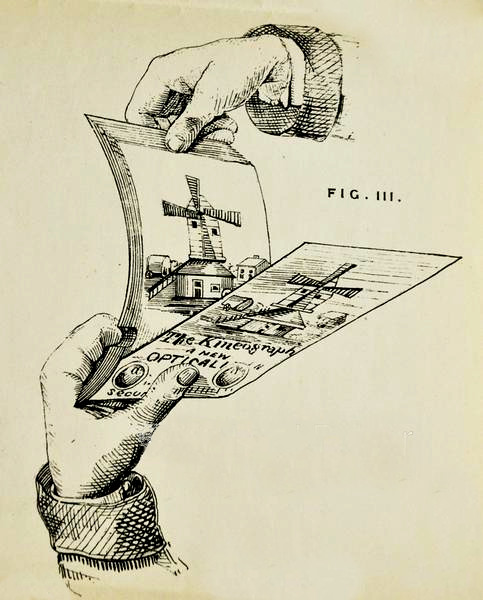


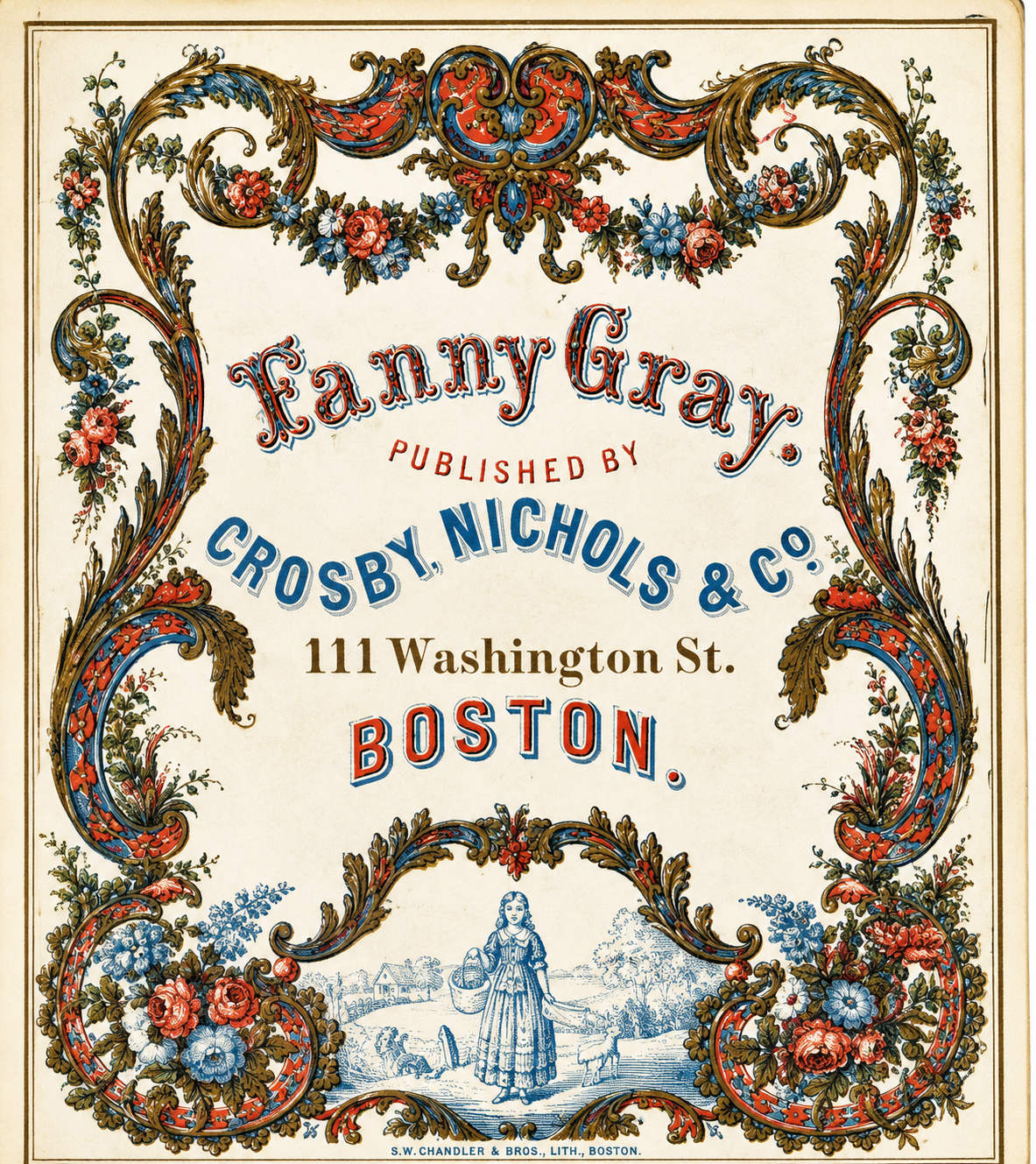
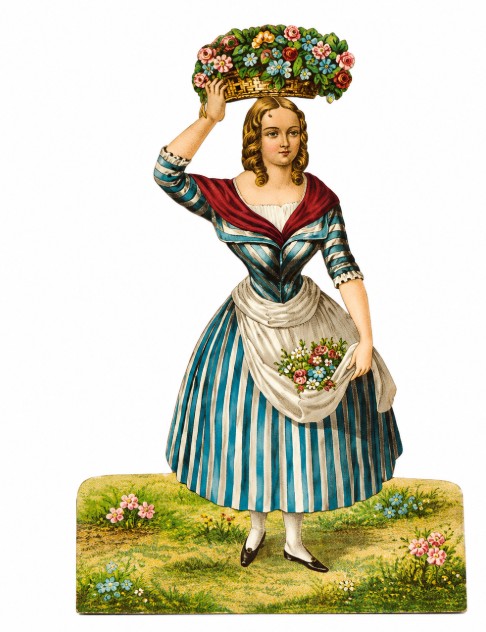


.jpg)


 ...
... 


.jpg)


.jpg)
.jpg)


. Dutch Illuminated Toy Theater rare survivor.png.jpg)